
Why You’ll Love This Russian Vinaigrette Salad
This Russian Vinaigrette Salad is a simple yet satisfying dish that brings together fresh, colorful vegetables in a way that delights both the eyes and taste buds. It’s easy to make with everyday ingredients, making it perfect for home cooks who want a nutritious meal without much effort. You’ll appreciate how this salad offers a burst of flavors from tangy beets, crunchy carrots, and hearty potatoes, all tossed in a light dressing.
One of the best parts about this salad is its ease of preparation, which lets you whip it up quickly for a weeknight dinner or a casual gathering. Health benefits abound, as it’s packed with antioxidants from beets, fiber from carrots, and essential vitamins from fresh veggies, supporting a balanced diet. Plus, its versatility means it fits into vegan and gluten-free lifestyles, adapting to what you have on hand while keeping its classic charm.
The distinctive flavor comes from a mix of earthy beets, tangy pickles, and a simple oil-based dressing that ties everything together nicely. Whether you’re serving it as a main dish or a side, this salad adds a refreshing twist to any meal, making it a go-to option for busy families and health-focused individuals. With ingredients like potatoes, beets, and carrots, it’s naturally low in fat and full of nutrients, just like the traditional Russian version that’s been enjoyed for generations.
Key Benefits at a Glance
- Simple steps that save time in the kitchen.
- Rich in vitamins and antioxidants for daily wellness.
- Easily customizable for different dietary needs.
- A bold taste that pairs well with various meals.
Imagine pulling together this salad on a lazy weekend, letting the flavors mingle while you relax. It’s not just food; it’s a smart choice that keeps things light and enjoyable for everyone from students to seniors.
Essential Ingredients for Russian Vinaigrette Salad
When putting together a Russian Vinaigrette Salad, selecting the right ingredients is key to capturing its traditional taste and texture. This salad relies on fresh, cooked vegetables that bring earthiness, crunch, and a bit of tang. Below is a complete list based on the classic recipe, ensuring you have everything needed for a perfect batch.
Main Ingredients List
- 3 to 4 medium-sized potatoes
- 3 to 4 beets (fresh beets that can be pre-cooked or canned for convenience)
- 3 carrots
- 1 yellow onion
- 1 cup of pickled sauerkraut or 3 to 4 dill pickles
- Juice of one lemon
- 3 to 4 tablespoons sunflower oil (or vegetable, canola, or olive oil)
- Salt and pepper to taste
- Optional: parsley for garnish
These items create a balanced mix that’s both nutritious and flavorful, drawing from Russian roots. For special dietary options, remember that this recipe is naturally vegan and gluten-free, using plant-based oils and no hidden additives.
| Ingredient Category | Details |
|---|---|
| Vegetables | Potatoes, beets, and carrots form the base, providing vitamins and a hearty feel. |
| Dressing Elements | Lemon juice and oil add tang and richness without extra calories. |
| Add-Ins | Sauerkraut or pickles bring crunch, while salt and pepper enhance taste. |
This setup makes it easy to follow, with each item measured clearly for success. For more ideas on adapting recipes, check out our guide to similar vegetable-based dishes that offer quick tweaks.
How to Prepare the Perfect Russian Vinaigrette Salad: Step-by-Step Guide
Getting started with Russian Vinaigrette Salad is straightforward and fun, beginning with washing and boiling your vegetables. This method keeps things simple while preserving nutrients, as you can peel after cooking to make dicing easier. Follow these steps to create a salad that’s full of color and flavor.
- Wash all vegetables thoroughly and consider peeling them before or after cooking to keep in those important nutrients.
- Prick the beets, carrots, and potatoes with a fork, then boil them in a large pot of water for 20 to 30 minutes until soft.
- Let the vegetables cool to room temperature before peeling and dicing them into half to one inch cubes for even mixing.
- Finely chop the yellow onion and add it to a bowl with the diced vegetables.
- Mix in the sauerkraut or finely chopped dill pickles to add that tangy crunch.
- Stir the oil, lemon juice, salt, and pepper together to form the dressing, then pour it over the salad and mix well.
- Refrigerate the salad for 1.5 to 2 hours or overnight so the flavors blend nicely, and adjust seasoning as needed before serving.
- Garnish with chopped parsley if you like, and enjoy it as a main dish or side.
This process takes about 30 minutes to prep, 1 hour to cook, and 2 hours to rest, making it ideal for meal planning. The result is a portable, low-fat option that’s perfect for picnics or lunches. Roasting beets instead of boiling can add extra depth, as suggested in our tips section.
This salad not only tastes great but also brings a touch of Russian tradition to your table, making everyday meals feel special.

Dietary Substitutions to Customize Your Russian Vinaigrette Salad
One of the joys of Russian Vinaigrette Salad is how it adapts to different needs, allowing you to swap ingredients without losing its core appeal. For protein options, try chickpeas instead of beans to keep things plant-based and filling. This flexibility makes it a hit for families with varied tastes, from busy parents to health-conscious folks.
When changing vegetables or seasonings, consider using sweet potatoes for a sweeter note or adding fresh herbs for extra aroma. These tweaks help the salad fit seasonal produce or personal preferences, keeping it nutritious and fun. For a spicier kick, a dash of cayenne can liven things up, while options like olive oil instead of sunflower keep the dressing light.
- Swap kidney beans with chickpeas or lentils for more protein.
- Replace sunflower oil with olive oil for a different healthy twist.
- Use sweet potatoes in place of regular ones for added sweetness.
- Trade pickles for sauerkraut to change the tang level.
These changes ensure the salad stays true to its Russian roots while meeting dietary goals, like being low-calorie or vegan.
Mastering Russian Vinaigrette Salad: Advanced Tips and Variations
Taking your Russian Vinaigrette Salad to the next level involves a few smart techniques, such as roasting beets for a deeper, smokier taste instead of boiling them. Using a mandoline slicer helps get uniform cuts, which improves the overall texture and makes the salad more appealing. These steps can turn a simple side into something more refined for dinner parties.
Flavor variations are endless, like adding walnuts for crunch or trying balsamic vinegar for a new acidity. You might also include roasted garlic for extra complexity, blending with the earthy beets and tangy pickles. This salad improves with time, so preparing it ahead lets the tastes meld perfectly.
- Roast beets to enhance their natural sweetness and flavor.
- Add nuts or herbs to bring in more texture and freshness.
- Experiment with vinegars for a personalized taste.
For presentation, layer the ingredients in a glass bowl to show off the colors, and garnish with edible flowers if you want to impress guests. As a make-ahead meal, it stores well for up to three days. For more on quick recipes, visit our page on easy Asian-inspired dishes that pair nicely.
How to Store Russian Vinaigrette Salad: Best Practices
Proper storage keeps your Russian Vinaigrette Salad fresh and tasty, starting with placing it in an airtight container in the fridge. This method helps it last up to three days, maintaining that crisp texture from the vegetables. Avoid freezing the whole salad, as it can make things mushy, but you can freeze beans separately if needed.
For the best results, serve it cold or at room temperature to preserve the vibrant flavors. If you’re prepping meals ahead, keep the vegetables and dressing separate until you’re ready to eat, preventing sogginess. This approach makes it easy for working professionals or students to grab a healthy lunch on the go.
- Refrigerate in an airtight container for freshness.
- Combine ingredients just before eating for the best texture.
- Check for spoilage before enjoying leftovers.
With these tips, you’ll enjoy the salad’s evolving flavors over time, making it a practical choice for any routine. It’s all about keeping that homemade feel without extra hassle.

FAQs: Frequently Asked Questions About Russian Vinaigrette Salad
What are the main ingredients in Russian vinaigrette salad?
Can I make Russian vinaigrette salad vegan and gluten-free?
What type of oil works best for dressing Russian vinaigrette salad?
Is it necessary to peel beets and potatoes for Russian vinaigrette salad?
Can I use pickled cucumbers instead of sauerkraut in Russian vinaigrette salad?
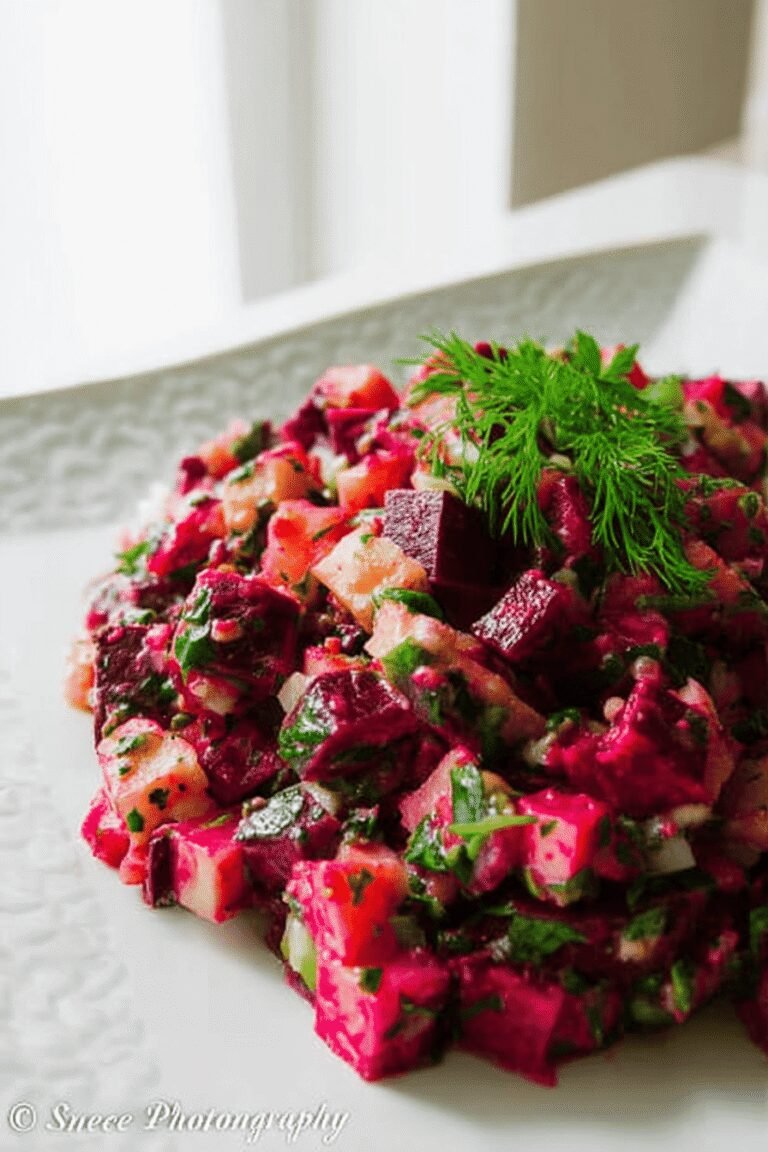
Russian Vinaigrette Salad
🥗 Enjoy a nutritious and flavorful Russian Vinaigrette Salad that combines classic beets and fresh vegetables for a wholesome meal.
🌿 This vegan and gluten-free salad is low in fat and perfect as a side dish or a refreshing main course option.
- Total Time: 3 hours 30 minutes to overnight
- Yield: 6–8 servings 1x
Ingredients
3 to 4 medium-sized potatoes
3 to 4 beets (fresh beets that can be pre-cooked or canned for convenience)
3 carrots
1 yellow onion
1 cup of pickled sauerkraut or 3 to 4 dill pickles
Juice of one lemon
3 to 4 tablespoons sunflower oil (or vegetable, canola, or olive oil)
Salt and pepper to taste
parsley for garnish
Instructions
1-Wash all vegetables thoroughly and consider peeling them before or after cooking to keep in those important nutrients.
2-Prick the beets, carrots, and potatoes with a fork, then boil them in a large pot of water for 20 to 30 minutes until soft.
3-Let the vegetables cool to room temperature before peeling and dicing them into half to one inch cubes for even mixing.
4-Finely chop the yellow onion and add it to a bowl with the diced vegetables.
5-Mix in the sauerkraut or finely chopped dill pickles to add that tangy crunch.
6-Stir the oil, lemon juice, salt, and pepper together to form the dressing, then pour it over the salad and mix well.
7-Refrigerate the salad for 1.5 to 2 hours or overnight so the flavors blend nicely, and adjust seasoning as needed before serving.
8-Garnish with chopped parsley if you like, and enjoy it as a main dish or side.
Last Step:
Please leave a rating and comment letting us know how you liked this recipe! This helps our business to thrive and continue providing free, high-quality recipes for you.Notes
🥔 Choose potatoes that hold their shape to prevent a mealy texture.
⏱️ Use pre-cooked or canned beets to save time.
🔥 Roasting beets enhances their flavor for a richer taste.
- Prep Time: 30 minutes
- Cooling and resting: 2 hours to overnight
- Cook Time: 1 hour
- Category: Salad
- Method: Boiling and mixing
- Cuisine: Russian
- Diet: Vegan, Gluten-Free
Nutrition
- Serving Size: 1 cup