

Why You’ll Love This Rose Lemonade
Rose lemonade stands out as a refreshing drink that combines the bright tang of lemon with the gentle, floral notes of rose. This beverage appeals to many because of its simple preparation, which uses easy-to-find ingredients and takes just minutes to mix. Whether you’re unwinding after a busy day or entertaining guests, its quick assembly makes it a go-to choice.
One of the biggest draws is the health perks packed into every sip. Made with natural elements like rose extracts and lemon juice, rose lemonade offers antioxidants that support immune health and skin glow. For those watching their diet, it’s a light option that can be adjusted to fit vegan, gluten-free, or low-calorie needs without losing its charm.
The flavor is truly unique, blending zesty citrus with a subtle rose aroma that evokes blooming gardens. This drink’s versatility shines in various settings, from casual family meals to elegant parties. Many enjoy how it hydrates while adding a touch of elegance to everyday moments.
Beyond taste, rose lemonade is made with quality ingredients such as carbonated water, lemon juice concentrate, and rose oil from a valley in Bulgaria, ensuring an authentic and pure flavor. Preparation is straightforward, letting you open the can and pour over ice for instant refreshment. With nutritional facts like 110 calories per 9.3 fluid ounces and no fat or sodium, it’s a smart pick for health-conscious folks.
Tips for Enjoyment
Serve it chilled with ice and a lemon garnish to highlight its sweet citrus and rose flavors, or mix it into cocktails for added depth. This makes rose lemonade a flexible favorite for home cooks, busy parents, and party hosts alike.
Essential Ingredients for Rose Lemonade
To create your own rose lemonade, gather the key items that bring out its refreshing floral and citrus notes. Below is a comprehensive list of all ingredients needed, drawing from the recipe details. Each one ensures the drink’s balance of taste and health benefits.
- 2 tablespoons rose water – Provides the signature floral aroma and flavor from sources like rose oil in Bulgaria.
- 1 cup fresh lemon juice – Adds a tangy zest and natural vitamin C, or use lemon juice concentrate as an alternative.
- 3/4 cup granulated sugar – Sweetens the lemonade to balance the tartness, or opt for beet sugar as in commercial versions.
- 4 cups water – Dilutes the mixture for a refreshing consistency; in commercial rose lemonade, this includes carbonated water.
- Glucose syrup (amount as needed) – Used in some preparations for subtle sweetness, often alongside beet sugar.
- Fermented ginger root extract (made from water, glucose syrup, ginger root, pear juice concentrate, and yeast) – Adds a hint of spice and depth, typically in small amounts for flavor enhancement.
- Pear juice concentrate (as required) – Contributes natural sweetness and fruitiness to complement the rose and lemon.
- Natural flavors including lemon and orange (to taste) – Enhance the citrus profile without overpowering the rose.
- Tartaric acid and citric acid (in precise amounts for acidity) – Help maintain the drink’s tangy balance and shelf stability.
- Red cabbage extract (for color) – Gives the beverage its appealing pink hue in commercial settings.
For special diets, consider these options to customize:
- Vegan: Swap granulated sugar with organic raw sugar, agave syrup, or beet sugar to keep it plant-based.
- Gluten-free: All listed ingredients are naturally gluten-free, making this recipe straightforward for such needs.
- Low-calorie: Use stevia or erythritol instead of granulated sugar or glucose syrup to cut down on added sugars.
How to Prepare the Perfect Rose Lemonade: Step-by-Step Guide
Creating rose lemonade at home is simple and fun, starting with gathering your ingredients for a smooth process. First, measure out 2 tablespoons of rose water, 1 cup of fresh lemon juice, 3/4 cup of granulated sugar, and 4 cups of water to set the stage. This preparation draws from the beverage’s core elements, including carbonated water and natural flavors for that authentic touch.
Next, in a large pitcher, mix the fresh lemon juice and sugar until it dissolves fully, forming a sweet base that balances the tartness. Then, add the rose water and stir well to blend the floral essence evenly, incorporating elements like rose oil from Bulgaria for depth.
After that, pour in the water using carbonated water if you want fizz and stir thoroughly to reach your ideal strength. For a commercial-style version, remember it’s made with ingredients like glucose syrup and fermented ginger root extract, which the add here if desired.
Tips for Flavor Adjustment
Taste the mixture and tweak the sweetness or rose intensity as needed, perhaps by incorporating pear juice concentrate or natural citrus flavors. If adapting for dietary needs, substitute sugar with a low-calorie option at this point to keep it light.
Once mixed, chill the rose lemonade in the fridge for at least an hour to let the flavors meld, mirroring the straightforward preparation of just opening and serving over ice. Finally, serve it cold over ice, garnished with lemon slices to enhance its refreshing quality, and appreciate the 110 calories per serving with no fat.
For more ideas on variations, check out our section on mastering advanced tips to elevate your drink game. This step-by-step approach suits everyone from students to working professionals looking for a quick refreshment.

Dietary Substitutions to Customize Your Rose Lemonade
Adapting rose lemonade for different needs is easy and keeps its core appeal intact. Start by exploring options for sweeteners, like swapping granulated sugar with beet sugar or glucose syrup from the original recipe to maintain vegan status.
For those adding extras, infuse with herbs such as mint or basil to complement the lemon and rose flavors. You can also switch lemon juice with lime for a fresh twist, ensuring the drink remains low in calories at around 110 per serving.
Nutritional details show it’s free of fat and sodium, making substitutions straightforward for diet-conscious individuals. Always check for items like tartaric acid or citric acid to keep acidity inпп check.
| Substitution Type | Option | Benefit |
|---|---|---|
| Sweetener | Stevia instead of sugar | Reduces added sugars to 19 grams per serving |
| Base Liquid | Sparkling water | Adds fizz without extra calories |
| Flavor Enhancer | Pear juice concentrate | Boosts natural sweetness and nutrition |
Mastering Rose Lemonade: Advanced Tips and Variations
Taking your rose lemonade to the next level involves simple techniques that enhance its appeal. Infuse rose water with dried petals for a stronger aroma, using chilled or carbonated water to tweak the texture, just like in the commercial version with fermented ginger root extract.
Experiment with flavors by adding elderflower or crushed raspberries for a fruity kick, or incorporate ginger for a subtle spice. For presentation, pour into clear glasses to show off the red cabbage extract’s pink color, and top with garnishes like lemon or rose petals.
Make it ahead by prepping the base and storing it; combine with water right before serving to keep flavors fresh. Remember, nutritional info per serving includes 25 grams of carbs, making it easy to fit into balanced mealslearn about rose water benefits for more health insights.
How to Store Rose Lemonade: Best Practices
Proper storage helps keep rose lemonade tasting great for days. Keep it in an airtight container in the fridge for up to 3 days, preserving the fresh lemon and rose notes from ingredients like rose oil.
For longer use, freeze portions in ice cube trays to avoid dilution when added to drinks. Since it’s served cold, no reheating is needed, but stir if settled. This method works well for meal prep, letting you dilute as required.

FAQs: Frequently Asked Questions About Rose Lemonade
What is rose lemonade and how is it made?
Is rose lemonade healthy to drink?
Can I use rose petals to make rose lemonade?
How long does rose lemonade last in the fridge?
What are some popular ways to serve rose lemonade?
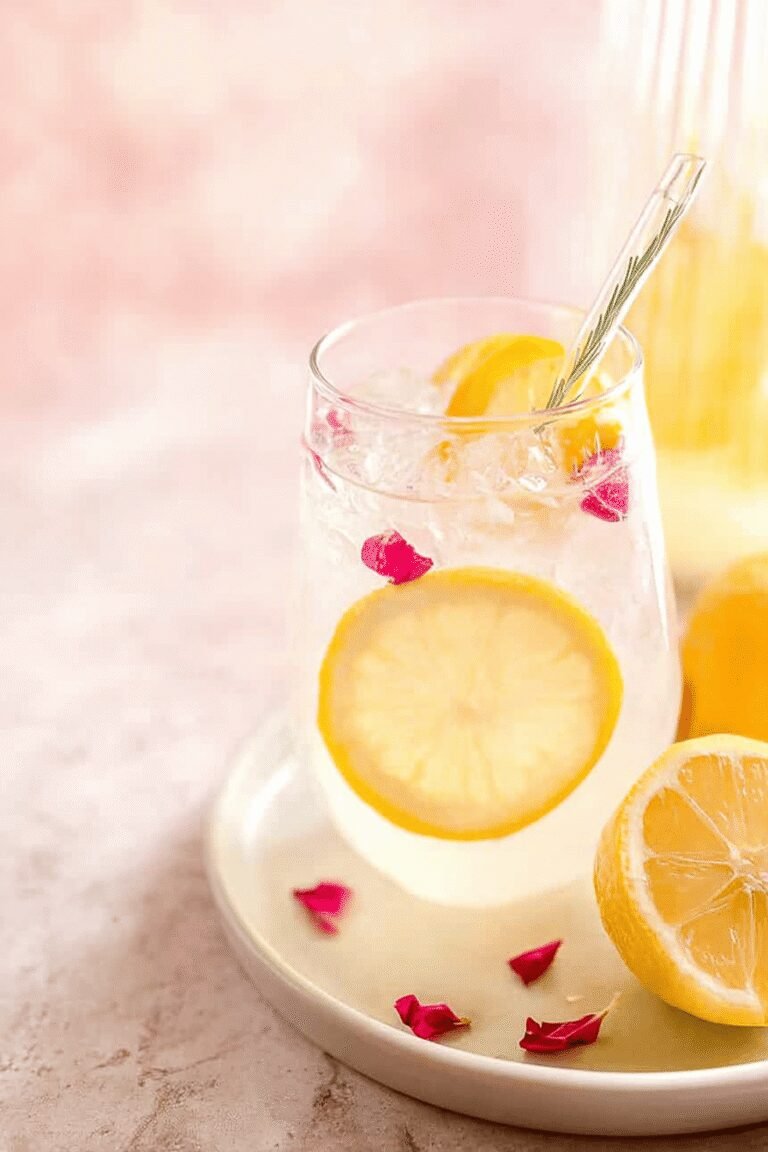
Rose Lemonade
🌹 Enjoy the delicate blend of floral rose and bright citrus flavors for a uniquely refreshing beverage experience.
🍋 Perfect for hot days or special occasions, this Rose Lemonade offers a sweet and invigorating treat with natural ingredients.
- Total Time: 1 minute
- Yield: 1 serving
Ingredients
– 2 tablespoons rose water for floral aroma and flavor
– 1 cup fresh lemon juice for tangy zest and natural vitamin C
– 3/4 cup granulated sugar to sweeten and balance tartness
– 4 cups water to dilute the mixture for refreshing consistency
– Glucose syrup (amount as needed) for subtle sweetness
– Fermented ginger root extract for hint of spice and depth
– Pear juice concentrate (as required) for natural sweetness and fruitiness
– Natural flavors including lemon and orange to enhance citrus profile
– Tartaric acid and citric acid for acidity and shelf stability
– Red cabbage extract for color
Instructions
1-First, measure out 2 tablespoons of rose water, 1 cup of fresh lemon juice, 3/4 cup of granulated sugar, and 4 cups of water to set the stage. This preparation draws from the beverage’s core elements, including carbonated water and natural flavors for that authentic touch.
2-Next, in a large pitcher, mix the fresh lemon juice and sugar until it dissolves fully, forming a sweet base that balances the tartness.
3-Then, add the rose water and stir well to blend the floral essence evenly, incorporating elements like rose oil from Bulgaria for depth.
4-After that, pour in the water using carbonated water if you want fizz and stir thoroughly to reach your ideal strength.
5-For a commercial-style version, remember it’s made with ingredients like glucose syrup and fermented ginger root extract, which the add here if desired.
6-Taste the mixture and tweak the sweetness or rose intensity as needed, perhaps by incorporating pear juice concentrate or natural citrus flavors.
7-If adapting for dietary needs, substitute sugar with a low-calorie option at this point to keep it light.
8-Once mixed, chill the rose lemonade in the fridge for at least an hour to let the flavors meld, mirroring the straightforward preparation of just opening and serving over ice.
9-Finally, serve it cold over ice, garnished with lemon slices to enhance its refreshing quality, and appreciate the 110 calories per serving with no fat.
Last Step:
Please leave a rating and comment letting us know how you liked this recipe! This helps our business to thrive and continue providing free, high-quality recipes for you.Notes
❄️ Serve chilled with plenty of ice and lemon garnish to fully appreciate the flavors.
🍸 Incorporate into cocktails or mocktails to add a floral and citrus twist.
🌿 Use fresh, high-quality rose oil or essence for authentic natural flavors if making at home.
- Prep Time: 1 minute
- Cook Time: 0 minutes
- Category: Beverage
- Method: Serving chilled
- Cuisine: International
- Diet: Vegan, Gluten-Free
Nutrition
- Serving Size: 9.3 fl oz
- Calories: 110
- Sugar: 21g
- Sodium: 0mg
- Fat: 0g
- Saturated Fat: 0g
- Unsaturated Fat: 0g
- Trans Fat: 0g
- Carbohydrates: 25g
- Fiber: 0g
- Protein: 0g
- Cholesterol: 0mg