
Why You’ll Love This Homemade Corned Beef
Picture yourself preparing a meal that’s not only easy to make but also packed with flavors that impress everyone at the table. This homemade corned beef recipe stands out because it’s straightforward, bringing together simple steps that lead to tender, flavorful results. Whether you’re new to cooking or a seasoned pro, the process feels approachable and rewarding.
Beyond the taste, this dish offers great health perks like high protein and essential nutrients that make it a smart choice for balanced eating. You can tweak it to fit various needs, making it versatile for different lifestyles. It’s that go-to recipe that’ll become a favorite for family dinners or special occasions, giving you a sense of accomplishment with every bite.
One of the best parts is how adaptable and full of rich, savory flavors it is, thanks to the special spice mix and curing method. This isn’t just food; it’s a way to enjoy a hearty meal that feels personalized. Try it once, and you’ll see why it quickly becomes a staple in your kitchen.
Key Benefits at a Glance
- It uses basic ingredients you likely have on hand, cutting down on trips to the store.
- The curing process enhances the meat’s natural flavors without overwhelming them.
- You can enjoy it in various ways, from sandwiches to sides with veggies.
Essential Ingredients for Homemade Corned Beef
Gathering the right ingredients is the first step to creating amazing homemade corned beef. This section breaks down everything you need, focusing on precise measurements for the brine and cooking parts. By using these exact quantities, you’ll get consistent, delicious results every time.
Starting with the brine ingredients, which are key for that classic cured flavor:
Ingredients for Brine
- 4 quarts water (1 gallon)
- 1 cup kosher salt
- 1/2 cup brown sugar
- 1/3 cup pickling spice blend
- 1 teaspoon pink curing salt (Prague Powder #1)
- 4 cloves garlic, minced
Next, here are the ingredients needed for the cooking stage, which help build a complete meal:
Ingredients for Cooking
- 5 pounds beef brisket
- 4 cups water or beef broth
- 1 tablespoon pickling spice blend
- 3 carrots, peeled and cut into 2-inch pieces
- 1 pound small red potatoes, halved
- 1 head green cabbage, core removed and quartered
Remember, these ingredients ensure a well-rounded dish that’s flavorful and nutritious. If you’re watching your diet, you can swap in options like plant-based proteins, but stick to the measurements for the best outcome.
How to Prepare the Perfect Homemade Corned Beef: Step-by-Step Guide
Getting started with homemade corned beef involves a few key steps that make the process simple and fun. Begin by preparing the brine, which is the foundation for that signature taste and texture. This method lets you control the flavors and end up with meat that’s tender and full of depth.
Follow these directions to make the brine and cure the beef. First, combine the 4 quarts water, kosher salt, brown sugar, pickling spice blend, pink curing salt, and minced garlic in a large pot. Bring it to a boil, then reduce the heat and simmer until the salt and sugar dissolve completely. Let the mixture cool fully before using it.
Step-by-Step Brining and Curing
- Place the 5 pounds beef brisket into a large container or sealable bag.
- Pour the cooled brine over the brisket to cover it completely.
- Refrigerate the brisket in the brine for 5 to 10 days, turning it once around day 5 to ensure even curing.
- After curing, remove the brisket from the brine and discard the liquid.
Once cured, it’s time to cook the beef using one of these reliable methods. Each option keeps the brisket tender and pairs it with veggies for a complete meal.
Various Cooking Methods
For stovetop cooking, put the brisket into a Dutch oven with 1 tablespoon pickling spices and 4 cups broth or water. Bring it to a boil, cover, and simmer for about 3 1/2 hours. Add the potatoes, carrots, and cabbage 30-40 minutes before finishing, and keep the brisket submerged by adding water if needed. Let it rest covered for 15-20 minutes before slicing across the grain.
If you prefer oven braising, preheat your oven to 350°F (175°C). Cook the brisket in a covered Dutch oven with the pickling spices and broth for 3 1/2 to 4 hours. Add the vegetables 30-40 minutes before the end, then rest and slice as above.
For a quicker option, use an Instant Pot: Place the brisket fat side up on a rack with pickling spices and broth. Cook at high pressure for 90 minutes, followed by a natural pressure release. Rest it covered for 15-20 minutes, then cook the vegetables at high pressure for 3 minutes with a quick release. Finally, slice across the grain.
Slow cooker fans can set it on low for 8-10 hours or high for 4-5 hours with pickling spices and broth. Add carrots and potatoes halfway through, and cabbage in the last 2 hours. Allow it to rest covered before slicing for the best results.

Dietary Substitutions to Customize Your Homemade Corned Beef
Making homemade corned beef even more personal is easy with a few swaps. If you’re looking to lighten things up, try using turkey breast instead of beef brisket for a leaner option. For those going plant-based, seitan works well as a substitute while keeping the same curing steps.
When it comes to veggies and seasonings, you can switch traditional cabbage with kale or Swiss chard for a fresh twist. To handle gluten issues, go for gluten-free soy sauce or tamari in the mix. These changes let you tailor the recipe without losing that great taste.
Adding smoked paprika can bring in new flavors, making it perfect for different tastes or restrictions. Always measure carefully to keep the balance just right, like using 1/2 cup brown sugar in the brine.
Mastering Homemade Corned Beef: Advanced Tips and Variations
Taking your homemade corned beef to the next level means trying out some pro techniques and fun twists. For extra tenderness, consider using a simple cooking method like the one in our prawn recipe as inspiration for moisture retention. Experimenting with flavors, such as adding star anise or mustard seeds to the pickling spices, can create unique profiles that surprise your taste buds.
Presentation plays a big role too; slice the beef thinly and add garnishes like fresh parsley for a nice look. If you’re planning ahead, cure and cook the beef in advance, then store it in the fridge or freezer to keep things easy.
One helpful tip is to always keep the brisket fully submerged during cooking by adding water or broth as needed. Pink curing salt is key for safety and that pink color, so don’t skip it. For the best results, adjust brining time based on your preference, from 5 to 10 days.
Nutritional Breakdown
| Nutrient | Amount per Serving |
|---|---|
| Calories | 418 |
| Carbohydrates | 35g |
| Protein | 39g |
| Fat | 13g |
| Saturated Fat | 4g |
| Cholesterol | 105mg |
| Sodium | 1059mg |
| Potassium | 1230mg |
| Fiber | 5g |
| Sugar | 18g |
| Vitamin A | 3960 IU |
| Vitamin C | 50.3 mg |
| Calcium | 138 mg |
| Iron | 5 mg |
As one home cook shared, “Adding my own spices made this recipe feel like my own creation, and it turned out better than store-bought versions!”
How to Store Homemade Corned Beef: Best Practices
Keeping your homemade corned beef fresh is simple with the right habits. After cooking, put it in airtight containers and keep it in the fridge for up to 4 days. This helps maintain its juicy texture and prevents any waste.
For longer storage, wrap it tightly in freezer-safe packaging and freeze for up to 3 months. When you’re ready to eat, reheat it gently on the stovetop or in the oven at low heat to avoid drying it out. Planning meals ahead? Slice it into portions before storing to make serving quicker and easier.
Remember, corned beef can be frozen right after brining, just thaw it in the fridge before cooking. These steps ensure your efforts pay off with meals that taste as good as the day you made them.
FAQs: Frequently Asked Questions About Homemade Corned Beef
What cut of beef is best for making homemade corned beef?
How long should I brine beef to make homemade corned beef?
What is the easiest method to cook homemade corned beef at home?
Can I use different types of salt for corned beef brining, and does it affect the result?
How should I slice homemade corned beef for serving?
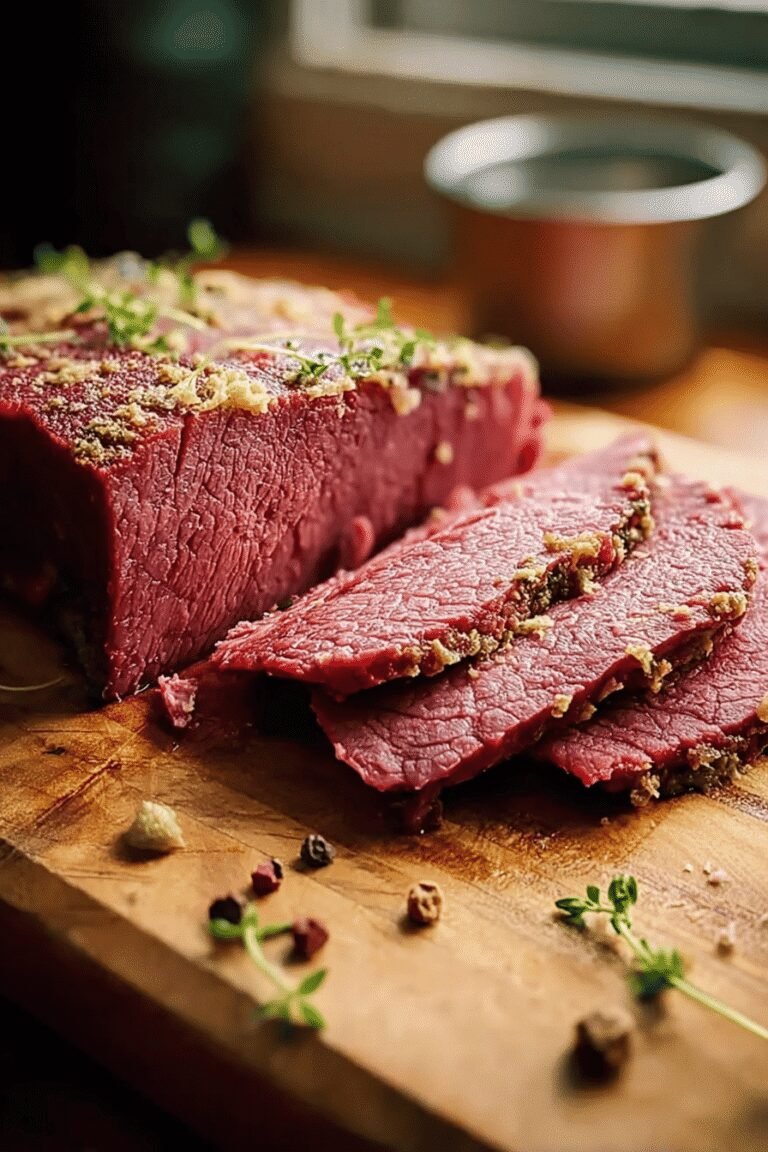
Homemade Corned Beef
🥩 Learn how to make tender, flavorful corned beef with simple steps that yield perfect results every time.
🌿 This recipe offers versatile cooking methods and a well-balanced seasoning blend for a delicious, classic meal.
- Total Time: 5 to 10 days plus cooking time
- Yield: 6 to 8 servings 1x
Ingredients
4 quarts water (1 gallon)
1 cup kosher salt
1/2 cup brown sugar
1/3 cup pickling spice blend
1 teaspoon pink curing salt (Prague Powder #1)
4 cloves garlic, minced
5 pounds beef brisket
4 cups water or beef broth
1 tablespoon pickling spice blend
3 carrots, peeled and cut into 2-inch pieces
1 pound small red potatoes, halved
1 head green cabbage, core removed and quartered
Instructions
1-Place the 5 pounds beef brisket into a large container or sealable bag.
2-Pour the cooled brine over the brisket to cover it completely.
3-Refrigerate the brisket in the brine for 5 to 10 days, turning it once around day 5 to ensure even curing.
4-After curing, remove the brisket from the brine and discard the liquid.
5-For stovetop cooking, put the brisket into a Dutch oven with 1 tablespoon pickling spices and 4 cups broth or water. Bring it to a boil, cover, and simmer for about 3 1/2 hours. Add the potatoes, carrots, and cabbage 30-40 minutes before finishing, and keep the brisket submerged by adding water if needed. Let it rest covered for 15-20 minutes before slicing across the grain.
6-If you prefer oven braising, preheat your oven to 350°F (175°C). Cook the brisket in a covered Dutch oven with the pickling spices and broth for 3 1/2 to 4 hours. Add the vegetables 30-40 minutes before the end, then rest and slice as above.
7-For a quicker option, use an Instant Pot: Place the brisket fat side up on a rack with pickling spices and broth. Cook at high pressure for 90 minutes, followed by a natural pressure release. Rest it covered for 15-20 minutes, then cook the vegetables at high pressure for 3 minutes with a quick release. Finally, slice across the grain.
8-Slow cooker fans can set it on low for 8-10 hours or high for 4-5 hours with pickling spices and broth. Add carrots and potatoes halfway through, and cabbage in the last 2 hours. Allow it to rest covered before slicing for the best results.
Last Step:
Please leave a rating and comment letting us know how you liked this recipe! This helps our business to thrive and continue providing free, high-quality recipes for you.Notes
🧂 Use kosher salt for consistent flavor; volume can vary by brand.
🔴 Pink curing salt is essential for safety and color; do not substitute with regular pink salt.
❄️ Corned beef can be frozen after brining; thaw in refrigerator before cooking.
💧 Keep brisket fully submerged during cooking by adding water or broth.
⏲️ Rest cooked brisket covered for 15-20 minutes to keep it juicy.
🔪 Always slice brisket across the grain for tenderness.
⌛ Adjust brining time (5-10 days) depending on taste preference.
- Prep Time: 15 minutes
- Brining Time: 5 to 10 days
- Cook Time: 3 hours 30 minutes to 4 hours
- Category: Main Course
- Method: Brining, Simmering, Braising, Pressure Cooking
- Cuisine: Irish-American
- Diet: Gluten-Free
Nutrition
- Serving Size: 1 serving
- Calories: 418 kcal
- Sugar: 18 g
- Sodium: 1059 mg
- Fat: 13 g
- Saturated Fat: 4 g
- Unsaturated Fat: 7 g
- Trans Fat: 0 g
- Carbohydrates: 35 g
- Fiber: 5 g
- Protein: 39 g
- Cholesterol: 105 mg