
Why You’ll Love This Thai Basil Pesto
Thai Basil Pesto brings bold flavor to the table in just 15 minutes. It is quick, flexible, and packed with fresh herbs, nuts, garlic, and bright lime. If you want a fast sauce that feels special but does not take much effort, this recipe fits right in.
- Easy to make: This Thai Basil Pesto comes together in one mini food processor with simple pantry ingredients. No cooking is needed, so it is great for busy parents, students, and working professionals.
- Full of fresh flavor: Thai basil gives the pesto a sweet, peppery, licorice-like taste that stands out from classic basil pesto. The chili flakes, lime juice, and rice wine vinegar add a bright, lively finish.
- Fits many meals: Spoon it over noodles, pasta, rice, grilled fish, chicken, steak, soup, toast, or crackers. It also works well as a dip or sandwich spread.
- Easy to adapt: You can swap in Italian basil if needed, use only cashews or peanuts, and adjust the heat to match your taste. That makes Thai Basil Pesto handy for different diets and pantry situations.
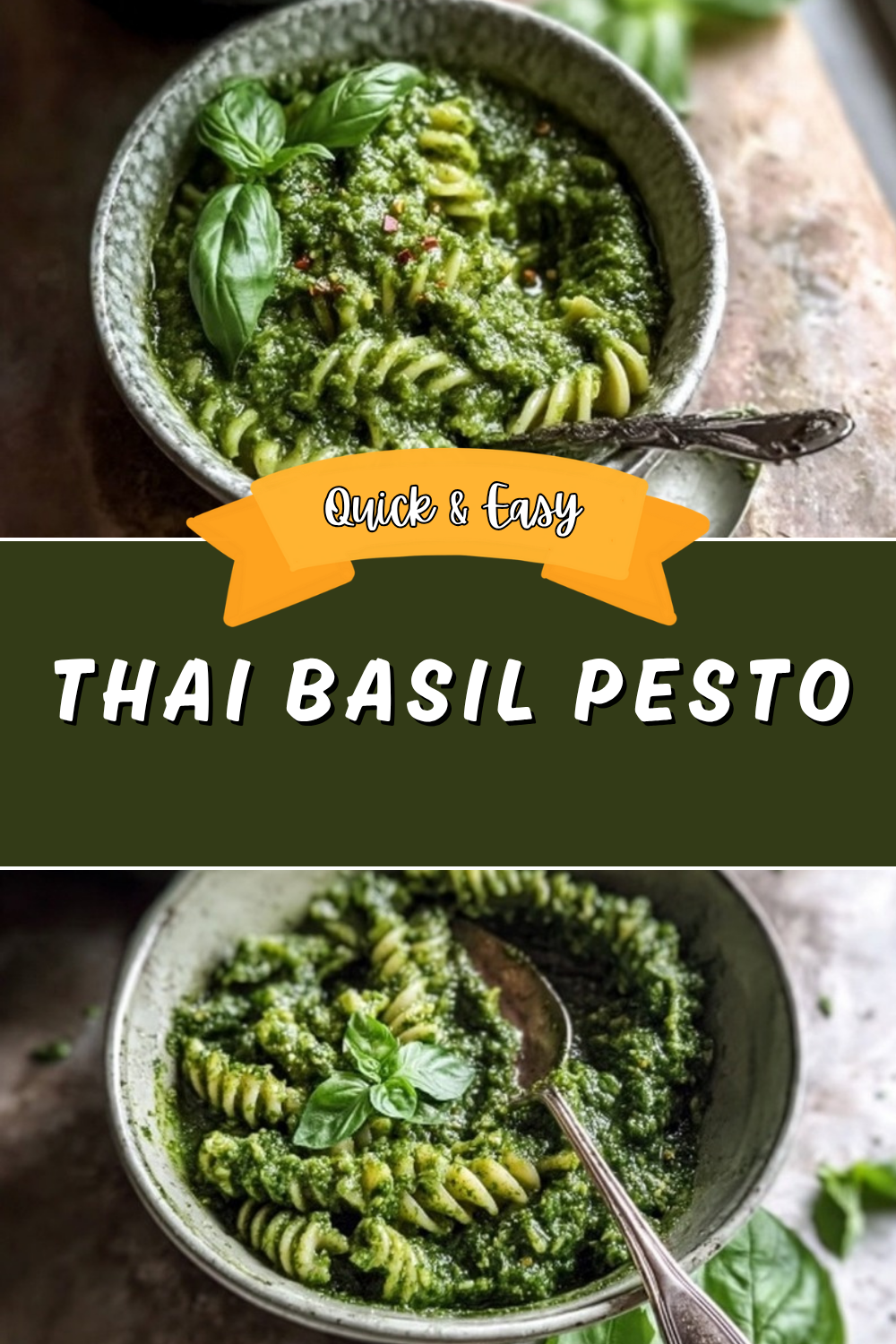
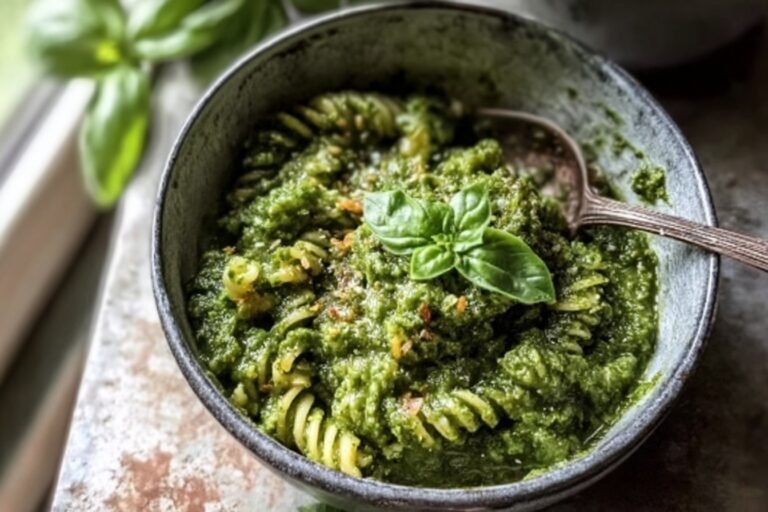
Fresh Thai basil gives this pesto its bold Asian flavor, and a little lime juice brings everything into balance.
For readers who like simple sauces and fast homemade flavor, this is a smart recipe to keep on repeat. If you enjoy easy pantry-style recipes, you may also like this simple banana bread recipe for another low-effort kitchen win.
Essential Ingredients for Thai Basil Pesto
Here is the full ingredient list for this Thai Basil Pesto recipe. It makes about 1 cup.
- 2 cups Thai basil leaves, packed, washed, and dried – This is the main flavor base and gives the pesto its fresh, peppery, anise-like taste.
- 2 tablespoons cashew nuts, roasted and unsalted – Cashews add creaminess and help the pesto blend into a smooth paste.
- 2 tablespoons peanuts, roasted and unsalted – Peanuts bring a deep nutty flavor and add body to the sauce.
- 2 garlic cloves, crushed – Garlic adds sharpness and a savory kick.
- 1/2 teaspoon chili flakes – These add heat. You can use less if you want a milder pesto.
- 60 milliliters olive oil or sesame oil – Oil helps everything blend and gives the pesto a rich, spoonable texture.
- 1/2 teaspoon sea salt – Salt rounds out the flavor. You can swap in 1 teaspoon soy sauce or tamari for a deeper savory note.
- 1 teaspoon rice wine vinegar – This adds brightness and balances the richness of the nuts and oil.
- 1 teaspoon caster sugar – Sugar softens the sharp edges and helps create a well-rounded taste.
- Lime juice from 1/2 lime, to taste – Lime gives the pesto its fresh, tangy lift.
Simple swap ideas
- Italian basil: If Thai basil is hard to find, use Italian basil as a substitute.
- One nut only: If needed, use just cashews or just peanuts instead of both.
- Different oils: Mild olive oil works well, and canola or grapeseed oil are also good choices.
- Gluten-free option: Use tamari instead of soy sauce if you want a gluten-free version.
- Vegan-friendly: This recipe is already plant-based, so no changes are needed.
Quick nutrition snapshot
| Per full recipe | Amount |
|---|---|
| Calories | 794 kilocalories |
| Carbohydrates | 17g |
| Protein | 11g |
| Fat | 79g |
| Saturated fat | 11g |
| Polyunsaturated fat | 12g |
| Monounsaturated fat | 53g |
| Sodium | 1190mg |
| Potassium | 467mg |
| Fiber | 4g |
| Sugar | 5g |
| Vitamin A | 2829 IU |
| Vitamin C | 11mg |
| Calcium | 129mg |
| Iron | 4mg |
How to Prepare the Perfect Thai Basil Pesto: Step-by-Step Guide
Making Thai Basil Pesto is simple, fast, and beginner-friendly. You do not need fancy tools, and the whole recipe takes about 15 minutes from start to finish. The key is to use fresh Thai basil, blend in stages if needed, and taste as you go so the final flavor fits your liking.
First step: Prep the basil and nuts
Start by washing and drying the Thai basil leaves well. Pick the leaves from the stems so you have about 2 packed cups ready to go. This step matters because extra water can thin the pesto and make it dull in color.
If you want a deeper nutty flavor, use roasted and unsalted nuts. Cashews give a softer, creamier texture, while peanuts bring a stronger, more savory taste. You can use both together, or choose just one type if that is what you have on hand.
Second step: Add everything to the processor
Place the Thai basil leaves in a mini food processor. Add the 2 tablespoons of cashew nuts, 2 tablespoons of peanuts, 2 crushed garlic cloves, 1/2 teaspoon chili flakes, 60 milliliters olive oil or sesame oil, 1/2 teaspoon sea salt, 1 teaspoon rice wine vinegar, 1 teaspoon caster sugar, and lime juice from 1/2 lime.
If you are using soy sauce or tamari instead of sea salt, add 1 teaspoon now. This makes the pesto slightly richer and saltier, which can be very nice if you plan to serve it with rice, noodles, or grilled meat.
Third step: Blend into a paste
Blend the mixture until it becomes a paste. Stop once or twice to scrape down the sides so every bit gets mixed evenly. If the blades are struggling, pulse in short bursts instead of running the machine the whole time.
You can control the texture here. For a chunky Thai Basil Pesto, stop sooner and leave a little texture. For a smoother sauce, blend longer and add a touch more oil if needed. This recipe works either way, so choose the style that suits your meal.
Fourth step: Taste and adjust
Taste the pesto after blending. If it feels flat, add a little more lime juice. If it needs more saltiness, add a small pinch of sea salt or a splash more soy sauce or tamari. If you want more heat, add a few extra chili flakes.
The balance of salty, tangy, nutty, and herbal flavors is what makes this Thai Basil Pesto so good. A small adjustment can make a big difference, especially if your basil is very fresh and fragrant.
Final step: Store or serve
Spoon the pesto into a clean jar or container. Drizzle a thin layer of oil over the top so the surface stays covered. Seal tightly and refrigerate for up to 1 week, or freeze for up to 4 months.
Serve the pesto with toast, soup, stir-fries, noodles, pasta, rice, steak, chicken, fish, crackers, or crostini. For a quick meal, toss it with hot noodles or spread it on toast with sliced tomato. If you enjoy easy recipe ideas for brunch or snacking, try pairing it with these homemade tea cakes for a simple spread of sweet and savory bites.
For the best color, keep the pesto sealed and covered with a little oil right after blending.

Dietary Substitutions to Customize Your Thai Basil Pesto
Protein and main component alternatives
Thai Basil Pesto is already plant-based, so it works well for vegan eaters. If you want to change the nut base, use only cashews for a softer and creamier finish, or use only peanuts for a stronger roasted flavor. You can also mix in almonds if that is what you have available, but the taste will be a little different.
If Thai basil is not easy to find, use Italian basil instead. The flavor will be milder, but the pesto will still be fresh and useful for pasta, rice, and dips. Some cooks also like a mix of Thai basil and Italian basil for a balanced taste.
Vegetable, sauce, and seasoning modifications
For the sauce base, olive oil gives a smooth result, while sesame oil adds a deeper Asian-style note. Canola and grapeseed oil are also good choices if you want a lighter flavor. If you need a gluten-free option, use tamari instead of soy sauce.
You can also adjust the chili flakes based on who will eat it. Keep the heat low for children, seniors, or anyone who likes mild food. Add more chili for travelers or spice lovers who want a stronger kick. Rice wine vinegar and lime juice can both be adjusted to make the pesto brighter or more mellow.
Mastering Thai Basil Pesto: Advanced Tips and Variations
Once you know the basic method, it is easy to make Thai Basil Pesto your own. Small changes in texture, heat, or oil choice can give you a whole new sauce without adding much extra work.
Pro cooking techniques
For a more traditional method, use a mortar and pestle. This takes more time, but it gives the pesto a rustic texture and a stronger basil scent. If you use a food processor, pulse instead of running it nonstop. That helps keep the pesto from turning too thin or warm.
If your basil is very fresh, use it right away. Fresh Thai basil has the most flavor and gives the pesto its clean green color. If you are short on basil, adding some Italian basil helps stretch the batch without losing the herbal note.
Flavor variations
For a sweeter touch, add a tiny bit more caster sugar. For a sharper finish, add extra lime juice. You can also change the nut ratio depending on what you like. More peanuts will make the pesto deeper and earthier, while more cashews will make it softer and smoother.
Want a different serving style? Stir the pesto into warm rice, spoon it over grilled chicken, or use it as a dip for crackers and crostini. It is also very good with steak, fish, and roasted vegetables.
Presentation tips
Serve Thai Basil Pesto in a small bowl with a drizzle of oil on top. Add a few torn basil leaves for color. If you are serving guests, place it beside bread, noodles, or a platter of grilled foods so people can spoon it on as they like.
Make-ahead options
This pesto is great for batch prep. Make it ahead, seal it tightly, and chill it for quick meals through the week. You can also freeze it in small portions so it is ready for busy nights. That makes it handy for meal prep, school lunches, and fast dinners.
How to Store Thai Basil Pesto: Best Practices
Thai Basil Pesto stores well if you keep air away from the surface. For short-term storage, place it in a sealed jar or container and refrigerate for up to 1 week. Add a thin layer of oil on top to slow browning.
For long-term storage, freeze the pesto for up to 4 months. Small freezer-safe containers or ice cube trays work well, since they let you thaw only what you need. This is useful for meal prep, quick pasta nights, and last-minute sauces.
When you are ready to use frozen pesto, thaw it in the fridge or stir it directly into hot food. If the pesto has thickened, add a little oil or lime juice to loosen it. Keep it away from metal containers if you want to avoid flavor changes.
If the pesto starts to darken a little in the fridge, a splash of lime juice and a quick stir can bring it back to life.
FAQs: Frequently Asked Questions About Thai Basil Pesto
What is the difference between Thai basil and regular basil?
What is Thai basil pesto?
How do you make Thai basil pesto at home?
Can you substitute ingredients in Thai basil pesto?
How do you store Thai basil pesto?
Thai Basil Pesto
🌿 Transform your meals with vibrant Thai basil pesto bursting with bold Asian flavors – fresh, nutty, and incredibly versatile!
🍜 Healthier than classic pesto, it’s packed with antioxidants and perfect for pasta, stir-fries, or as a zesty dip.
- Total Time: 15 minutes
- Yield: 1 cup (8 servings)
Ingredients
– 2 cups Thai basil leaves, packed, washed, and dried
– 2 tablespoons cashew nuts, roasted and unsalted
– 2 tablespoons peanuts, roasted and unsalted
– 2 garlic cloves, crushed
– 1/2 teaspoon chili flakes
– 60 milliliters olive oil or sesame oil
– 1/2 teaspoon sea salt
– 1 teaspoon rice wine vinegar
– 1 teaspoon caster sugar
– Lime juice from 1/2 lime, to taste
Instructions
1-First step: Prep the basil and nuts
Start by washing and drying the Thai basil leaves well. Pick the leaves from the stems so you have about 2 packed cups ready to go. This step matters because extra water can thin the pesto and make it dull in color.
If you want a deeper nutty flavor, use roasted and unsalted nuts. Cashews give a softer, creamier texture, while peanuts bring a stronger, more savory taste. You can use both together, or choose just one type if that is what you have on hand.
2-Second step: Add everything to the processor
Place the Thai basil leaves in a mini food processor. Add the 2 tablespoons of cashew nuts, 2 tablespoons of peanuts, 2 crushed garlic cloves, 1/2 teaspoon chili flakes, 60 milliliters olive oil or sesame oil, 1/2 teaspoon sea salt, 1 teaspoon rice wine vinegar, 1 teaspoon caster sugar, and lime juice from 1/2 lime.
If you are using soy sauce or tamari instead of sea salt, add 1 teaspoon now. This makes the pesto slightly richer and saltier, which can be very nice if you plan to serve it with rice, noodles, or grilled meat.
3-Third step: Blend into a paste
Blend the mixture until it becomes a paste. Stop once or twice to scrape down the sides so every bit gets mixed evenly. If the blades are struggling, pulse in short bursts instead of running the machine the whole time.
You can control the texture here. For a chunky Thai Basil Pesto, stop sooner and leave a little texture. For a smoother sauce, blend longer and add a touch more oil if needed. This recipe works either way, so choose the style that suits your meal.
4-Fourth step: Taste and adjust
Taste the pesto after blending. If it feels flat, add a little more lime juice. If it needs more saltiness, add a small pinch of sea salt or a splash more soy sauce or tamari. If you want more heat, add a few extra chili flakes.
The balance of salty, tangy, nutty, and herbal flavors is what makes this Thai Basil Pesto so good. A small adjustment can make a big difference, especially if your basil is very fresh and fragrant.
5-Final step: Store or serve
Spoon the pesto into a clean jar or container. Drizzle a thin layer of oil over the top so the surface stays covered. Seal tightly and refrigerate for up to 1 week, or freeze for up to 4 months.
Serve the pesto with toast, soup, stir-fries, noodles, pasta, rice, steak, chicken, fish, crackers, or crostini. For a quick meal, toss it with hot noodles or spread it on toast with sliced tomato. If you enjoy easy recipe ideas for brunch or snacking, try pairing it with these homemade tea cakes for a simple spread of sweet and savory bites.
Last Step:
Please leave a rating and comment letting us know how you liked this recipe! This helps our business to thrive and continue providing free, high-quality recipes for you.Notes
🌿 Source fresh Thai basil for authentic punch; mix with Italian basil if needed.
🔥 Roast nuts yourself for extra creaminess and control saltiness.
❄️ Top stored pesto with oil to prevent oxidation and browning.
- Prep Time: 15 minutes
- Category: Sauce
- Method: Blend
- Cuisine: Thai
- Diet: Vegan, Gluten Free
Nutrition
- Serving Size: 2 tablespoons
- Calories: 99 kcal
- Sugar: 1g
- Sodium: 149mg
- Fat: 10g
- Saturated Fat: 1g
- Unsaturated Fat: 9g
- Trans Fat: 0g
- Carbohydrates: 2g
- Fiber: 0.5g
- Protein: 1g
- Cholesterol: 0mg