

Why You’ll Love This Mini Lemon Cakes With Lavender Glaze
If you love bright, sunny desserts that taste like a little celebration, these Mini Lemon Cakes With Lavender Glaze are such a sweet fit. They bring together fresh citrus, soft crumb, and a gentle floral finish that feels fancy without being fussy. I love recipes like this because they look bakery-worthy, but they still come together in a home kitchen with everyday tools.
- Easy to make: The batter comes together in one bowl for dry ingredients and a mixer for the butter, then bakes in just 18 to 25 minutes. That means you can go from mixing to glazing in under an hour.
- Fresh, lively flavor: Fresh lemon juice, orange juice, lemon zest, and orange zest give these mini lemon cakes a bright citrus taste that never feels heavy.
- Pretty enough for parties: The lavender glaze adds a soft purple-speckled finish that makes these cakes perfect for showers, birthdays, brunch tables, and tea time.
- Flexible for busy kitchens: A cupcake pan can stand in for a mini Bundt pan, so you can make them with what you already have.
These little cakes are the kind of treat that makes an ordinary afternoon feel a bit more special, especially when the glaze starts to set and the kitchen smells like citrus and vanilla-sweet sunshine.
For readers who enjoy lemon-forward sweets, you may also like this bright and cozy blueberry muffins recipe from Gold Recipe. If you are curious about the wellness side of citrus, Cleveland Clinic shares helpful details on the benefits of lemons.
Essential Ingredients for Mini Lemon Cakes With Lavender Glaze
This recipe uses simple baking staples plus fresh citrus and lavender. The ingredients are listed below exactly as needed so you can prep everything before you start.
Main ingredients
- 2 1/2 cups flour, plus extra for the pan
- 1/4 teaspoon salt
- 2/3 cup butter, plus extra for the pan
- 5 tablespoons freshly squeezed orange juice
- 2 tablespoons freshly squeezed lemon juice
- 2 tablespoons water
- Zest of 1 lemon
- Zest of 1 orange
- 2 teaspoons baking powder
- 3 eggs
- 1 1/2 cups sugar
- 1 cup powdered sugar
- 1/4 cup lemon juice, add more if needed
- 2 tablespoons milk
- 1 tablespoon fresh or dried culinary lavender
| Ingredient | What it does |
|---|---|
| Flour | Builds the cake structure and gives the crumb its soft, tender bite. |
| Butter | Adds richness and keeps the cakes moist. |
| Citrus juice and zest | Bring fresh flavor and a bright aroma to every bite. |
| Baking powder | Helps the mini cakes rise nicely in the oven. |
| Powdered sugar | Makes the glaze smooth and pourable. |
| Lavender | Gives the glaze its gentle floral note. |
Special dietary options
- Vegan: Swap the butter for a plant-based baking stick, use a liquid egg replacer for the 3 eggs, and choose a plant milk such as oat or almond milk.
- Gluten-free: Replace the flour with a 1:1 gluten-free baking blend that includes xanthan gum.
- Low-calorie: Use a lighter butter substitute, reduce the glaze amount, and keep the lavender finish light for a softer topping.
If you enjoy sweet brunch bakes, you might also like this croissant bread recipe for another comforting bakery-style treat.
How to Prepare the Perfect Mini Lemon Cakes With Lavender Glaze: Step-by-Step Guide
First step: get the pan and oven ready
Preheat your oven to 350°F. Butter a pan well, then dust it with flour and tap out the excess. This helps the cakes release cleanly after baking, especially if you are using a mini Bundt pan or cupcake pan. Since the batter can be delicate, this little prep step matters more than it seems.
Set out all your ingredients before you begin. Citrus bakes move quickly once the mixing starts, and having the lemon juice, orange juice, zest, and eggs ready keeps the process smooth and calm.
Second step: mix the dry ingredients
In a large bowl, whisk together the flour, baking powder, and salt. Mixing the dry ingredients first helps spread the leavening evenly through the batter, so the mini lemon cakes rise in a balanced way. Once everything looks well combined, set the bowl aside.
This is also a good moment to check your flour measure. Too much flour can make the cakes dense, so spoon and level it if possible.
Third step: cream the butter with citrus zest
In a mixer, beat the butter with the orange zest and lemon zest until smooth. The zest perfumes the butter and helps the citrus flavor spread through the whole batter. Next, add the sugar and beat until the mixture looks light and fluffy, scraping down the bowl as needed.
That fluffy stage is worth taking your time on. It helps build a softer crumb and gives the finished cakes a tender texture that feels lovely with the glaze.
Fourth step: add the eggs one at a time
Add the eggs one at a time, beating well after each addition. This gives the batter time to absorb each egg before the next one goes in. If you rush this part, the mixture can look curdled, so go slowly and let the mixer do the work.
By the end of this step, the batter should look smooth, creamy, and slightly glossy.
Fifth step: alternate the wet and dry ingredients
Now alternate adding the flour mixture and the combined lemon juice, orange juice, and water. Beat until smooth after each addition. Start and end with the flour mixture if you like a steadier batter, and mix only until combined so the cakes stay soft.
Use freshly squeezed juices for the best flavor. The fresh citrus gives the cake a cleaner, brighter taste than bottled juice, and the orange adds a mellow sweetness that rounds out the lemon.
Sixth step: fill the pan and bake
Fill the pan about 3/4 full with batter. If you are making cupcakes, be careful not to overfill the cups, since the batter needs room to rise. Distribute the batter evenly so each cake bakes at the same pace.
Bake for 18 to 25 minutes, or until a toothpick inserted in the center comes out clean. Ovens can vary a little, so begin checking near the 18-minute mark. The tops should look set and lightly golden when they are ready.
Seventh step: cool and unmold
Cool the cakes in the pan for 5 minutes, then invert them onto a wire rack. If you have a rack underneath, place parchment below it to catch any drips later. Let the cakes cool fully before adding glaze, or the icing may slide right off instead of settling into a pretty finish.
This part always feels like the big reveal. Once the cakes come out cleanly, you get to see those little golden edges and soft centers that make mini cakes so charming.
Eighth step: make the lavender glaze
For the glaze, whisk the powdered sugar, lemon juice, and milk until pourable. If it seems too thick, add a bit more lemon juice until it reaches a drizzle-friendly texture. If you love a stronger floral note, you can also fold a small amount of lavender into the glaze for more color and fragrance.
For more citrus inspiration, Cleveland Clinic also has a nice overview of the health benefits of lavender, which is a fun read if you are curious about this calming flower.
Ninth step: finish, set, and serve
Drizzle the glaze over the cooled cakes and sprinkle with lavender. Let the glaze set for 1 to 2 hours before serving, so it firms up nicely and stays pretty on the plate. These mini lemon cakes are lovely on their own, but they also pair well with tea, coffee, or fresh berries.
Store leftovers in an airtight container in the refrigerator for 3 to 4 days. They stay soft, bright, and pleasant for snacking, making them a handy dessert for guests or weekday treats.
Quick timing note: Prep takes about 20 minutes, cook time is about 25 minutes, total time is about 45 minutes, and the recipe makes 24 servings.
Protein and Main Component Alternatives
Ingredient swaps for different needs
Even though this recipe is built around butter, eggs, and flour, there are a few easy swaps if you need to adjust the main components. These changes can help with allergies, dietary choices, or pantry gaps without losing the spirit of the recipe.
- Butter alternative: Use a plant-based baking stick for a dairy-free version. Choose one with a neutral flavor so the citrus still shines.
- Egg alternative: A commercial egg replacer can work well in cakes, especially when you want a lighter, more flexible batter. Follow the package instructions for the equivalent of 3 eggs.
- Flour alternative: A cup-for-cup gluten-free baking blend can replace the all-purpose flour. Look for one with xanthan gum for better structure.
If you are baking for a mixed crowd, it can help to keep the standard recipe for one batch and test a small alternative batch first. That way, you can compare texture and flavor without risking the whole dessert.
When to keep the original recipe
For the best classic flavor and texture, the original ingredients still win. The butter helps the crumb stay tender, the eggs build structure, and the flour gives the cakes their neat little rise. If you are serving guests who love traditional citrus desserts, this original version is a reliable choice.
Vegetable, Sauce, and Seasoning Modifications
Flavor changes that still fit the recipe
Because this is a citrus dessert, there are no vegetables in the usual sense, but you can still play with seasonal flavors, glaze styles, and aromatic add-ins. Small changes can make the cakes feel fresh for different occasions.
- More floral flavor: Add a small amount of culinary lavender to the batter for a softer lavender note throughout the cake.
- Stronger citrus taste: Add a little more lemon zest or orange zest for a bolder fragrance.
- Different glaze mood: Swap part of the lemon juice in the glaze with orange juice for a sweeter finish.
- Berry pairing: Serve the mini cakes with fresh raspberries or blueberries on the side for a bright, colorful plate.
If you want a playful brunch spread, these cakes sit nicely beside a fresh fruit bowl, iced tea, or a tray of muffins. Their flavor is gentle enough to pair with many things, which makes them especially useful for parties and holiday tables.
Seasonal presentation ideas
In spring, top each cake with a tiny lavender sprig and a twist of lemon zest. In summer, serve them with berries and chilled lemonade. In winter, a dusting of extra powdered sugar can make them look snowy and festive. These little styling touches make the dessert feel special without adding much work.
Mastering Mini Lemon Cakes With Lavender Glaze: Advanced Tips and Variations
Pro cooking techniques
One of the best tricks for mini lemon cakes with lavender glaze is to keep the butter at the right softness. It should be pliable, not greasy or melted, so it can cream properly with the citrus zest and sugar. Also, stop mixing once the flour disappears. Overmixing can make the crumb tough instead of tender.
Another helpful tip is to check the cakes early. A few extra minutes in the oven can dry them out, while the sweet spot gives you a moist cake with a clean toothpick test. If your oven runs hot, rotate the pan once during baking for even color.
Flavor variations
You can turn this into a slightly different dessert by swapping a bit of the glaze flavor or adding tiny mix-ins. Try a touch of vanilla in the batter, a pinch of cardamom, or a few drops of orange blossom water for a perfume-like finish. If you love bolder citrus, add extra lemon zest and reduce the lavender for a more classic tart profile.
The prettiest version is not always the most complicated one. A simple glaze, a little lavender, and fresh citrus can do a lot of work all by themselves.
Presentation tips
Arrange the cakes on a white platter so the glaze and lavender stand out. A few lemon curls, fresh blossoms, or berries nearby make the plate look inviting. For parties, tuck each cake into a paper liner or mini dessert cup so guests can pick them up easily.
Make-ahead options
If your schedule is packed, bake the cakes a day ahead and glaze them the next day. You can also measure the dry ingredients and zest the citrus early. That small bit of prep makes the recipe feel much easier on a busy day, especially if you are cooking for guests.
How to Store Mini Lemon Cakes With Lavender Glaze: Best Practices
Refrigeration
Keep the cakes in an airtight container in the refrigerator for 3 to 4 days. This helps the glaze stay in place and keeps the cakes fresh. If you stack them, place parchment between layers so the tops do not stick together.
Freezing
You can freeze the unglazed cakes for longer storage. Wrap each cooled cake tightly, then place them in a freezer-safe bag or container. Freeze for up to 2 months for the best texture. Add the glaze after thawing so it looks and tastes fresh.
Reheating
If you want to serve the cakes slightly warm, let them thaw in the refrigerator first, then sit at room temperature for a short time. A brief warm-up in the microwave can work, but use low power so the cake does not dry out or melt the glaze too much.
Meal prep considerations
These mini cakes are handy for batch baking. You can make the cakes in advance, store them unglazed, and finish them just before serving. That works well for events, lunches, and family gatherings because the dessert tastes fresh without requiring last-minute mixing.

FAQs: Frequently Asked Questions About Mini Lemon Cakes With Lavender Glaze
Print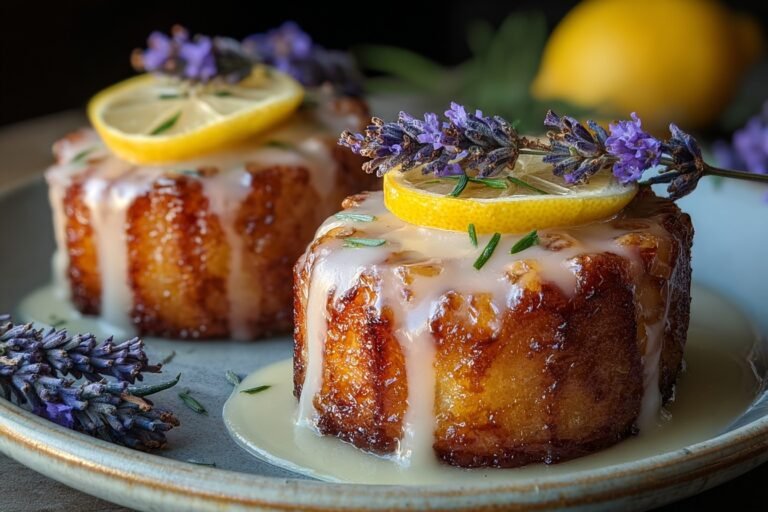
Mini Lemon Cakes With Lavender Glaze
🍋 Bursting with fresh orange & lemon zests – moist citrus cake delivers vitamin C refreshment!
🌸 Silky lavender glaze adds floral elegance; easy bake for spring brunches or tea.
- Total Time: 45 minutes + set
- Yield: 24 mini cakes
Ingredients
– 2 1/2 cups flour, plus extra for the pan
– 1/4 teaspoon salt
– 2/3 cup butter, plus extra for the pan
– 5 tablespoons freshly squeezed orange juice
– 2 tablespoons freshly squeezed lemon juice
– 2 tablespoons water
– Zest of 1 lemon
– Zest of 1 orange
– 2 teaspoons baking powder
– 3 eggs
– 1 1/2 cups sugar
– 1 cup powdered sugar
– 1/4 cup lemon juice, add more if needed
– 2 tablespoons milk
– 1 tablespoon fresh or dried culinary lavender
Instructions
1-First step: get the pan and oven ready Preheat your oven to 350°F. Butter a pan well, then dust it with flour and tap out the excess. This helps the cakes release cleanly after baking, especially if you are using a mini Bundt pan or cupcake pan. Since the batter can be delicate, this little prep step matters more than it seems. Set out all your ingredients before you begin. Citrus bakes move quickly once the mixing starts, and having the lemon juice, orange juice, zest, and eggs ready keeps the process smooth and calm.
2-Second step: mix the dry ingredients In a large bowl, whisk together the flour, baking powder, and salt. Mixing the dry ingredients first helps spread the leavening evenly through the batter, so the mini lemon cakes rise in a balanced way. Once everything looks well combined, set the bowl aside. This is also a good moment to check your flour measure. Too much flour can make the cakes dense, so spoon and level it if possible.
3-Third step: cream the butter with citrus zest In a mixer, beat the butter with the orange zest and lemon zest until smooth. The zest perfumes the butter and helps the citrus flavor spread through the whole batter. Next, add the sugar and beat until the mixture looks light and fluffy, scraping down the bowl as needed. That fluffy stage is worth taking your time on. It helps build a softer crumb and gives the finished cakes a tender texture that feels lovely with the glaze.
4-Fourth step: add the eggs one at a time Add the eggs one at a time, beating well after each addition. This gives the batter time to absorb each egg before the next one goes in. If you rush this part, the mixture can look curdled, so go slowly and let the mixer do the work. By the end of this step, the batter should look smooth, creamy, and slightly glossy.
5-Fifth step: alternate the wet and dry ingredients Now alternate adding the flour mixture and the combined lemon juice, orange juice, and water. Beat until smooth after each addition. Start and end with the flour mixture if you like a steadier batter, and mix only until combined so the cakes stay soft. Use freshly squeezed juices for the best flavor. The fresh citrus gives the cake a cleaner, brighter taste than bottled juice, and the orange adds a mellow sweetness that rounds out the lemon.
6-Sixth step: fill the pan and bake Fill the pan about 3/4 full with batter. If you are making cupcakes, be careful not to overfill the cups, since the batter needs room to rise. Distribute the batter evenly so each cake bakes at the same pace. Bake for 18 to 25 minutes, or until a toothpick inserted in the center comes out clean. Ovens can vary a little, so begin checking near the 18-minute mark. The tops should look set and lightly golden when they are ready.
7-Seventh step: cool and unmold Cool the cakes in the pan for 5 minutes, then invert them onto a wire rack. If you have a rack underneath, place parchment below it to catch any drips later. Let the cakes cool fully before adding glaze, or the icing may slide right off instead of settling into a pretty finish. This part always feels like the big reveal. Once the cakes come out cleanly, you get to see those little golden edges and soft centers that make mini cakes so charming.
8-Eighth step: make the lavender glaze For the glaze, whisk the powdered sugar, lemon juice, and milk until pourable. If it seems too thick, add a bit more lemon juice until it reaches a drizzle-friendly texture. If you love a stronger floral note, you can also fold a small amount of lavender into the glaze for more color and fragrance. For more citrus inspiration, Cleveland Clinic also has a nice overview of the health benefits of lavender, which is a fun read if you are curious about this calming flower.
9-Ninth step: finish, set, and serve Drizzle the glaze over the cooled cakes and sprinkle with lavender. Let the glaze set for 1 to 2 hours before serving, so it firms up nicely and stays pretty on the plate. These mini lemon cakes are lovely on their own, but they also pair well with tea, coffee, or fresh berries. Store leftovers in an airtight container in the refrigerator for 3 to 4 days. They stay soft, bright, and pleasant for snacking, making them a handy dessert for guests or weekday treats.
Last Step:
Please leave a rating and comment letting us know how you liked this recipe! This helps our business to thrive and continue providing free, high-quality recipes for you.Notes
🍊 Freshly squeezed juices maximize bright citrus flavor punch.
🌿 Infuse lavender in warm milk 10 minutes for deeper floral notes.
🧁 Use mini Bundt or muffin tins; line rack with parchment for easy glaze cleanup.
- Prep Time: 20 minutes
- Set: 1-2 hours
- Cook Time: 25 minutes
- Category: Dessert
- Method: Baking
- Cuisine: American
- Diet: Vegetarian
Nutrition
- Serving Size: 1 mini cake
- Calories: 170 kcal
- Sugar: 18g
- Sodium: 100mg
- Fat: 7g
- Saturated Fat: 4g
- Unsaturated Fat: 3g
- Trans Fat: 0g
- Carbohydrates: 25g
- Fiber: 0.5g
- Protein: 2g
- Cholesterol: 40mg