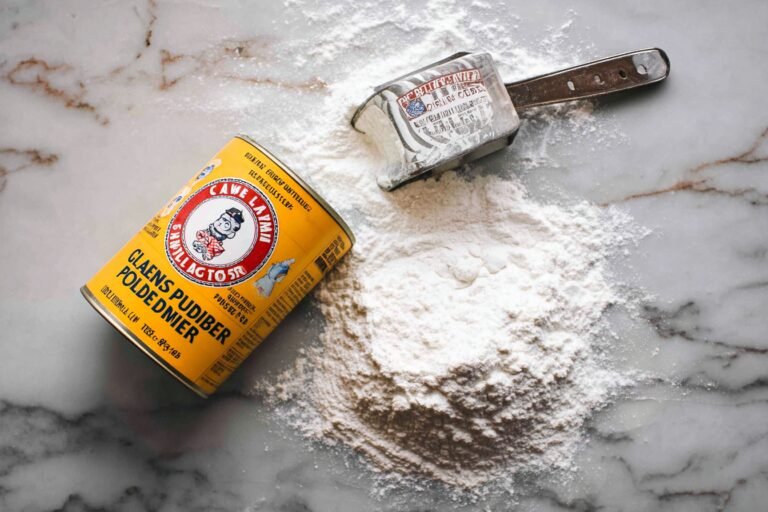
Ingredients
– 1/4 teaspoon baking soda This pure sodium bicarbonate acts as a base and reacts with acids to create bubbles for rising in your batter
– 1 teaspoon baking powder A mix of baking soda, acidic salts like cream of tartar, and starch such as corn starch, which provides a complete leavening system
– 1/2 teaspoon cream of tartar Used as an acidic ingredient when substituting for baking powder, helping to activate baking soda without altering flavor too much
– 1 teaspoon lemon juice or vinegar Another acid option for substitutions, added to baking soda to mimic baking powder’s effects and ensure proper rising
– Honey acidic ingredient that pairs with baking soda
– buttermilk acidic ingredient that pairs with baking soda; use 1 tablespoon to react and produce bubbles in dough
– molasses acidic ingredient that pairs with baking soda
– chocolate acidic ingredient that pairs with baking soda
– yogurt acidic ingredient that pairs with baking soda
– sour cream acidic ingredient that pairs with baking soda
– brown sugar acidic ingredient that pairs with baking soda
– cocoa acidic ingredient that pairs with baking soda
Instructions
1-First Step: Gather Your Ingredients Start by pulling together the essentials like 1/4 teaspoon baking soda or 1 teaspoon baking powder. Measure them out accurately to avoid mistakes, as baking soda reacts fast with acids. This prep sets the stage for smooth baking, especially if you’re adapting for dietary needs like vegan options.
2-Second Step: Mix the Dry Ingredients Combine your baking soda or baking powder with dry items like flour in a bowl. If you’re using baking soda, add an acid such as 1 teaspoon lemon juice at this point. Stir well to distribute evenly, which helps in comparing baking soda vs baking powder for even rising in your batter.
3-Third Step: Add Wet Ingredients Pour in wet components like buttermilk or yogurt, which will trigger the reaction for baking soda. For baking powder, just mixing with moisture starts the process. Be sure to blend quickly if using baking soda to capture those bubbles, making it ideal for quick recipes.
4-Fourth Step: Bake Immediately Pour the batter into your pan and pop it in the oven at 350 degrees Fahrenheit right away, especially for baking soda to keep the rise. Baking powder offers more flexibility with its double-action, so you have a bit more time. This step ensures your treats are light and fluffy, perfect for busy schedules.
5-Final Step: Cool and Serve Once baked, let your goods cool on a rack for 10 minutes to set. This allows you to enjoy the full effect of baking soda vs baking powder in texture. For variations, try adding flavors like chocolate, and serve warm for the best taste. Remember, adaptations for low-calorie options can make this even healthier.
Last Step:
Please leave a rating and comment letting us know how you liked this recipe! This helps our business to thrive and continue providing free, high-quality recipes for you.Notes
⚡ Baking soda causes an immediate reaction; bake promptly to preserve rise.
🧂 Baking powder is best for recipes without acidic ingredients.
🍋 When substituting, add acid carefully to avoid off-flavors.
- Prep Time: 0 minutes
- Cook Time: 0 minutes
- Category: Baking Basics
- Method: Mixing, Baking
- Cuisine: General
Nutrition
- Serving Size: N/A
- Calories: 0
- Sugar: 0
- Sodium: 0
- Fat: 0
- Saturated Fat: 0
- Unsaturated Fat: 0
- Trans Fat: 0
- Carbohydrates: 0
- Fiber: 0
- Protein: 0
- Cholesterol: 0