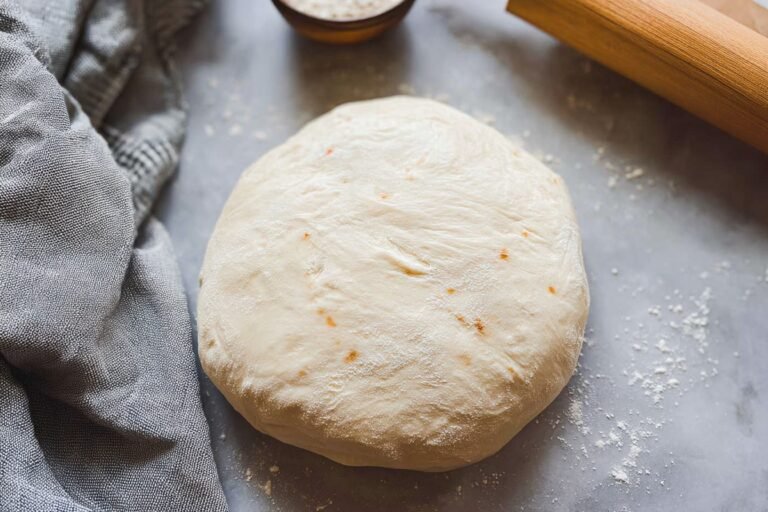
Ingredients
– 2.5 cups all-purpose flour Serves as the primary structure, providing carbohydrates and enabling gluten development for elasticity in yeast-based doughs.
– 1 teaspoon salt Enhances flavor and controls yeast activity, helping to balance the dough’s taste and texture.
– 1 teaspoon instant yeast Acts as a leavening agent, promoting rising through fermentation, which is essential for fluffy breads and requires proper temperature for best results.
– 1 cup warm water Hydrates the mixture, allowing ingredients to combine smoothly and supporting the dough’s pliability, with warmth aiding yeast activation.
– 2 tablespoons olive oil Adds fats for tenderness and moisture, preventing dryness and contributing to the overall richness of the final product.
Instructions
1-First Step: Gather and Mix Ingredients Start by assembling all ingredients on a clean workspace, ensuring everything is at room temperature for optimal results. For basic dough, combine 2.5 cups all-purpose flour, 1 teaspoon salt, and 1 teaspoon instant yeast in a large bowl, as this mixture forms the foundation. Gradually add 1 cup warm water and 2 tablespoons olive oil, stirring until a shaggy dough forms this step, which takes about 2-3 minutes, allows for even hydration and prepares the dough for kneading, adapting easily for gluten-free flours by using starch-based blends.
2-Second Step: Knead the Dough Turn the dough onto a floured surface and knead for 8-10 minutes until it becomes smooth and elastic, developing gluten that gives dough its structure. This process is crucial for yeast-based types, helping to trap air for rising, but for unleavened doughs, you can skip extended kneading. If the dough feels too sticky, add flour one tablespoon at a time, making it adaptable for different humidity levels or dietary needs like low-calorie versions with reduced oil.
3-Third Step: Allow Time for Rising Once kneaded, place the dough in a lightly oiled bowl, cover with a damp cloth, and let it rise in a warm spot for 1-2 hours until doubled in size this fermentation step enhances flavor and texture through yeast activity at around 75°F. For faster results with no-yeast doughs, skip this and move directly to shaping, which suits busy schedules. Temperature control here is key, as cooler environments slow the process, allowing for better gluten development in enriched doughs with eggs and fats.
4-Fourth Step: Shape and Cook the Dough After rising, punch down the dough to release gases, then shape it into your desired form, such as loaves or rolls, taking 5-10 minutes depending on the recipe. Cooking methods vary: bake at 375°F for 20-30 minutes for bread, or boil for pasta-style dough, ensuring even cooking. For laminated doughs, gently fold in fats to create layers, adapting for vegan options by using plant-based oils, and monitor timing to achieve the perfect texture.
5-Final Step: Cool and Use Allow the cooked dough to cool on a wire rack for 10-15 minutes to set its structure, preventing sogginess in items like pastries. This finishes the preparation, making the dough ready for serving or storage, with variations for different flours like rye or barley adding unique flavors. Total preparation time can range from a few minutes for simple doughs to several hours for complex ones, ensuring success with proper techniques for home bakers. For more on tools, check out our guide on essential baking tools to enhance your process.
Last Step:
Please leave a rating and comment letting us know how you liked this recipe! This helps our business to thrive and continue providing free, high-quality recipes for you.Notes
🧑🍳 Keep yeast doughs in a warm, draft-free place to promote proper rising.
🍰 Handle high-fat doughs gently to avoid developing toughness.
📏 Practice folding and rolling techniques carefully for laminated dough layers.
- Prep Time: Varies from a few minutes to several hours depending on dough type
- Rising or resting time: Varies (30 minutes to several hours)
- Cook Time: Varies depending on final product
- Category: Baking Fundamentals
- Method: Mixing, Kneading, Rising, Shaping, Cooking
- Cuisine: General Baking
- Diet: Varies (can be vegetarian, vegan, gluten-free depending on ingredients)