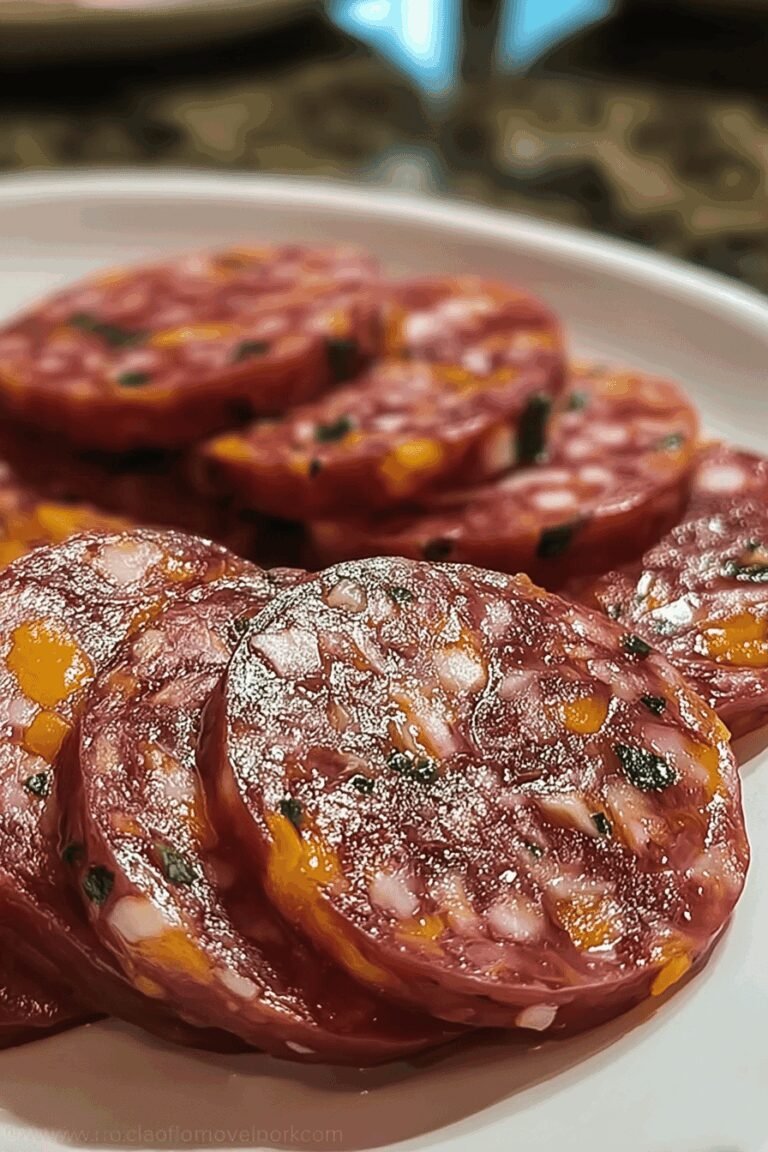
Ingredients
– 3 ½ pounds venison the main protein for a lean base
– 1 pound fatty pork shoulder adds moisture and richness
– ½ pound pork fatback enhances texture and prevents dryness
– 51 grams salt essential for seasoning and preservation
– 6 grams curing salt with sodium nitrate key for safety during drying
– 10 grams dextrose or granulated sugar provides a touch of sweetness for balance
– 1 tablespoon cracked black pepper delivers mild heat and depth
– 1 tablespoon coarsely ground coriander seed adds aromatic, citrusy notes
– 2 teaspoons coarsely ground mustard seed contributes tang and spice
– 1 teaspoon powdered ginger enhances warmth and zest
– ½ teaspoon ground cloves offers a subtle, sweet-spicy finish
– ¼ cup malt vinegar (or substitute with cider vinegar) aids in fermentation and flavor
– ½ cup distilled water used to dissolve the starter culture
– 10 grams starter culture crucial for safe fermentation
– Hog casings, preferably 38-42 mm wide for stuffing and shaping
Instructions
1- Creating venison summer sausage at home is a rewarding process that combines tradition with practical tips for safety and flavor. Start by cutting 3 ½ pounds of venison, 1 pound of fatty pork shoulder, and ½ pound of pork fatback into grinder-sized chunks, trimming away any sinew or silver skin to keep things clean. Mix 10 grams of dextrose, 51 grams of salt, and 6 grams of curing salt with the meat, then refrigerate overnight to let the flavors begin to develop.
2- Next, chill your grinding equipment in the freezer and combine 1 teaspoon of powdered ginger, ½ teaspoon of ground cloves, and half of the 1 tablespoon cracked black pepper, 1 tablespoon coriander seed, and 2 teaspoons mustard seed with the chilled meat and fat. Refrigerate the mixture until it reaches about 30°F, while soaking the hog casings in warm water and chilling the ¼ cup of malt vinegar.
3- Grind the meat mixture first through a coarse 10 mm die, then a fine 4.5 mm die, keeping the temperature below 35°F to maintain quality chill if needed to avoid any issues. After grinding, chill the mixture to 28-32°F, add the remaining spices, the chilled malt vinegar, and 10 grams of starter culture dissolved in ½ cup of distilled water. Mix and knead with cold hands for about 2 minutes until it’s nearly emulsified for a proper bind.
4-Stuffing and Fermenting Steps Cut the hog casings into 2-foot lengths and stuff them loosely with slightly more than 1 foot of sausage per link, leaving extra casing for tying. Compress the stuffed links carefully, remove air pockets by pricking with a sterile needle, and tie the ends with double or triple knots for security.
5- Hang the links on a rack and ferment at 65-80°F with about 85% humidity for 3 days, using a humidifier and open-ended plastic bags while spritzing daily. Follow up with cold smoking for up to 4 hours at under 100°F, then dry in a 50-60°F environment, adjusting humidity gradually over 4-8 weeks for the desired texture. For more ideas on related recipes, check out our guide on spicy seafood options that pair well with sausages.
Last Step:
Please leave a rating and comment letting us know how you liked this recipe! This helps our business to thrive and continue providing free, high-quality recipes for you.Notes
🌡️ Keep meat and equipment very cold (~30°F) during mixing to ensure proper texture and prevent fat smearing.
🧰 Use a dedicated sausage stuffer; avoid using a grinder for stuffing.
🔥 Maintain stable fermentation conditions: 65-80°F with high humidity (~85%) and keep casings moist by daily spritzing.
- Prep Time: 3 hours active prep
- Fermentation, Smoking, and Drying Time: 3 days fermentation, 4 hours smoking, 4-8 weeks drying
- Category: Charcuterie
- Method: Grinding, Fermenting, Smoking, Drying
- Cuisine: Dutch/German-inspired
Nutrition
- Serving Size: 1 serving
- Calories: 168
- Sugar: 1 gram
- Sodium: 833 milligrams
- Fat: 10 grams
- Saturated Fat: 4 grams
- Unsaturated Fat: 6 grams
- Carbohydrates: 1 gram
- Fiber: 1 gram
- Protein: 17 grams
- Cholesterol: 67 milligrams