

Why You’ll Love This Lemon Dijon Salmon
This lemon Dijon Salmon recipe is a quick and tasty choice for anyone wanting a healthy meal that packs great flavor. You can whip it up in just about 20 minutes, making it perfect for busy days when you need something simple yet satisfying. The mix of tangy Dijon mustard and fresh lemon brings out the natural richness of the salmon, creating a dish that’s both light and full of taste.
One reason to try this recipe is its ease of preparation. It comes together in under 25 minutes with a simple marinade and quick oven finish, using just a few ingredients for a flavorful lemon Dijon Salmon that’s ideal for weeknights. The straightforward steps cut down on prep time while delivering a dish that feels fancy. Plus, you’ll love how the lemon-Dijon glaze adds a bright touch without much effort.
The health benefits make it even better. Salmon provides omega-3 fatty acids, protein, and vitamin D, and the light lemon-Dijon coating keeps things low in calories and saturated fat. Choosing wild salmon boosts heart and brain health, and the fresh citrus and mustard enhance the flavor without extra fats, so this recipe fits well for those watching their diet.
You can see why it’s so versatile too. It adapts to various diets, like swapping for a paleo-friendly version or adjusting for gluten-free needs, so lemon Dijon Salmon works for many meals. Whether paired with greens or grains, it’s flexible enough for family dinners or quick lunches. This balance of tang, citrus, and richness sets it apart as a go-to option.
Health Highlights of Lemon Dijon Salmon
For more on how salmon supports your health, check out this guide to salmon’s benefits. It’s packed with useful tips that align with recipes like this one.
Essential Ingredients for Lemon Dijon Salmon
Gathering the right ingredients is key to making this lemon Dijon Salmon recipe shine. Below is a structured list of all the items you need, based on the exact measurements provided. This list includes everything required for the recipe, so you can follow along without missing a thing.
- 1 1/2 pounds wild salmon fillets
- 1 tablespoon extra virgin olive oil
- 1 tablespoon Dijon mustard
- 1 clove garlic, minced
- 1 tablespoon fresh lemon juice (plus lemon slices for topping)
- 1 teaspoon chopped fresh thyme or 1/2 teaspoon dried thyme
- Salt and freshly ground black pepper to taste
These ingredients come together to create a simple yet flavorful dish. Fresh salmon forms the base, while Dijon mustard and lemon juice add that signature tang. Garlic and thyme bring depth, and don’t forget the salt and pepper for seasoning.
This recipe is naturally gluten-free, and you can tweak it for other diets. For vegan options, swap the salmon with tofu or cauliflower and adjust the glaze accordingly.
How to Prepare the Perfect Lemon Dijon Salmon: Step-by-Step Guide
Getting started with lemon Dijon Salmon is easy and fun. Begin by prepping your ingredients, which only takes about 5 minutes. This step ensures everything goes smoothly from there. Follow these clear steps to make a dish that’s ready in no time.
First Steps: Preheat and Prep
Preheat your oven to 400 degrees F and line a baking sheet with foil or a silpat. Place the 1 1/2 pounds wild salmon fillets on the sheet and pat them dry with a paper towel. Season with salt and freshly ground black pepper to taste. This sets the stage for a flavorful bake. In a small bowl, mix 1 tablespoon extra virgin olive oil, 1 clove minced garlic, 1 tablespoon Dijon mustard, 1 tablespoon fresh lemon juice, and 1 teaspoon chopped fresh thyme or 1/2 teaspoon dried thyme.
Adding the Glaze and Baking
Spoon half of the mixture over the salmon fillets and top with lemon slices. Slide the baking sheet into the oven and bake for 8 to 10 minutes. After that, remove it and add the rest of the mustard mixture on top. Put it back in for another 3 to 5 minutes until the fish flakes easily with a fork. Keep an eye on it so it doesn’t overcook. The total cook time is about 15 minutes, making this lemon Dijon Salmon a quick win for any meal.
Tips for Best Results
Cooking time depends on the thickness of your salmon; aim for about 10 minutes per inch. For added flavor, try including fresh lemonade-inspired twists like extra lemon zest in the sauce. Once done, let it rest briefly before serving to keep it juicy.
Protein and Main Component Alternatives
Salmon is great, but you can switch it up based on what you have or your preferences. For instance, try tofu or cauliflower for a plant-based option. Here’s a quick list of swaps to consider:
- Tofu (1 pound pressed and sliced): Marinate and roast for a vegan twist.
- Cauliflower steaks (from 1 large head, cut into 3/4-inch slices): Use the same glaze and bake at 425 degrees F for 20-25 minutes.
- Cod or halibut (1 pound): Cook for 8-12 minutes at 400 degrees F for a leaner fish.
- Trout or Arctic char (1 pound): Bake just like salmon for similar results.
- Tempeh (1 pound, sliced and steamed): Glaze and grill for a bold flavor.
These options help keep the lemon Dijon Salmon adaptable. For low-fat needs, go with white fish or tofu and cut back on oil.
Vegetable, Sauce, and Seasoning Modifications
Make your lemon Dijon Salmon even better with some tweaks. Add veggies like asparagus or tomatoes for a fuller meal. For the sauce, try swapping honey for maple syrup if you want a paleo-friendly version.
- Vegetables: Roast green beans or Brussels sprouts alongside for extra nutrition.
- Sauce variations: Mix in smoked paprika for a warm kick or use Greek yogurt for creaminess.
- Herb swaps: Try basil or chives to change the flavor profile.
These changes let you customize the dish while keeping its core appeal. For low-sodium options, focus on herbs and lemon for taste.
Mastering Lemon Dijon Salmon: Advanced Tips and Variations
Once you’re comfortable with the basics, level up your lemon Dijon Salmon with pro techniques. For example, reverse searing gives you precise control over doneness. This method involves roasting at a lower temperature first, then finishing with a quick sear for a perfect crust.
Flavor and Cooking Hacks
Try a citrus-herb twist by adding orange zest to the glaze. For a smoky version, include smoked paprika and maple syrup. These variations keep the lemon Dijon Salmon exciting and adaptable to different tastes. Don’t forget, you can make the sauce ahead for even easier prep.
As you explore, remember the benefits of lemon juice that enhance this recipe’s appeal.
How to Store Lemon Dijon Salmon: Best Practices
Proper storage keeps your lemon Dijon Salmon fresh and tasty. Cool it to room temperature quickly, then refrigerate in an airtight container for 2-3 days. If you’re freezing, do it right after cooking for up to 2 months. Always label your packages for easy tracking.
For reheating, use a low oven or skillet to keep the fish moist. This makes meal prep simple and helps avoid waste.

FAQs: Frequently Asked Questions About Lemon Dijon Salmon
How long should I bake Lemon Dijon Salmon at 400°F?
Can I substitute Dijon mustard with another type of mustard in this recipe?
Is it okay to use frozen salmon for Lemon Dijon Salmon?
What side dishes pair well with Lemon Dijon Salmon?
How can I store and reheat leftover Lemon Dijon Salmon?
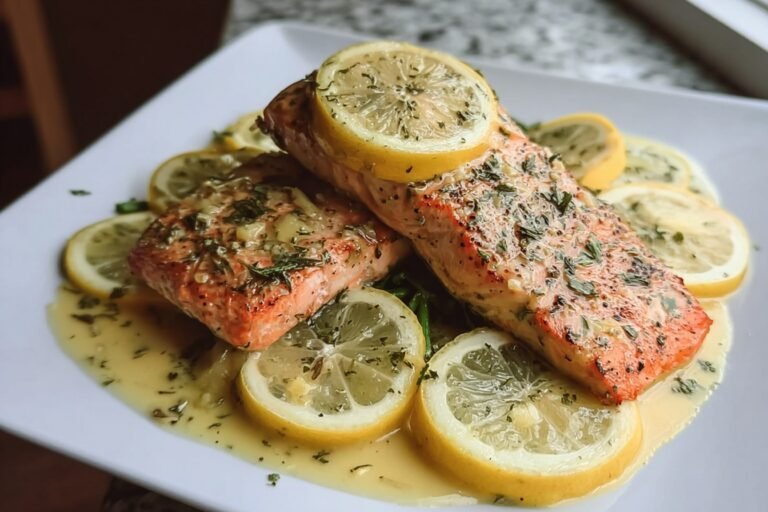
Lemon Dijon Salmon
🍋 Baked Lemon Dijon Salmon with Garlic and Herb Seasoning offers a healthy and flavorful way to enjoy omega-3 rich wild salmon with a tangy, aromatic twist.
🐟 This quick and easy recipe makes it perfect for a nutritious weeknight meal that’s both satisfying and elegant.
- Total Time: 20 minutes
- Yield: 4 servings
Ingredients
– 1 1/2 pounds wild salmon fillets
– 1 tablespoon extra virgin olive oil
– 1 tablespoon Dijon mustard
– 1 clove garlic, minced
– 1 tablespoon fresh lemon juice
– lemon slices for topping
– 1 teaspoon chopped fresh thyme
– 1/2 teaspoon dried thyme
– Salt to taste
– freshly ground black pepper to taste
Instructions
1-First Steps: Preheat your oven to 400 degrees F and line a baking sheet with foil or a silpat. Place the 1 1/2 pounds wild salmon fillets on the sheet and pat them dry with a paper towel. Season with salt and freshly ground black pepper to taste. This sets the stage for a flavorful bake. In a small bowl, mix 1 tablespoon extra virgin olive oil, 1 clove minced garlic, 1 tablespoon Dijon mustard, 1 tablespoon fresh lemon juice, and 1 teaspoon chopped fresh thyme or 1/2 teaspoon dried thyme.
2-Adding the Glaze and Baking: Spoon half of the mixture over the salmon fillets and top with lemon slices. Slide the baking sheet into the oven and bake for 8 to 10 minutes. After that, remove it and add the rest of the mustard mixture on top. Put it back in for another 3 to 5 minutes until the fish flakes easily with a fork. Keep an eye on it so it doesn’t overcook. The total cook time is about 15 minutes, making this lemon Dijon Salmon a quick win for any meal.
3-Tips for Best Results: Cooking time depends on the thickness of your salmon; aim for about 10 minutes per inch. For added flavor, try including fresh lemonade-inspired twists like extra lemon zest in the sauce. Once done, let it rest briefly before serving to keep it juicy.
Last Step:
Please leave a rating and comment letting us know how you liked this recipe! This helps our business to thrive and continue providing free, high-quality recipes for you.Notes
⏲ Cooking time depends on thickness; allow about 10 minutes per inch of salmon.
🍗 Dijon sauce can be made ahead or used as a marinade for other proteins like chicken.
🍠 Make this a sheet pan meal by adding potatoes and vegetables, placing salmon on the pan for the last 15 minutes of cooking.
- Prep Time: 5 minutes
- Cook Time: 15 minutes
- Category: Main Course
- Method: Baking
- Cuisine: American
- Diet: Gluten-Free, Paleo, Whole30
Nutrition
- Serving Size: 6 ounces
- Calories: 277
- Sugar: 1 g
- Sodium: 118 mg
- Fat: 14 g
- Saturated Fat: 2 g
- Carbohydrates: 1 g
- Fiber: 1 g
- Protein: 34 g
- Cholesterol: 94 mg