
Why You’ll Love These Claussen Pickle Recipes
If you have been craving that cold, crunchy, garlicky bite from Claussen Pickle Recipes, this homemade version is going to hit the spot. It is quick to mix, easy to pack, and gives you that classic deli-style pickle flavor right from your own fridge. I love recipes like this because they fit busy schedules and still feel a little special.
These homemade Claussen-style pickles are crisp, tangy, and ready in just a few days, so you do not have to wait weeks to enjoy them.
- Easy to prepare: You only need about 25 minutes of hands-on time. The brine comes together in a pitcher, the cucumbers get trimmed and halved, and the jars do the rest of the work while they sit on the counter and in the fridge.
- Great for simple, lighter snacking: One pickle has just 20 calories, 3 grams of carbohydrates, and 1 gram of fiber. That makes these Claussen Pickle Recipes a smart choice for snack plates, sandwiches, and lunch boxes.
- Flexible for many eaters: This recipe works well for home cooks, students, busy parents, and anyone who wants a crunchy refrigerator pickle without complicated canning steps. You can also adjust the spice level a little by changing the red pepper flakes.
- Bold, classic flavor: The mix of dill seed, coriander, mustard seed, black peppercorns, garlic, vinegar, and salt gives you that signature briny snap people love in Claussen-style pickles.
For readers who like learning more about the health side of pickles, this Cleveland Clinic article on the surprising health benefits of pickles is a helpful read. You can also check out WebMD’s guide to cucumber health benefits for a closer look at the veggie behind the crunch.
These pickles also fit nicely with meal planning. Keep a jar near quick dinners, pair them with grilled meats, or tuck them into sandwiches for a sharp, fresh bite. If you enjoy easy homemade sides, you might also like serving them alongside hearty dishes such as Instant Pot Pot Roast Recipe or Garlic Butter Pork Chops.
Ingredients for Claussen Pickle Recipes
This recipe keeps the ingredient list simple, but each item plays an important role in flavor, texture, and safety.
- 20 to 25 small to medium pickling cucumbers
- 2 quarts cold water
- 1/2 cup white vinegar
- 1/3 cup canning or pickling salt
- 1 teaspoon coriander seed
- 1/2 teaspoon mustard seed
- 1/4 teaspoon red pepper flakes
- 1 tablespoon black peppercorns
- 1 tablespoon dill seed
- 1/4 teaspoon dried garlic
- Fine mesh colander
- 4-cup measuring cup
- Optional pickle crisper, 1/4 teaspoon per quart jar
Use firm, knobby pickling cucumbers with no wax coating for the best crunch. If you want even firmer pickles, the optional pickle crisper can help keep the texture snappy.
How to Prepare the Perfect Claussen Pickle Recipes: Step-by-Step Guide
Making Claussen Pickle Recipes at home is easier than a lot of people think. The key is to keep the cucumbers crisp, make a balanced brine, and give the jars just enough time to develop that familiar tangy flavor. The prep time is about 25 minutes, and then the fridge does most of the work.
First Step: Make the brine
Start with a clean pitcher or mixing container. Add 2 quarts cold water and 1/2 cup white vinegar, then stir in 1/3 cup canning or pickling salt, 1 teaspoon coriander seed, 1/2 teaspoon mustard seed, 1/4 teaspoon red pepper flakes, 1 tablespoon black peppercorns, and 1/4 teaspoon dried garlic. Stir until the salt dissolves as much as possible.
Use vinegar with at least 5 percent acidity and do not reduce the amount, because the vinegar helps with flavor and safety. A 4-cup measuring cup can be handy if you want to portion the liquid before pouring it into jars. If you like a crunchier pickle, add 1/4 teaspoon of pickle crisper to each quart jar later in the process.
Second Step: Wash and trim the cucumbers
Wash the pickling cucumbers well under cool running water. Trim 1/8 inch off the blossom end of each cucumber, since leaving that tip on can make the pickles turn soft or mushy. This small step makes a big difference in texture.
After trimming, slice each cucumber in half lengthwise. That shape helps the brine move around the cucumbers more evenly and gives you classic spear-style refrigerator pickles.
Third Step: Pack the jars
Divide the dill seed and dried garlic between two clean quart jars. If you are using pickle crisper, add 1/4 teaspoon to each jar now. Then fill the jars with the cucumber halves, packing them snugly but not so tightly that the brine cannot move between them.
Clean jars matter a lot here, so wash everything well before you begin. It also helps to wash your hands before handling the cucumbers, especially if you are packing several jars at once.
Fourth Step: Strain and pour the brine
Set the fine mesh colander over a bowl or another pitcher and strain the brine so the whole spices stay separated from the liquid. Distribute the solids evenly between the jars. Then pour the strained brine over the cucumbers until they are covered up to the bottom of the jar neck.
Make sure the cucumbers stay submerged. If they float, gently press them down with a clean utensil. Keeping everything below the brine line helps with even pickling and better texture.
Fifth Step: Let the pickles rest on the counter
Cover the jars lightly with lids. Do not tighten them all the way yet, because the jars need some air exchange during the first day. Leave the jars on the counter for 1 day. During this time, the flavor begins to develop and the brine starts working into the cucumbers.
Set the jars in a cool spot away from direct sunlight. If you notice a little surface film or scum forming, that can happen during fermentation. Skim it off with a clean spoon. A white sediment at the bottom later on is normal and not harmful.
Sixth Step: Refrigerate until ready
After the first day, move the jars to the refrigerator for 2 to 3 more days. The pickles will become more flavorful and crisp as they chill. By the end of that short wait, they should taste close to the classic Claussen style people love.
Once the flavor is where you want it, secure the lids and keep the jars in the refrigerator. The pickles can last up to six months when stored properly. For many people, the best flavor shows up after a few days, but they keep developing nicely for a couple of weeks.
Seventh Step: Serve and enjoy
Serve the pickles cold straight from the jar, or slice them into sandwich toppings, chopped relish, or snack plates. They work well beside burgers, grilled chicken, pulled pork, and picnic food. If you are planning a bigger spread, these pickles are also great next to dishes like Cowboy Cornbread Casserole or Paula Deen Mac and Cheese.
The texture is best when they stay cold and submerged in brine. If you see a bit of harmless sediment, just leave it alone or rinse the pickles before serving if you prefer. The flavor will still be bright, sharp, and pleasantly garlicky.
| Step | Time | What Happens |
|---|---|---|
| Mix the brine | 5 minutes | Salt and spices dissolve into the vinegar water |
| Prep cucumbers | 10 minutes | Wash, trim blossom ends, and slice lengthwise |
| Pack jars | 5 minutes | Fill jars with cucumbers, dill seed, and garlic |
| Rest on counter | 1 day | Flavor starts developing at room temperature |
| Refrigerate | 2 to 3 days | Pickles finish chilling and crisping |

Dietary Substitutions to Customize Your Claussen Pickle Recipes
Protein and Main Component Alternatives
Since this is a pickle recipe, the main ingredient is the cucumber rather than a protein. Still, there are plenty of ways to adapt the batch to fit different tastes or what you already have on hand. Small Persian cucumbers can work if pickling cucumbers are not available, though the classic flavor is best with firm Kirby-style cucumbers.
If you are serving these with protein-heavy meals, they pair well with chicken, pork, salmon, or turkey dishes. That makes them an easy side for family dinners and meal prep lunches.
Vegetable, Sauce, and Seasoning Modifications
You can change the spice profile without losing the spirit of Claussen Pickle Recipes. For a stronger dill taste, add a bit more dill seed. For extra heat, keep the red pepper flakes or increase them slightly. If you want a softer garlic note, use just a little less dried garlic.
Some cooks like adding fresh dill heads or a grape leaf for added crunch, but this version uses the exact ingredients listed in the recipe prompt. If you need to keep sodium lower, this is not the best recipe to cut salt in, since pickling salt is a core part of the brine. The better move is to enjoy smaller portions.
When making refrigerator pickles, texture depends on crisp cucumbers, proper trimming, and keeping the cucumbers fully covered by brine.
Mastering Claussen Pickle Recipes: Advanced Tips and Variations
A few small habits can make a big difference in the final jar. First, always choose firm cucumbers with no soft spots. Second, rinse and dry your jars well so there is no leftover residue. Third, keep the blossom ends trimmed, since that is one of the biggest reasons pickles turn soft.
If you want a stronger spice note, let the jars sit an extra day in the refrigerator before opening them. If you want a milder pickle, taste them after the first full day of chilling and use them sooner. The flavor will still be balanced, but the cucumber bite will stand out more.
For busy weeks, you can prep the brine in advance and store it in the fridge until you are ready to pack the jars. That makes the recipe especially useful for working professionals, students, and parents who like quick kitchen projects. Refrigerator pickles are one of those low-effort recipes that feel impressive without requiring much active time.
For serving, try slicing the pickles into spears or rounds and adding them to sandwiches, burgers, or snack boards. They also look nice next to hearty comfort foods, and their bright color makes any plate feel more lively. If you love homemade side dishes, a batch of these pickles fits right in with recipes like One Pan Chicken or Meatloaf with Brown Gravy.
How to Store Claussen Pickle Recipes: Best Practices
Once the pickles are ready, screw the lids on tightly and store the jars in the refrigerator. They should stay good for up to six months when kept cold and submerged in brine. For the best crunch, always use clean utensils when removing pickles from the jar.
Freezing is not a great choice if you want to keep the classic crisp texture. It can change the bite and make the cucumbers softer when thawed. Since this is a refrigerator pickle recipe, cold storage is the best method.
There is no reheating needed for this recipe. In fact, serving them chilled is part of what makes Claussen Pickle Recipes taste so refreshing. If you are prepping for a party or meal plan, keep the cucumbers packed tightly and label each jar with the date you made them so you know when they are at their best.
Nutrition Facts for Claussen Pickle Recipes
Per serving of 1 pickle:
| Nutrient | Amount |
|---|---|
| Calories | 20 |
| Carbohydrates | 3 grams |
| Sodium | 1647 milligrams |
| Potassium | 199 milligrams |
| Fiber | 1 gram |
| Sugar | 1 gram |
| Vitamin A | 110 IU |
| Vitamin C | 4.5 milligrams |
| Calcium | 30 milligrams |
| Iron | 0.4 milligrams |
Because these pickles are salty by nature, they are best enjoyed as a snack or side in moderate portions. They can still fit into many eating patterns, especially when paired with other fresh foods.
FAQs: Frequently Asked Questions About Claussen Pickle Recipes
How do I make copycat Claussen pickles at home?
What ingredients do I need for a Claussen pickle recipe?
What causes scum or film on top of homemade Claussen pickles?
What causes white sediment at the bottom of my Claussen pickle jar?
How long do homemade Claussen pickles last in the fridge?
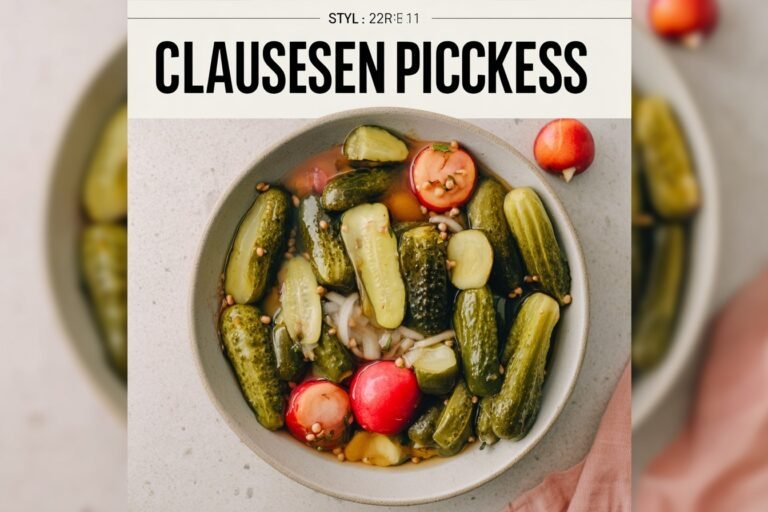
Claussen Pickle Recipes
🥒 Crunchy, garlicky homemade pickles bursting with flavor, mimicking Claussen’s famous taste for a probiotic-rich snack.
🥬 Low-calorie, vitamin-packed treat that’s easy to make at home and stores for months in your fridge.
- Total Time: 3 days 25 minutes
- Yield: 20-25 pickles (2 quarts)
Ingredients
Instructions
1-First Step: Make the brine Start with a clean pitcher or mixing container. Add 2 quarts cold water and 1/2 cup white vinegar, then stir in 1/3 cup canning or pickling salt, 1 teaspoon coriander seed, 1/2 teaspoon mustard seed, 1/4 teaspoon red pepper flakes, 1 tablespoon black peppercorns, and 1/4 teaspoon dried garlic. Stir until the salt dissolves as much as possible. Use vinegar with at least 5 percent acidity and do not reduce the amount, because the vinegar helps with flavor and safety. A 4-cup measuring cup can be handy if you want to portion the liquid before pouring it into jars. If you like a crunchier pickle, add 1/4 teaspoon of pickle crisper to each quart jar later in the process.
2-Second Step: Wash and trim the cucumbers Wash the pickling cucumbers well under cool running water. Trim 1/8 inch off the blossom end of each cucumber, since leaving that tip on can make the pickles turn soft or mushy. This small step makes a big difference in texture. After trimming, slice each cucumber in half lengthwise. That shape helps the brine move around the cucumbers more evenly and gives you classic spear-style refrigerator pickles.
3-Third Step: Pack the jars Divide the dill seed and dried garlic between two clean quart jars. If you are using pickle crisper, add 1/4 teaspoon to each jar now. Then fill the jars with the cucumber halves, packing them snugly but not so tightly that the brine cannot move between them. Clean jars matter a lot here, so wash everything well before you begin. It also helps to wash your hands before handling the cucumbers, especially if you are packing several jars at once.
4-Fourth Step: Strain and pour the brine Set the fine mesh colander over a bowl or another pitcher and strain the brine so the whole spices stay separated from the liquid. Distribute the solids evenly between the jars. Then pour the strained brine over the cucumbers until they are covered up to the bottom of the jar neck. Make sure the cucumbers stay submerged. If they float, gently press them down with a clean utensil. Keeping everything below the brine line helps with even pickling and better texture.
5-Fifth Step: Let the pickles rest on the counter Cover the jars lightly with lids. Do not tighten them all the way yet, because the jars need some air exchange during the first day. Leave the jars on the counter for 1 day. During this time, the flavor begins to develop and the brine starts working into the cucumbers. Set the jars in a cool spot away from direct sunlight. If you notice a little surface film or scum forming, that can happen during fermentation. Skim it off with a clean spoon. A white sediment at the bottom later on is normal and not harmful.
6-Sixth Step: Refrigerate until ready After the first day, move the jars to the refrigerator for 2 to 3 more days. The pickles will become more flavorful and crisp as they chill. By the end of that short wait, they should taste close to the classic Claussen style people love. Once the flavor is where you want it, secure the lids and keep the jars in the refrigerator. The pickles can last up to six months when stored properly. For many people, the best flavor shows up after a few days, but they keep developing nicely for a couple of weeks.
7-Seventh Step: Serve and enjoy Serve the pickles cold straight from the jar, or slice them into sandwich toppings, chopped relish, or snack plates. They work well beside burgers, grilled chicken, pulled pork, and picnic food. If you are planning a bigger spread, these pickles are also great next to dishes like Cowboy Cornbread Casserole or Paula Deen Mac and Cheese. The texture is best when they stay cold and submerged in brine. If you see a bit of harmless sediment, just leave it alone or rinse the pickles before serving if you prefer. The flavor will still be bright, sharp, and pleasantly garlicky.
Last Step:
Please leave a rating and comment letting us know how you liked this recipe! This helps our business to thrive and continue providing free, high-quality recipes for you.Notes
🥒 Always trim the blossom end of cucumbers to avoid mushy pickles.
🧂 Use only pickling or coarse kosher salt to prevent cloudy brine.
🔍 Add pickle crisper to jars for maximum crunchiness.
- Prep Time: 25 minutes
- Fermentation & Refrigeration: 3 days
- Cook Time: 0 minutes
- Category: Condiments
- Method: Fermenting
- Cuisine: American
- Diet: Vegan, Gluten-Free, Low-Calorie
Nutrition
- Serving Size: 1 pickle
- Calories: 20 kcal
- Sugar: 1g
- Sodium: 1647mg
- Fat: 0g
- Saturated Fat: 0g
- Unsaturated Fat: 0g
- Trans Fat: 0g
- Carbohydrates: 3g
- Fiber: 1g
- Protein: 1g
- Cholesterol: 0mg