
Banh Canh Cua: Why This Vietnamese Crab Tapioca Noodle Soup Wins Hearts
Banh Canh Cua is the kind of bowl that makes you pause after the first sip. The broth is savory, a little sweet from crab and vegetables, and rich without feeling heavy. Thick tapioca noodles soak up all that flavor, while crab, prawns, and pork hock make every bite satisfying.
This Banh Canh Cua recipe brings together comfort, texture, and deep seafood flavor in one beautiful bowl.
Why you’ll love this bowl
- Easy to follow at home: Even though the broth takes time, the steps are simple and broken into manageable parts, making this an approachable banh canh recipe for home cooks.
- Big flavor and nourishing ingredients: Crab, dried squid, scallops, daikon, jicama, and pork hock create a rich broth with protein, minerals, and a naturally sweet finish.
- Great for family meals: This vietnamese crab soup serves 10, so it works well for gatherings, meal prep, and weekend cooking.
- Flexible toppings: You can add blood jelly, extra herbs, chili, or lime juice to fit your taste and dietary style.
If you enjoy cozy bowls like this, you may also love our easy homemade ramen recipe, which has the same comforting feel with a different flavor profile.
Essential Ingredients for Banh Canh Cua
Here is the full ingredient list for this authentic banh canh cua recipe. Each item plays an important role in building the broth, texture, and final toppings.
Main ingredients
- 10 liters water – the base for the rich soup stock.
- 1 pork hock – adds body, collagen, and deep savory flavor.
- 30 grams dried squid – brings smoky seafood aroma after grilling.
- 800 grams daikon, peeled – adds gentle sweetness to the broth.
- 400 grams jicama, peeled – gives extra natural sweetness and balance.
- 70 grams dehydrated scallops – boosts umami and seafood depth.
- 2 tablespoons annatto seeds – adds color and a mild earthy note.
- 1 tablespoon oil – helps bloom the annatto seeds.
- 70 grams rock sugar – rounds out the broth with soft sweetness.
- 6 tablespoons salt – seasons the soup base.
- 1/2 US cup fish sauce – gives the broth its classic Vietnamese saltiness and depth.
- 1 1/2 tablespoons chicken bouillon powder – adds extra savoriness.
- 500 grams frozen crab meat – provides sweet crab flavor and texture.
- 1 crab – simmers in the soup for a deeper crab taste.
- 20 fresh prawns, peeled and deveined – become the prawn balls for added protein and flavor.
- 1 red shallot, finely chopped – builds the aromatic prawn paste.
- 3 cloves garlic, finely chopped – gives the prawn paste a savory base.
- 1 sprig spring onion, finely chopped – adds freshness to the paste.
- 1 tablespoon oil (for frying aromatics) – used to cook the shallot, garlic, and spring onion.
- 1/4 teaspoon salt – seasons the prawn mixture.
- 1/2 teaspoon sugar – balances the seafood flavors.
- 1 teaspoon chicken bouillon powder – adds savoriness to the prawn paste.
- 1/2 teaspoon pepper – gives light heat and aroma.
- 1/2 teaspoon fish sauce – sharpens the prawn paste flavor.
- 1/2 US cup potato starch – thickens the broth and gives body.
- 1/4 US cup water – mixed with starch to make a slurry.
- Cooking oil – used for frying the prawn balls until golden.
- 2 kilograms banh canh tapioca noodles – the chewy noodles that make the dish special.
- 1 box blood jelly, optional – a classic topping for extra richness.
- Coriander, finely chopped – fresh garnish.
- Spring onion, finely chopped – bright finishing touch.
- Fried onions – adds crunch and aroma.
- Pepper – for final seasoning.
- Lime juice – lifts the broth at the table.
Special dietary options
- Vegan: Swap crab, prawns, pork hock, fish sauce, and chicken bouillon for mushroom stock, tofu puffs, soy sauce, and king oyster mushrooms.
- Gluten-free: This dish is naturally close to gluten-free if your fish sauce and bouillon powder are certified gluten-free.
- Low-calorie: Use less noodle, skip the blood jelly, and increase daikon, jicama, and herbs for a lighter bowl.
For more ingredient ideas in comforting Asian-style dishes, you may like our Asian ramen salad for a fresh noodle-focused side.
How to Prepare the Perfect Banh Canh Cua: Step-by-Step Guide
Step 1: Build the broth base
Add the 1 pork hock to 10 liters water in a large pot. Set the heat to low-medium and let it come to a gentle simmer. This slow start helps draw out flavor without making the broth cloudy. Keep the lid partially on so the pot stays steady while the stock develops.
Step 2: Add smoky seafood depth
Grill the 30 grams dried squid for a minute or two until fragrant, then add it to the broth. This step gives the soup a gentle smoky note that makes Banh Canh Cua taste much more layered. While that simmers, cut the 800 grams daikon and 400 grams jicama into large chunks.
Step 3: Simmer the vegetables and scallops
Turn the heat to high, then add the daikon, jicama, and 70 grams dehydrated scallops to the pot. Once it returns to a simmer, lower the heat and cook for about 40 minutes, or until the vegetables are soft and sweet. Remove the hock pieces and set them aside once the stock is ready.
Step 4: Add color and season the soup
Heat 1 tablespoon oil with 2 tablespoons annatto seeds in a small pan for about 1 minute. Strain the orange oil into the broth. Then season the soup with 6 tablespoons salt, 70 grams rock sugar, 1/2 US cup fish sauce, and 1 1/2 tablespoons chicken bouillon powder. Taste the broth and adjust if needed, but keep in mind the crab and noodles will add more flavor later.
Step 5: Make the prawn paste
In another pan, brown the 3 cloves garlic, 1 red shallot, and 1 sprig spring onion in 1 tablespoon oil. Let everything cool before mixing it into a paste with 1/4 teaspoon salt, 1/2 teaspoon sugar, 1 teaspoon chicken bouillon powder, 1/2 teaspoon pepper, 1/2 teaspoon fish sauce, and the 20 peeled and deveined prawns. For a springier texture, slap the paste against a hard surface a few times before shaping it.
Step 6: Shape and fry the prawn balls
Scoop the paste into small balls and fry them in hot cooking oil until golden and cooked through. They should look lightly crisp on the outside and springy inside. This adds a fun texture contrast to the soft noodles and broth.
Step 7: Add crab and finish the broth
Add the 500 grams frozen crab meat to the soup, then place the 1 whole crab into the pot and cook for about 15 minutes. Remove the crab when it is cooked. At this point, the broth should smell deeply of seafood and sweet aromatics. If you want a stronger crab taste, fresh crab is even better when available.
Step 8: Thicken the soup
Mix the 1/2 US cup potato starch with 1/4 US cup water to form a smooth slurry. Stir the broth on low heat while slowly pouring in the slurry. Keep stirring until the soup thickens to a silky, glossy texture. This is the signature finish for banh canh and gives the broth its cozy body.
Step 9: Cook the noodles separately
Boil water in a separate pot. Add the 2 kilograms banh canh tapioca noodles and cook for 3 to 5 minutes, or until tender and chewy. Strain immediately so they do not get too soft. If you want extra help with noodle texture, you can also try the same careful noodle handling tips from our easy homemade ramen guide.
Step 10: Assemble and serve
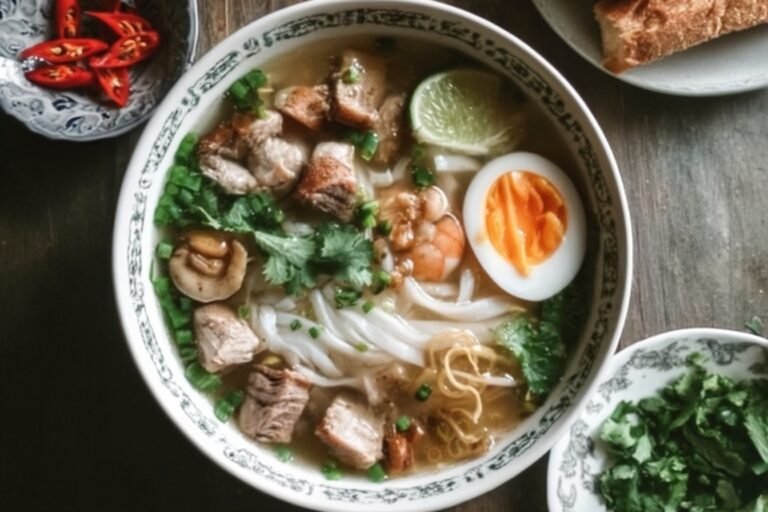
Place noodles in each bowl, then top with pork hock, prawn balls, crab, and the optional 1 box blood jelly. Ladle the hot soup over everything. Finish with finely chopped coriander, spring onion, fried onions, pepper, and a squeeze of lime juice. Serve hot and let everyone season their own bowl at the table.
| Part | Time | Notes |
|---|---|---|
| Prep | 40 minutes | Chop vegetables, clean seafood, and mix the prawn paste. |
| Cook | 2 hours | Includes broth simmering, frying, and noodle cooking. |
| Stock cooking | 3 hours 30 minutes | Slow simmer for full flavor development. |
| Total | 6 hours 10 minutes | Makes 10 servings. |
Protein and Main Component Alternatives
If you cannot find every item for this banh canh cua recipe, there are still good ways to get close to the same cozy result.
- Crab: Mud crab gives the best flavor, but blue swimmer crab or Dungeness crab also work well. If you want easier prep, use just the claws.
- Prawns: If prawns are not available, small shrimp can stand in for the prawn balls.
- Pork hock: You can use pork bones, pork neck bones, or another preferred cut for a different richness level.
- Dried squid and scallops: These bring depth, but if you cannot find them, simmer extra crab shells or add more seafood stock.
- Frozen crab meat: Seafood market crab meat is often better quality than standard supermarket options.
Vegetable, Sauce, and Seasoning Modifications
The beauty of vietnamese crab noodle soup is that you can make small changes without losing the spirit of the dish.
Vegetable swaps
- Replace jicama with more daikon if needed.
- Add chargrilled onion or charred shallots for extra sweetness.
- Keep the vegetables chunky so they do not break down in the long simmer.
Sauce and seasoning ideas
- Use less fish sauce if you prefer a softer salt level.
- Add more lime juice at the table for a brighter finish.
- Use chili oil or fresh sliced chili if you like heat.
- Swap some chicken bouillon for seafood stock powder if that fits your taste.
Diet-friendly adjustments
- For a lighter bowl, reduce the noodles and increase the broth and herbs.
- For lower sodium, cut back on the salt and fish sauce, then taste in small steps.
- For a fuller seafood note, add more crab meat and less pork hock.
Fresh herbs, a squeeze of lime, and a little pepper at the end can completely change the mood of the bowl.
Mastering Banh Canh Cua: Advanced Tips and Variations
Pro cooking techniques
For the best authentic banh canh cua recipe, keep the broth at a gentle simmer instead of a hard boil. That helps keep it clear and sweet. If you want even more flavor, chargrill the vegetables with skin on until blackened, then peel before adding them to the pot. You can also use fresh crab to naturally sweeten the broth and give it a fuller seafood aroma.
Flavor variations
Some families make this dish richer with more crab roe, while others keep it cleaner and lighter. You can swap mud crab for claw meat only, add more scallions, or spoon in extra fried shallots. For a deeper finish, season the prawns based on their natural saltiness before turning them into paste.
Presentation tips
Make the bowl look inviting by layering the noodles first, then arranging the pork hock, crab, and prawn balls on top. Finish with coriander, spring onion, fried onions, and black pepper. A wedge of lime on the side gives everyone control over the final flavor.
Make-ahead options
You can cook the broth a day ahead and chill it overnight, which also makes it easier to skim off any fat. The prawn balls can be shaped in advance and refrigerated. Cook the noodles right before serving so they stay soft and springy. This is a smart approach for busy parents, students, and working professionals who want a special meal without last-minute stress.
How to Store Banh Canh Cua: Best Practices
Refrigeration
Store the broth, noodles, and toppings separately if possible. The soup base keeps well in the fridge for up to 3 days. Noodles are best eaten fresh, but you can refrigerate them for 1 to 2 days with a light coat of oil to reduce sticking.
Freezing
Freeze the broth without noodles for up to 1 month. Let it cool fully first, then portion it into containers. Crab meat and prawn balls can also be frozen separately, though the texture is best when freshly cooked.
Reheating
Reheat the broth gently over medium heat until steaming. Avoid boiling hard, since that can make the crab and prawn pieces tough. Warm the noodles quickly in hot water before serving.
Meal prep considerations
If you are cooking for the week, make the stock, prawn balls, and toppings ahead of time, then boil noodles only when you are ready to eat. That way, the final bowl still tastes fresh and the noodles stay chewy.

FAQs: Frequently Asked Questions About Banh Canh Cua
What is banh canh cua?
What is the best crab to use for banh canh cua?
How do I stop banh canh cua noodles from sticking together?
What can I substitute for potato starch in banh canh cua noodles?
How long does it take to make banh canh cua at home?
Banh Canh Cua
🦀 Immerse yourself in an authentic Vietnamese crab noodle soup with a rich, sweet-savory broth that’s deeply comforting and flavorful!
🍜 Thick tapioca noodles loaded with fresh seafood make this hearty dish perfect for sharing with family or friends.
- Total Time: 6 hours 10 minutes
- Yield: 10 servings
Ingredients
– 10 liters water – the base for the rich soup stock
– 1 pork hock – adds body, collagen, and deep savory flavor
– 30 grams dried squid – brings smoky seafood aroma after grilling
– 800 grams daikon, peeled – adds gentle sweetness to the broth
– 400 grams jicama, peeled – gives extra natural sweetness and balance
– 70 grams dehydrated scallops – boosts umami and seafood depth
– 2 tablespoons annatto seeds – adds color and a mild earthy note
– 1 tablespoon oil – helps bloom the annatto seeds
– 70 grams rock sugar – rounds out the broth with soft sweetness
– 6 tablespoons salt – seasons the soup base
– 1/2 US cup fish sauce – gives the broth its classic Vietnamese saltiness and depth
– 1 1/2 tablespoons chicken bouillon powder – adds extra savoriness
– 500 grams frozen crab meat – provides sweet crab flavor and texture
– 1 crab – simmers in the soup for a deeper crab taste
– 20 fresh prawns, peeled and deveined – become the prawn balls for added protein and flavor
– 1 red shallot, finely chopped – builds the aromatic prawn paste
– 3 cloves garlic, finely chopped – gives the prawn paste a savory base
– 1 sprig spring onion, finely chopped – adds freshness to the paste
– 1 tablespoon oil (for frying aromatics) – used to cook the shallot, garlic, and spring onion
– 1/4 teaspoon salt – seasons the prawn mixture
– 1/2 teaspoon sugar – balances the seafood flavors
– 1 teaspoon chicken bouillon powder – adds savoriness to the prawn paste
– 1/2 teaspoon pepper – gives light heat and aroma
– 1/2 teaspoon fish sauce – sharpens the prawn paste flavor
– 1/2 US cup potato starch – thickens the broth and gives body
– 1/4 US cup water – mixed with starch to make a slurry
– Cooking oil – used for frying the prawn balls until golden
– 2 kilograms banh canh tapioca noodles – the chewy noodles that make the dish special
– 1 box blood jelly, optional – a classic topping for extra richness
– Coriander, finely chopped – fresh garnish
– Spring onion, finely chopped – bright finishing touch
– Fried onions – adds crunch and aroma
– Pepper – for final seasoning
– Lime juice – lifts the broth at the table
Instructions
1-Step 1: Build the broth base Add the 1 pork hock to 10 liters water in a large pot. Set the heat to low-medium and let it come to a gentle simmer. This slow start helps draw out flavor without making the broth cloudy. Keep the lid partially on so the pot stays steady while the stock develops.
2-Step 2: Add smoky seafood depth Grill the 30 grams dried squid for a minute or two until fragrant, then add it to the broth. This step gives the soup a gentle smoky note that makes Banh Canh Cua taste much more layered. While that simmers, cut the 800 grams daikon and 400 grams jicama into large chunks.
3-Step 3: Simmer the vegetables and scallops Turn the heat to high, then add the daikon, jicama, and 70 grams dehydrated scallops to the pot. Once it returns to a simmer, lower the heat and cook for about 40 minutes, or until the vegetables are soft and sweet. Remove the hock pieces and set them aside once the stock is ready.
4-Step 4: Add color and season the soup Heat 1 tablespoon oil with 2 tablespoons annatto seeds in a small pan for about 1 minute. Strain the orange oil into the broth. Then season the soup with 6 tablespoons salt, 70 grams rock sugar, 1/2 US cup fish sauce, and 1 1/2 tablespoons chicken bouillon powder. Taste the broth and adjust if needed, but keep in mind the crab and noodles will add more flavor later.
5-Step 5: Make the prawn paste In another pan, brown the 3 cloves garlic, 1 red shallot, and 1 sprig spring onion in 1 tablespoon oil. Let everything cool before mixing it into a paste with 1/4 teaspoon salt, 1/2 teaspoon sugar, 1 teaspoon chicken bouillon powder, 1/2 teaspoon pepper, 1/2 teaspoon fish sauce, and the 20 peeled and deveined prawns. For a springier texture, slap the paste against a hard surface a few times before shaping it.
6-Step 6: Shape and fry the prawn balls Scoop the paste into small balls and fry them in hot cooking oil until golden and cooked through. They should look lightly crisp on the outside and springy inside. This adds a fun texture contrast to the soft noodles and broth.
7-Step 7: Add crab and finish the broth Add the 500 grams frozen crab meat to the soup, then place the 1 whole crab into the pot and cook for about 15 minutes. Remove the crab when it is cooked. At this point, the broth should smell deeply of seafood and sweet aromatics. If you want a stronger crab taste, fresh crab is even better when available.
8-Step 8: Thicken the soup Mix the 1/2 US cup potato starch with 1/4 US cup water to form a smooth slurry. Stir the broth on low heat while slowly pouring in the slurry. Keep stirring until the soup thickens to a silky, glossy texture. This is the signature finish for banh canh and gives the broth its cozy body.
9-Step 9: Cook the noodles separately Boil water in a separate pot. Add the 2 kilograms banh canh tapioca noodles and cook for 3 to 5 minutes, or until tender and chewy. Strain immediately so they do not get too soft. If you want extra help with noodle texture, you can also try the same careful noodle handling tips from our easy homemade ramen guide.
10-Step 10: Assemble and serve Place noodles in each bowl, then top with pork hock, prawn balls, crab, and the optional 1 box blood jelly. Ladle the hot soup over everything. Finish with finely chopped coriander, spring onion, fried onions, pepper, and a squeeze of lime juice. Serve hot and let everyone season their own bowl at the table.
Last Step:
Please leave a rating and comment letting us know how you liked this recipe! This helps our business to thrive and continue providing free, high-quality recipes for you.Notes
🦀 Use fresh crab for a naturally sweet, richer broth flavor.
👋 Slap prawn paste against a surface for a springier, bouncy texture.
🔥 Chargrill daikon and jicama with skins on, then peel before simmering for extra depth.
- Prep Time: 40 minutes
- Stock Cooking Time: 3 hours 30 minutes
- Cook Time: 2 hours
- Category: Soup
- Method: Simmer
- Cuisine: Vietnamese
- Diet: Seafood
Nutrition
- Serving Size: 1 bowl
- Calories: 1356 kcal
- Sugar: 19g
- Sodium: 7061mg
- Fat: 20g
- Saturated Fat: 5g
- Unsaturated Fat: 15g
- Trans Fat: 0g
- Carbohydrates: 224g
- Fiber: 3g
- Protein: 62g
- Cholesterol: 215mg