
Why You’ll Love This Bucatini Allamatriciana
Bucatini Allamatriciana is a classic Italian pasta dish that brings the flavors of Rome right to your kitchen, offering a perfect balance of simplicity and indulgence. This recipe stands out for its ease of preparation, making it ideal for busy days when you want a homemade meal without spending hours cooking. Let’s dive into what makes this bucatini Allamatriciana recipe so appealing to home cooks everywhere.
- Ease of preparation: One of the best things about this bucatini Allamatriciana is how straightforward it is to put together. With just a few steps like simple mise en place and a quick cooking time of about 15 minutes, you can have a satisfying meal ready fast. This means even beginners or those short on time, such as students, can enjoy traditional Amatriciana pasta without hassle.
- Health benefits: This dish provides a great macronutrient balance with ingredients like tomatoes and olive oil that offer vitamins and healthy fats. For diet-conscious individuals, options include using lean proteins or lower-sodium choices to keep things nutritious while enjoying the rich Amatriciana sauce. It’s packed with elements like potassium from tomatoes and protein from guanciale, making it a wholesome pick for everyday meals.
- Versatility: Bucatini Allamatriciana adapts easily to various dietary needs, such as vegetarian, vegan, gluten-free, or low-calorie versions through simple ingredient swaps. For instance, you can modify it for different lifestyles, like using plant-based substitutes, which makes it perfect for families or groups with mixed preferences. It’s one of those Italian pasta recipes that fits into many routines, from quick dinners for working professionals to gatherings for party hosts.
- Distinctive flavor: What really sets this bucatini Amatriciana apart is its smoky and umami elements from guanciale or its substitutes, combined with the acidity of tomatoes and the saltiness of pecorino. This creates a bold, memorable taste that’s both comforting and exciting. It’s a traditional Italian recipe that highlights fresh ingredients for a depth of flavor that’ll keep you coming back for more.
With these benefits, incorporating bucatini Allamatriciana into your meal rotation can add variety and excitement, especially if you’re exploring new Italian pasta dishes.
Essential Ingredients for Bucatini Allamatriciana
In this section, we’ll cover all the key ingredients needed for a delicious bucatini Allamatriciana recipe. Using the right components ensures the dish captures the essence of traditional Amatriciana sauce while allowing for easy adaptations. Below is a structured list of the ingredients with their precise measurements, along with explanations of their roles and benefits to help you prepare this classic Italian recipe.
- 200g guanciale – Provides the essential fat and smoky umami base flavor, rendering into a rich foundation for the sauce; substitutes like pancetta or bacon can add a similar profile if guanciale is unavailable.
- 120ml dry white wine (optional) – Adds acidity and complexity to deglaze the pan, enhancing the overall sauce; you can omit it for a non-alcoholic version of this bucatini Allamatriciana.
- 800g crushed tomatoes – Offer acidity, body, and balance to the Amatriciana sauce, with options like fresh or canned diced tomatoes for texture variations.
- 1 teaspoon crushed red pepper flakes – Brings heat and complexity to the dish, adjustable based on your spice preference to complement the traditional flavors of Italian pasta.
- 400g bucatini pasta – Supports sauce cling and traditional texture with its hollow shape, though alternatives like spaghetti or gluten-free options work for dietary needs in this Allamatriciana recipe.
- Sea salt to taste – Used for seasoning adjustments, helping to enhance flavors without overwhelming the natural taste of the bucatini Amatriciana.
- Black pepper to taste – Adds a subtle kick and depth, making it easy to fine-tune the sauce’s profile in your classic Italian recipe.
- 50g pecorino Romano cheese (for grating) – Provides a finishing salty and tangy umami; parmesan can replace it for a milder option in variations of Allamatriciana.
For special dietary options, consider these tweaks: For vegan versions, use smoked tempeh or mushrooms instead of guanciale and nutritional yeast in place of pecorino to maintain that umami in your bucatini Allamatriciana. Gluten-free adaptations call for gluten-free bucatini or corn-based pasta, with care to avoid cross-contamination for sensitive eaters. Low-calorie modifications might involve lean smoked turkey bacon and reducing oil, while increasing tomato volume for added satiety without extra calories.
How to Prepare the Perfect Bucatini Allamatriciana: Step-by-Step Guide
First Step: Mise en Place
Start your bucatini Allamatriciana by getting everything ready, just like in traditional Italian recipes. Measure out 400g bucatini pasta, finely dice 200g guanciale, grate 50g pecorino Romano, and drain 800g crushed tomatoes. Preheat a large skillet over medium heat to about 160-180°C for even cooking. This step, typically taking 5 minutes, sets the stage for a smooth preparation of Amatriciana sauce and helps adapt for dietary needs like vegan substitutes.
Second Step: Render the Cured Meat
Next, add the 200g diced guanciale to the cold pan and heat it to medium for slow rendering, which takes 6-8 minutes until it becomes crisp. For vegan or lean options, sauté smoked tempeh or mushrooms in 1 tablespoon of oil for 4-6 minutes instead. This step builds the flavorful base of your bucatini Allamatriciana, ensuring the fat from the guanciale infuses the sauce without burning keep an eye on the temperature to preserve that classic Italian pasta taste.
Third Step: Build the Sauce
Once the guanciale is rendered, remove any excess fat if needed, then optionally add a small diced onion or garlic and sauté for 1-2 minutes. Stir in the 800g crushed tomatoes, break them up, and add 1 teaspoon red pepper flakes before bringing to a gentle simmer for 10-15 minutes until slightly reduced. For low-calorie versions, use fresh tomatoes to lighten it up, adapting this Amatriciana sauce to suit vegetarian or gluten-free preferences by adjusting ingredients early.
Fourth Step: Cook the Bucatini
In a large pot, bring salted water to a rolling boil at 100°C and cook the 400g bucatini to 1-2 minutes shy of al dente, about 8-10 minutes, reserving 1-1.5 cups of pasta water. This step is crucial for the texture in your bucatini Allamatriciana, as undercooking allows the pasta to finish in the sauce. For gluten-free options, follow package instructions and reduce simmering time to prevent mushiness in this Italian pasta dish.
Fifth Step: Finish the Sauce with Pasta
Transfer the al dente bucatini to the skillet and toss over medium-low heat for 1-2 minutes, using about 1/2 cup of reserved pasta water to emulsify the sauce. Add the 50g grated pecorino Romano and stir until glossy, adjusting consistency with more water as needed. This creates the signature silky finish of Amatriciana sauce, and for vegan adaptations, use a plant-based cheese alternative to keep the flavors intact in your bucatini Allamatriciana.
Sixth Step: Season and Adjust for Diets
Taste the dish and add sea salt, black pepper, or even a bit of lemon zest to brighten it up. For gluten-free versions, ensure the pasta is handled carefully to maintain its texture, and for low-calorie tweaks, reduce oil and use lean proteins. The total preparation time is around 15 minutes, making this a quick classic Italian recipe that adapts seamlessly to various needs in your Allamatriciana sauce.
Final Step: Plating and Serving
Serve your bucatini Allamatriciana immediately in warm bowls, finishing with extra pecorino, a drizzle of olive oil, and chopped parsley for a fresh touch. Aim for a serving temperature of about 60-70°C to keep it optimal, and portion it for 4 servings as per nutritional guidelines. This step ensures the best experience with this Amatriciana pasta, incorporating tips like keeping it warm for up to 30 minutes.
Protein and Main Component Alternatives
When making bucatini Allamatriciana, swapping the main protein can accommodate dietary needs or ingredient availability. For instance, if guanciale isn’t on hand, try pancetta or smoked bacon for a similar fat and salt profile, which maintains the traditional Amatriciana essence without much change in cooking time just render it slowly for 6-8 minutes. Smoked tempeh offers a plant-based umami for vegan versions, affecting the flavor by adding an earthy note and requiring only 4-6 minutes of sautéing, creating a fusion variant that’s still rich in this Italian pasta dish.
Another option is mushrooms like king oyster or shiitake, which provide a meaty texture and umami when caramelized for 5-7 minutes, though this might need a bit more liquid to balance the sauce in your Allamatriciana recipe. Canned tuna in oil serves as a quick savory protein alternative, shortening render time to 2-3 minutes and turning it into a non-traditional fusion, while lean smoked turkey bacon cuts fat for low-calorie adaptations, reducing cooking time slightly and preserving the Amatriciana style with less richness.
Vegetable, Sauce, and Seasoning Modifications
To vary your bucatini Allamatriciana, experiment with vegetables like roasted red peppers or charred cherry tomatoes for added sweetness and depth, which can increase cook time by 5 minutes but enhance the sauce’s body. Incorporating sautéed spinach or kale introduces extra nutrients and greens, potentially affecting water absorption and requiring a taste test for seasoning in this Amatriciana sauce. For sauce tweaks, use fire-roasted canned tomatoes or a fresh-canned blend to alter texture, simmering for an extra 2-3 minutes to meld flavors while keeping the traditional Italian recipe intact.
Seasoning changes might include swapping Pecorino Romano for Parmigiano-Reggiano to soften the tang, or adding a splash of white wine for acidity, which helps deglaze and brightens low-sodium versions without extending cook time. Adjusting heat with fresh chilies or smoked paprika can create regional profiles, so always taste incrementally to maintain balance in your Allamatriciana pasta.
Mastering Bucatini Allamatriciana: Advanced Tips and Variations
To elevate your bucatini Allamatriciana, focus on pro techniques like rendering cured meat slowly over medium-low heat to preserve flavor and avoid burning, which ensures a silky Amatriciana sauce. For flavor variations, add smoked paprika for a nuanced twist or fold in browned butter if not keeping it vegan, enhancing the dish’s depth in just a few extra minutes. Presentation tips include twirling the pasta into nests and shaving fresh pecorino for an elegant look, making your Italian pasta meals more appealing.
Make-ahead options let you prepare the sauce up to 48 hours in advance, cooling it quickly before refrigerating, and for dietary variations, use gluten-free pasta with care to maintain texture or keep vegan versions vibrant with plant-based swaps. These tips for Allamatriciana help portion control for lighter meals, ensuring every bite of this classic recipe shines.
How to Store Bucatini Allamatriciana: Best Practices
Proper storage keeps your bucatini Allamatriciana fresh and tasty for later enjoyment. For refrigeration, cool the sauce and pasta quickly within 1-2 hours and store in airtight containers for up to 3-4 days, separating them to prevent sogginess. When freezing, portion the sauce without cheese in airtight bags for up to 3 months, or undercook pasta by 1-2 minutes before freezing the full dish for easy reheating.
Reheating involves gently warming the sauce in a skillet over low heat with added pasta water to revive its texture, while full dishes can be reheated in 1-3 minutes. For meal prep, label portions and finish with fresh cheese when serving to maintain the quality of this Amatriciana recipe.

FAQs: Frequently Asked Questions About Bucatini Allamatriciana
What ingredients do I need to make authentic Bucatini All’Amatriciana?
Can I use a different type of pasta instead of bucatini for All’Amatriciana?
How do I cook guanciale properly for All’Amatriciana sauce?
Is there a way to make All’Amatriciana sauce spicier?
How long should I cook the All’Amatriciana sauce for the best flavor?
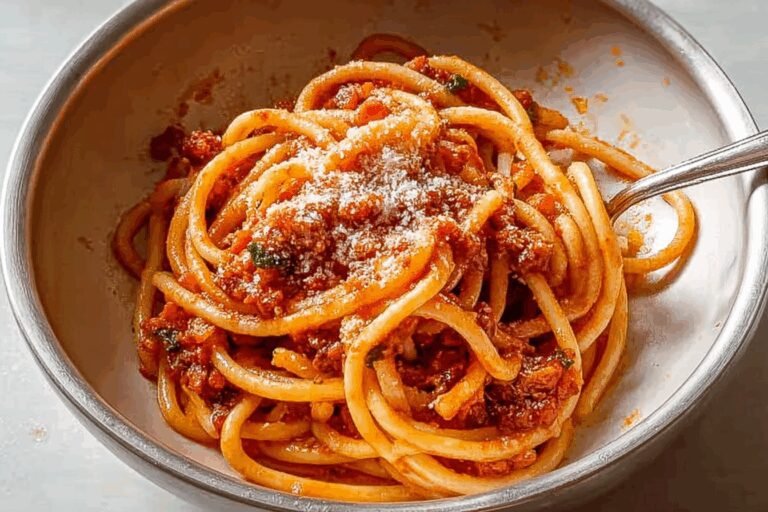
Bucatini Allamatriciana
🍝 Enjoy the rich and classic flavors of Bucatini All Amatriciana, a traditional Roman pasta dish with a savory tomato and guanciale sauce.
🧀 This recipe combines simple ingredients to create a comforting meal complemented by the sharpness of Pecorino Romano cheese.
- Total Time: 15 minutes
- Yield: 4 servings
Ingredients
– 200g guanciale Provides the essential fat and smoky umami base flavor, rendering into a rich foundation for the sauce
– 120ml dry white wine (optional) Adds acidity and complexity to deglaze the pan, enhancing the overall sauce
– 800g crushed tomatoes Offer acidity, body, and balance to the Amatriciana sauce
– 1 teaspoon crushed red pepper flakes Brings heat and complexity to the dish
– 400g bucatini pasta Supports sauce cling and traditional texture with its hollow shape
– Sea salt to taste Used for seasoning adjustments
– Black pepper to taste Adds a subtle kick and depth
– 50g pecorino Romano cheese (for grating) Provides a finishing salty and tangy umami
Instructions
1-First Step: Mise en Place Start your bucatini Allamatriciana by getting everything ready, just like in traditional Italian recipes. Measure out 400g bucatini pasta, finely dice 200g guanciale, grate 50g pecorino Romano, and drain 800g crushed tomatoes. Preheat a large skillet over medium heat to about 160-180°C for even cooking. This step, typically taking 5 minutes, sets the stage for a smooth preparation of Amatriciana sauce and helps adapt for dietary needs like vegan substitutes.
2-Second Step: Render the Cured Meat Next, add the 200g diced guanciale to the cold pan and heat it to medium for slow rendering, which takes 6-8 minutes until it becomes crisp. For vegan or lean options, sauté smoked tempeh or mushrooms in 1 tablespoon of oil for 4-6 minutes instead. This step builds the flavorful base of your bucatini Allamatriciana, ensuring the fat from the guanciale infuses the sauce without burning keep an eye on the temperature to preserve that classic Italian pasta taste.
3-Third Step: Build the Sauce Once the guanciale is rendered, remove any excess fat if needed, then optionally add a small diced onion or garlic and sauté for 1-2 minutes. Stir in the 800g crushed tomatoes, break them up, and add 1 teaspoon red pepper flakes before bringing to a gentle simmer for 10-15 minutes until slightly reduced. For low-calorie versions, use fresh tomatoes to lighten it up, adapting this Amatriciana sauce to suit vegetarian or gluten-free preferences by adjusting ingredients early.
4-Fourth Step: Cook the Bucatini In a large pot, bring salted water to a rolling boil at 100°C and cook the 400g bucatini to 1-2 minutes shy of al dente, about 8-10 minutes, reserving 1-1.5 cups of pasta water. This step is crucial for the texture in your bucatini Allamatriciana, as undercooking allows the pasta to finish in the sauce. For gluten-free options, follow package instructions and reduce simmering time to prevent mushiness in this Italian pasta dish.
5-Fifth Step: Finish the Sauce with Pasta Transfer the al dente bucatini to the skillet and toss over medium-low heat for 1-2 minutes, using about 1/2 cup of reserved pasta water to emulsify the sauce. Add the 50g grated pecorino Romano and stir until glossy, adjusting consistency with more water as needed. This creates the signature silky finish of Amatriciana sauce, and for vegan adaptations, use a plant-based cheese alternative to keep the flavors intact in your bucatini Allamatriciana.
6-Sixth Step: Season and Adjust for Diets Taste the dish and add sea salt, black pepper, or even a bit of lemon zest to brighten it up. For gluten-free versions, ensure the pasta is handled carefully to maintain its texture, and for low-calorie tweaks, reduce oil and use lean proteins. The total preparation time is around 15 minutes, making this a quick classic Italian recipe that adapts seamlessly to various needs in your Allamatriciana sauce.
7-Final Step: Plating and Serving Serve your bucatini Allamatriciana immediately in warm bowls, finishing with extra pecorino, a drizzle of olive oil, and chopped parsley for a fresh touch. Aim for a serving temperature of about 60-70°C to keep it optimal, and portion it for 4 servings as per nutritional guidelines. This step ensures the best experience with this Amatriciana pasta, incorporating tips like keeping it warm for up to 30 minutes.
Last Step:
Please leave a rating and comment letting us know how you liked this recipe! This helps our business to thrive and continue providing free, high-quality recipes for you.Notes
🍳 Make the dish up to 30 minutes ahead and keep warm until serving.
♨️ Reheat leftovers gently over low heat with a bit of water to loosen the sauce.
❄️ Store leftovers in the refrigerator for up to 3 days or freeze for up to 2 months, thawing in the refrigerator before reheating.
- Prep Time: 5 minutes
- Cook Time: 10 minutes
- Category: Main Course
- Method: Sautéing and Simmering
- Cuisine: Italian
Nutrition
- Serving Size: 1 serving
- Calories: 545
- Sugar: 9g
- Sodium: 586mg
- Fat: 20g
- Saturated Fat: 9g
- Carbohydrates: 69g
- Fiber: 6g
- Protein: 20g
- Cholesterol: 38mg