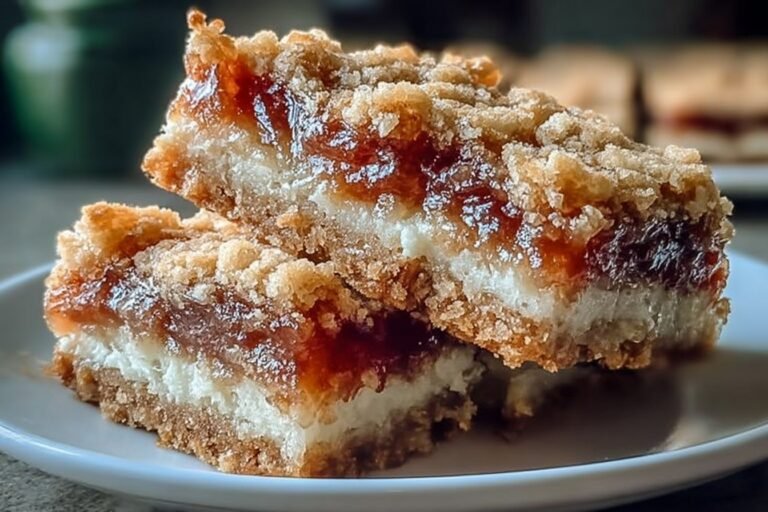
Ingredients
– 1 cup packed Brown sugar Adds sweetness and caramel flavor
– 2 cups Flour Builds structure
– 1/2 teaspoon Baking soda Helps with tenderness
– 1/4 teaspoon Salt Balances flavor
– 2 cups Rolled oats Gives chewy texture
– 1 cup Butter, softened Binds the crumble
– 14 ounces Guava paste Creates the tropical filling
Instructions
1-First step: get the pan and oven ready Preheat the oven to 350 degrees F. Grease a 13×9-inch pan and line it with foil or parchment paper, then lightly grease the paper or foil too. This extra step helps the bars lift out cleanly after baking, which is especially useful if you want tidy squares for a party tray or lunch box. Line the pan well if you plan to freeze the bars later. That way, you can remove the whole slab, chill it, and cut it after thawing. Busy parents and meal planners will appreciate how much easier cleanup becomes with this little trick.
2-Second step: mix the dry ingredients In a large bowl, combine the brown sugar, flour, baking soda, salt, and rolled oats. Stir until everything is evenly mixed. This dry base gives the bars their classic crumb texture and helps the sweetness spread through every bite. If you want to save time, you can use a food processor for the crust ingredients. That works especially well if you are making a double batch or if your butter is very soft and easy to blend. Just pulse a few times so the mixture stays crumbly, not paste-like.
3-Third step: cut in the butter Add the softened butter and cut it into the dry mixture until it looks crumbly. You can use a pastry cutter, two forks, or the food processor. The goal is to create a sandy, uneven mixture that clumps when pressed but still has visible oat pieces. This step matters because the butter creates the rich flavor and helps the bars hold together after baking. If the mixture feels too dry, keep working it gently with your hands. If it feels too wet, let it sit for a minute so the oats and flour can absorb some of the butter.
4-Fourth step: build the base layer Press half of the mixture firmly into the prepared pan. Try to make an even layer so the bars bake at the same pace. A flat bottom layer gives you a stronger base and helps the guava layer sit neatly in the center. Pressing too hard can make the crust dense, so use steady pressure instead of force. A measuring cup can help smooth the surface if you want a more even finish. This is a nice trick for home cooks who like neat edges.
5-Fifth step: add the guava paste Slice the 14 ounces of guava paste and place it over the crust, keeping it within 1/4 inch of the edge. For even better coverage, cut the paste into small cubes before arranging it. That makes it easier to spread the tropical flavor across every square inch of the bar. If you like a thicker center, add a little more guava paste. If you prefer a lighter fruit layer, use a bit less. That flexibility is one reason these guava cake bars are so easy to love. You can adjust them to match your own sweet tooth.
6-Sixth step: finish the topping Sprinkle the remaining crumb mixture over the guava layer and press it lightly. Do not pack it down too much. A gentle press helps the topping stick while still keeping that crumbly, homemade texture that makes guava bars so good. At this point, the pan should have three clear parts: crust, guava filling, and crumb topping. That simple layering is what makes the recipe feel easy while still giving you a dessert with great texture and flavor.
7-Seventh step: bake until lightly browned Bake for 35 to 40 minutes, or until the top is lightly browned. The edges should look set, and the center should no longer look wet. Every oven behaves a little differently, so start checking near the 35-minute mark. If your oven runs hot, the bars may brown a little faster. If the top still looks pale but the center is set, give it a few more minutes. The goal is a golden top with a soft, chewy middle.
8-Eighth step: cool before cutting Cool the bars in the pan on a wire rack before cutting them into 16 to 24 bars. This cooling step is important because the guava layer needs time to firm up. If you cut too early, the bars may fall apart. Once fully cool, lift the slab out using the parchment or foil edges and slice it into squares or rectangles. For a snack tray, smaller pieces work well. For dessert plates, go with larger bars. Either way, they make a cheerful, fruity treat.
Last Step:
Please leave a rating and comment letting us know how you liked this recipe! This helps our business to thrive and continue providing free, high-quality recipes for you.Notes
🌀 Use a food processor to cut butter into dry ingredients for perfectly crumbly texture.
🍈 Slice guava paste thinly for even melting and distribution without large chunks.
🏪 Find guava paste at Latin markets; substitute with guava jam if needed, adjusting sugar.
- Prep Time: 15 minutes
- Cooling: 1 hour
- Cook Time: 40 minutes
- Category: Dessert
- Method: Baking
- Cuisine: Latin American
- Diet: Vegetarian
Nutrition
- Serving Size: 1 bar
- Calories: 220 kcal
- Sugar: 18g
- Sodium: 120mg
- Fat: 10g
- Saturated Fat: 6g
- Unsaturated Fat: 4g
- Trans Fat: 0g
- Carbohydrates: 35g
- Fiber: 2g
- Protein: 3g
- Cholesterol: 25mg