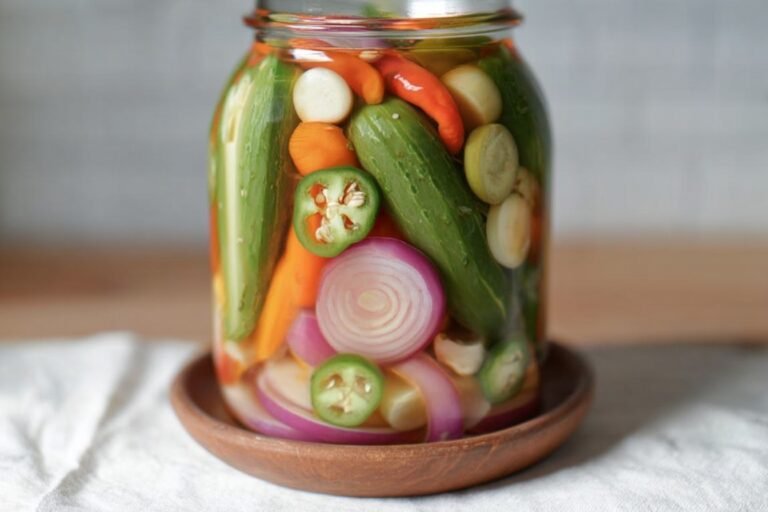
Ingredients
– 3 to 4 cups chopped or sliced fresh vegetables such as red onion, cauliflower, carrots, jalapenos, cucumber, radishes, beets, green beans, or asparagus for the main body of the recipe
– 1 medium carrot for sweetness and crunch
– 1/4 head cauliflower for holding up well in the brine and firm bite
– 1/2 large red onion for sharp flavor and lovely color
– 1 medium pickling cucumber for classic choice with crisp, refreshing texture
– 3 to 4 jalapenos for heat
– 2 to 3 cloves garlic for savory layer
– 1 cup white distilled vinegar for strong tang
– 1/4 cup rice vinegar or apple cider vinegar for softening sharpness and lighter flavor note
– 1 1/4 cups water for balancing the brine
– 2 teaspoons sea salt for seasoning the brine and pulling flavor into the vegetables
– 1 tablespoon sugar for rounding out acidity and balanced flavor
– 2 teaspoons whole black peppercorns for gentle heat and aromatic spice
– 2 teaspoons mustard seeds for classic pickle flavor with mild bite
– Fresh cilantro or dried cilantro for fresh, herbal note
– Dill for classic pickle taste
– Rosemary for use with carrots, onions, and cauliflower
– Red pepper flakes for extra heat
– Paprika for color and gentle smoky flavor
– Ground turmeric for warmth and golden tint
– Fresh turmeric for earthy color and flavor
– Ginger root for bright, zesty kick with cucumber and carrot
Instructions
1-First Step: Wash, trim, and cut the vegetables Start with 3 to 4 cups of fresh vegetables. Wash them well, then trim off any tough ends or bruised spots. Slice or chop them based on the vegetable you chose. For a faster pickle, cut carrots into thin coins or matchsticks, slice cucumbers into rounds or spears, cut red onion into thin half-moons, and separate cauliflower into small florets. Jalapenos can be sliced into rings, radishes into thin rounds, and green beans can stay whole if they are young and tender. If you use beets, cut them into thin slices or small batons so they soften more evenly. For denser vegetables like cauliflower and green beans, a quick blanch for 1 to 2 minutes can help them absorb the brine a little faster, though it is not required. Pat everything dry so the brine stays clear.
2-Second Step: Pack the vegetables into clean jars Use one large jar or two smaller jars, depending on how much you are making. Pack the vegetables in loosely so the brine can flow around every piece. Do not press them down too tightly, or they may soften unevenly. Add the garlic cloves, peppercorns, mustard seeds, and any herbs or spices you want to use. If you love a brighter flavor, cilantro and dill work nicely. If you want more warmth, try turmeric or ginger. For a spicy version, add red pepper flakes or extra jalapenos. Leave a little space at the top of the jar so the brine can cover everything fully. This helps the quick pickled vegetables stay crisp and flavorful.
3-Third Step: Make the brine In a small saucepan, combine the 1 cup white distilled vinegar, 1/4 cup rice vinegar or apple cider vinegar, 1 1/4 cups water, 2 teaspoons sea salt, and 1 tablespoon sugar. Warm the mixture over medium heat, stirring just until the salt and sugar dissolve. You do not need to boil it hard. Gentle heat is enough. The goal is to blend the brine so it tastes smooth and balanced. If you like a stronger vinegar bite, use the brine as is. If you want a softer flavor, choose rice vinegar or apple cider vinegar for part of the liquid. The brine should taste bold but not harsh. If it is pleasant to sip, it will taste great on the vegetables.
4-Fourth Step: Pour the hot brine over the vegetables Carefully pour the hot brine over the vegetables in the jar. Make sure everything is fully covered. Use a clean spoon or chopstick to gently move the vegetables around and release any air bubbles. This helps the brine reach all the little spaces between the slices and florets. If needed, add a little more water and vinegar in the same general ratio to cover the vegetables completely. The brine should sit just above the top layer of vegetables.
5-Fifth Step: Cool, seal, and chill Let the jar sit at room temperature until it cools, usually about 30 to 45 minutes. Once the jar is no longer hot, seal it with a lid and place it in the refrigerator. The flavors begin working quickly, but the vegetables taste best after a little time in the fridge. Thin cucumber slices and onion may be ready in as little as 2 hours. Thicker carrot pieces, cauliflower, or green beans usually need overnight chilling for the best texture and flavor.
6-Final Step: Taste and serve After chilling, taste a piece and see if you want more salt, spice, or sweetness next time. You can serve these quick pickled vegetables straight from the jar or drain them lightly before adding them to dishes. They are wonderful on burgers, rice bowls, tacos, roasted meats, sandwiches, and even alongside a simple lunch salad. They also make a nice side for comfort food dinners. If you are serving a rich casserole such as brussels sprout casserole or a cozy bowl from this creamy lasagna soup, the tangy crunch can balance the meal beautifully.
Last Step:
Please leave a rating and comment letting us know how you liked this recipe! This helps our business to thrive and continue providing free, high-quality recipes for you.Notes
🥒 Use a mandoline for ultra-thin slices to pickle faster and stay crunchier.
🔥 Customize heat with more jalapeños or add red pepper flakes for spice.
❄️ Store in fridge up to 3 weeks; flavors intensify over time.
- Prep Time: 10 minutes
- Chill: 30 minutes
- Cook Time: 5 minutes
- Category: Condiment
- Method: Quick Pickling
- Cuisine: Versatile
- Diet: Vegan, Gluten-Free, Low-Calorie
Nutrition
- Serving Size: ¼ cup
- Calories: 15 kcal
- Sugar: 2g
- Sodium: 250mg
- Fat: 0g
- Saturated Fat: 0g
- Unsaturated Fat: 0g
- Trans Fat: 0g
- Carbohydrates: 3g
- Fiber: 1g
- Protein: 0.5g
- Cholesterol: 0mg