
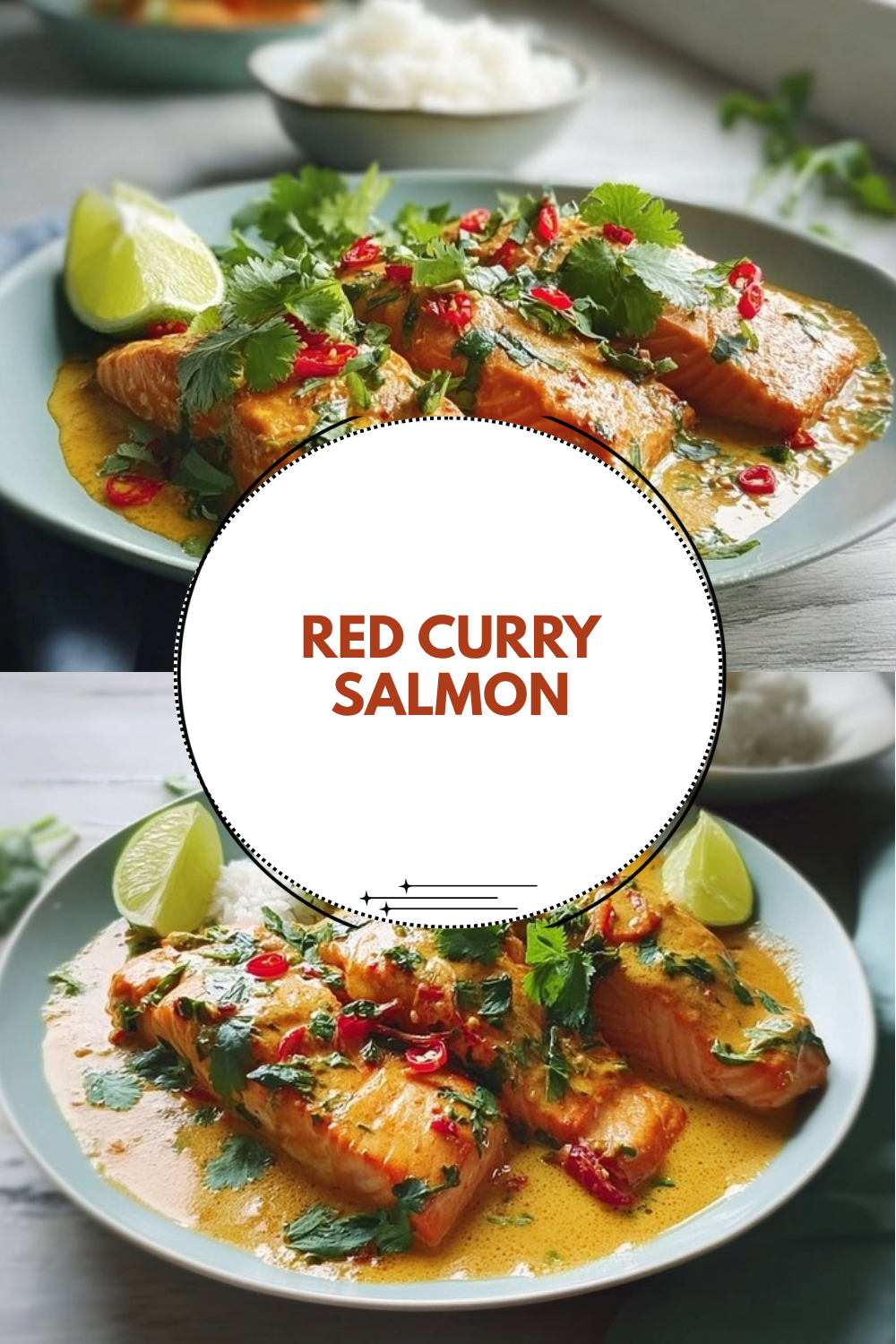
Why You Will Love This Red Curry Salmon
If you like weeknight dinners that taste like they came from a cozy Thai restaurant, Red Curry Salmon is a great recipe to keep on repeat. It brings together creamy coconut milk, bold red curry paste, tender salmon, and fresh herbs in one pan. The result is a fast, flavorful dinner that feels special without taking much effort.
- Easy to make: This salmon curry comes together in about 30 minutes, so it works well for busy weeknights, after-school dinners, or quick meals between meetings.
- Good for you: Salmon gives you protein and omega-3 fats, while carrots and broccolini add color, fiber, and nutrients. If you want a meal that feels rich but still balanced, this creamy Thai salmon curry fits the bill.
- Flexible for many diets: You can serve this coconut salmon curry over rice, cauliflower rice, or noodles. You can also adjust the spice level, leave out the fish sauce, or add more vegetables.
- Big flavor in every bite: The mix of Thai red curry paste, coconut milk, lime, basil, and cilantro gives this dish the bold, sweet, salty, and slightly spicy flavor that makes red thai curry so popular.
If you want a dinner that feels comforting, colorful, and full of Thai-inspired flavor, this red curry salmon recipe is a strong choice.
For another quick seafood dinner idea, you may also like this 30-minute coconut Thai salmon curry recipe. And if you want to learn more about the health benefits of salmon, this guide to salmon nutrition and health benefits is a useful read.
Essential Ingredients for Red Curry Salmon
This salmon coconut curry recipe uses simple ingredients that create a silky sauce and a bright, fresh finish. Each item plays a clear role in flavor, texture, or balance.
- 1 pound fresh salmon – The main protein. Choose fillets that are firm and bright for the best texture in thai red curry salmon.
- Salt and pepper to taste – These basics help bring out the salmon’s natural flavor.
- 1 tablespoon olive oil – Helps sear the salmon and starts the sauce base.
- 1 tablespoon butter – Adds richness and gives the curry a smooth finish.
- 1/2 medium onion, chopped – Builds sweetness and depth in the sauce.
- 2 cloves garlic, minced – Adds sharp savory flavor that works well with the curry paste.
- 2 heaping tablespoons Thai red curry paste – The main source of spice and Thai flavor in this red curry salmon.
- 1/2 teaspoon fish sauce, optional – Adds salty umami depth. Leave it out if needed.
- 1 13.5 ounce can full-fat coconut milk – Creates the creamy sauce that makes this a true coconut salmon curry.
- 1/2 teaspoon brown sugar – Balances the heat and roundness of the curry.
- 1/2 cup matchstick-cut carrots – Adds color, gentle sweetness, and a little crunch.
- 1 heaping cup chopped broccolini – Brings freshness, texture, and a green vegetable boost.
- 1 teaspoon lime juice – Brightens the sauce and keeps the flavors lively.
- 2 tablespoons torn or chopped fresh basil – Adds a fragrant finish that makes the curry taste fresh.
- 2 tablespoons chopped fresh cilantro – Gives the dish a clean herbal note and beautiful color.
Helpful ingredient notes
If you want a milder version of thai salmon curry, use a little less curry paste. If you like more heat, add a small extra spoonful. You can also swap broccolini for green beans, spinach, snap peas, or bell peppers depending on what you have.
Special dietary options
- Vegan: Replace salmon with tofu or chickpeas, use vegan butter, and skip fish sauce or use a plant-based fish sauce alternative.
- Gluten-free: This dish is naturally gluten-free if your curry paste and fish sauce are certified gluten-free.
- Low-calorie: Use light coconut milk, reduce butter, and serve with extra vegetables or cauliflower rice.
How to Prepare the Perfect Red Curry Salmon: Step-by-Step Guide
Making Red Curry Salmon is easier than it looks. The key is to cook the salmon gently so it stays tender, then simmer it in a creamy curry sauce so the fish picks up all that rich Thai flavor. This method works well for beginner cooks and busy home cooks who want a reliable one-pan dinner.
Step 1: Prep the salmon and vegetables
Pat the 1 pound fresh salmon dry with paper towels, then season both sides with salt and pepper to taste. Chop the onion, mince the garlic, cut the carrots into matchsticks if needed, and have the broccolini ready. When everything is prepped before you start cooking, the process moves smoothly and the sauce comes together fast.
Step 2: Sear the salmon
Set a large skillet over medium heat and add 1 tablespoon olive oil and 1 tablespoon butter. Once the butter melts and the pan is hot, place the salmon in the skillet skin-side down if it has skin. Cook for about 3 to 4 minutes without moving it, then gently flip and cook for 1 to 2 minutes more. The salmon does not need to be fully cooked yet because it will finish in the sauce later.
Step 3: Cook the onion and garlic
Transfer the salmon to a plate. In the same skillet, add the chopped onion and cook for about 2 to 3 minutes until it starts to soften. Add the minced garlic and stir for about 30 seconds. This step adds a savory base that helps the salmon curry taste fuller and more layered.
Step 4: Stir in the curry paste
Add 2 heaping tablespoons Thai red curry paste and stir it into the onion and garlic for about 1 minute. This helps wake up the curry paste and brings out its fragrance. If you are sensitive to spice, you can use a little less. If you love bold flavor, keep the full amount for a stronger red thai curry taste.
Step 5: Build the creamy sauce
Pour in the 1 13.5 ounce can full-fat coconut milk, then stir in the 1/2 teaspoon fish sauce, optional and 1/2 teaspoon brown sugar. Mix well so the curry paste dissolves into the coconut milk. The sauce should look smooth and lightly orange-red. Let it simmer gently for 2 to 3 minutes so the flavors can come together.
Step 6: Add the vegetables
Add the 1/2 cup matchstick-cut carrots and 1 heaping cup chopped broccolini to the skillet. Simmer for 3 to 4 minutes, just until the vegetables begin to soften but still keep some bite. If you prefer softer vegetables, give them another minute or two. If you are making the dish for kids, you may want the carrots a little softer for easier eating.
Step 7: Return the salmon to the pan
Place the salmon back into the skillet and spoon some sauce over the top. Cover the pan and cook for 3 to 5 minutes, depending on thickness, until the salmon flakes easily with a fork and reaches a safe internal temperature. This is the part that makes the creamy thai salmon curry feel so comforting, because the fish finishes gently in the sauce.
Step 8: Finish with lime and herbs
Turn off the heat and stir in 1 teaspoon lime juice. Top with 2 tablespoons torn or chopped fresh basil and 2 tablespoons chopped fresh cilantro. The herbs add brightness and give the sauce a fresh, clean finish. If you like a stronger citrus note, you can add a tiny extra squeeze of lime at the table.
Step 9: Serve hot
Spoon the salmon and sauce over warm rice, noodles, or cauliflower rice. The creamy curry sauce tastes great with jasmine rice because the grains soak up every bit of flavor. For a lighter meal, serve it with steamed greens or a crisp cucumber salad.
| Step | Time | What to Look For |
|---|---|---|
| Sear salmon | 4 to 6 minutes | Golden outside, not fully cooked through |
| Simmer sauce | 2 to 3 minutes | Smooth, fragrant curry base |
| Cook vegetables | 3 to 4 minutes | Tender but still bright |
| Finish salmon | 3 to 5 minutes | Flaky, moist, and cooked through |
For the best texture, keep the curry at a gentle simmer. A hard boil can make the salmon tough and can cause the coconut milk to separate.

Dietary Substitutions to Customize Your Red Curry Salmon
Protein and main component alternatives
If salmon is not your first choice, you can still enjoy this style of curry. Firm tofu works well for a vegetarian version, and shrimp is a fast-cooking seafood swap for people who want a lighter salmon curry style meal. Chicken thighs can also work if you want a different protein, although the cooking time will need to be longer.
For a plant-based version, press tofu well, cube it, and brown it lightly before adding it to the sauce. If you are using shrimp, add it near the end because it cooks quickly. This keeps the dish in the same flavor family as thai red curry salmon while fitting different preferences.
Vegetable, sauce, and seasoning modifications
You can swap the broccolini and carrots for vegetables that fit the season or your fridge. Bell peppers, green beans, baby spinach, zucchini, mushrooms, snow peas, and eggplant all work nicely in a coconut salmon curry style sauce. For a lower-spice version, cut the curry paste in half and add extra coconut milk. For a spicier bowl, add fresh sliced chili or a little chili oil at the end.
If you do not have fish sauce, simply leave it out or replace it with a little soy sauce or tamari if that fits your needs. For a richer curry, use the full-fat coconut milk as written. For a lighter version, use light coconut milk, though the sauce will be less creamy.
Mastering Red Curry Salmon: Advanced Tips and Variations
Pro cooking techniques
For the best red curry salmon recipe, start with salmon that is close to even thickness so it cooks at the same rate. If some pieces are thinner, check them early to avoid overcooking. You can also sear the salmon skin-side down first for a crisp finish, then let it finish in the curry sauce. That gives you a nice contrast between the tender fish and the creamy sauce.
If you want a thicker curry, simmer the sauce for a few extra minutes before adding the salmon back in. If you want a thinner sauce, stir in a splash of water or broth. Cooking the curry gently is the best way to keep the coconut milk smooth.
Flavor variations
This dish adapts well to small changes. Add a spoonful of peanut butter for a nutty note, or stir in a little ginger for extra warmth. A handful of spinach at the end works if you want more greens. You can also add lime zest for a stronger citrus edge. These small changes keep the heart of the creamy thai salmon curry while giving it a new feel.
Presentation tips
Serve the salmon in shallow bowls so the sauce stays visible. Spoon the carrots and broccolini around the fish, then finish with basil and cilantro on top. A little extra lime wedge on the side makes the plate look bright and inviting. If you want a more polished dinner plate, serve it with a neat mound of jasmine rice beside the curry instead of under it.
Make-ahead options
You can chop the onion, garlic, carrots, and broccolini earlier in the day to save time at dinner. The curry sauce base can also be made ahead and chilled, then reheated gently before adding the salmon. For the best texture, cook the salmon fresh right before serving. That keeps the fish tender and the sauce silky.
How to Store Red Curry Salmon: Best Practices
If you have leftovers, store them the right way so the curry stays tasty the next day. Red Curry Salmon keeps well, but the salmon is at its best when eaten soon after cooking.
Refrigeration
Let the curry cool to room temperature for a short time, then place it in an airtight container. Refrigerate for up to 3 days. If possible, store the salmon and sauce together so the fish stays moist.
Freezing
You can freeze the curry for longer storage, though the texture of the coconut milk may change a little after thawing. Place cooled portions in freezer-safe containers and freeze for up to 2 months. Thaw overnight in the refrigerator before reheating.
Reheating
Reheat gently on the stovetop over low heat or in the microwave at medium power. Add a splash of water or coconut milk if the sauce looks too thick. Avoid high heat, since it can dry out the salmon and separate the sauce.
Meal prep considerations
If you want to meal prep this salmon coconut curry recipe, make the sauce and vegetables ahead of time, then cook the salmon fresh on the day you plan to eat it. This gives you the best texture and keeps lunch or dinner quick. It also works well for busy professionals, students, and parents who want a fast meal without starting from scratch.
FAQs: Frequently Asked Questions About Red Curry Salmon
What is red curry salmon?
How do I make red curry salmon at home?
Is red curry salmon healthy?
How long to bake red curry salmon in the oven?
What sides go with red curry salmon?
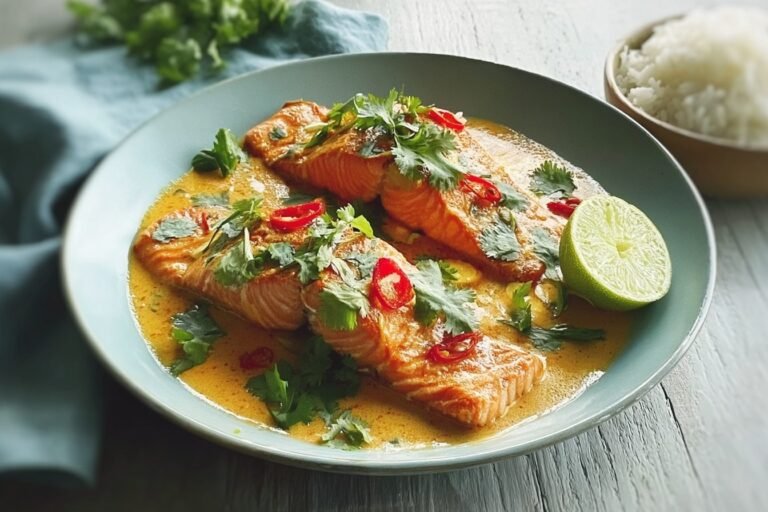
Red Curry Salmon
🐟 Indulge in creamy Thai flavors with tender salmon in a rich coconut curry, delivering omega-3s and vibrant veggies for a healthy, satisfying meal.
🌴 This quick salmon coconut curry brings restaurant-quality taste home effortlessly, perfect for weeknight dinners bursting with exotic spice.
- Total Time: 35 minutes
- Yield: 4 servings
Ingredients
– 1 pound fresh salmon for main protein
– Salt and pepper to taste for flavor
– 1 tablespoon olive oil for searing salmon
– 1 tablespoon butter for richness
– 1/2 medium onion, chopped for sweetness and depth
– 2 cloves garlic, minced for savory flavor
– 2 heaping tablespoons Thai red curry paste for spice and Thai flavor
– 1/2 teaspoon fish sauce, optional for umami depth
– 1 13.5 ounce can full-fat coconut milk for creamy sauce
– 1/2 teaspoon brown sugar for balancing heat
– 1/2 cup matchstick-cut carrots for color, sweetness, and crunch
– 1 heaping cup chopped broccolini for freshness and texture
– 1 teaspoon lime juice for brightening
– 2 tablespoons torn or chopped fresh basil for fragrant finish
– 2 tablespoons chopped fresh cilantro for herbal note
Instructions
1-Step 1: Prep the salmon and vegetables Pat the 1 pound fresh salmon dry with paper towels, then season both sides with salt and pepper to taste. Chop the onion, mince the garlic, cut the carrots into matchsticks if needed, and have the broccolini ready. When everything is prepped before you start cooking, the process moves smoothly and the sauce comes together fast.
2-Step 2: Sear the salmon Set a large skillet over medium heat and add 1 tablespoon olive oil and 1 tablespoon butter. Once the butter melts and the pan is hot, place the salmon in the skillet skin-side down if it has skin. Cook for about 3 to 4 minutes without moving it, then gently flip and cook for 1 to 2 minutes more. The salmon does not need to be fully cooked yet because it will finish in the sauce later.
3-Step 3: Cook the onion and garlic Transfer the salmon to a plate. In the same skillet, add the chopped onion and cook for about 2 to 3 minutes until it starts to soften. Add the minced garlic and stir for about 30 seconds. This step adds a savory base that helps the salmon curry taste fuller and more layered.
4-Step 4: Stir in the curry paste Add 2 heaping tablespoons Thai red curry paste and stir it into the onion and garlic for about 1 minute. This helps wake up the curry paste and brings out its fragrance. If you are sensitive to spice, you can use a little less. If you love bold flavor, keep the full amount for a stronger red thai curry taste.
5-Step 5: Build the creamy sauce Pour in the 1 13.5 ounce can full-fat coconut milk, then stir in the 1/2 teaspoon fish sauce, optional and 1/2 teaspoon brown sugar. Mix well so the curry paste dissolves into the coconut milk. The sauce should look smooth and lightly orange-red. Let it simmer gently for 2 to 3 minutes so the flavors can come together.
6-Step 6: Add the vegetables Add the 1/2 cup matchstick-cut carrots and 1 heaping cup chopped broccolini to the skillet. Simmer for 3 to 4 minutes, just until the vegetables begin to soften but still keep some bite. If you prefer softer vegetables, give them another minute or two. If you are making the dish for kids, you may want the carrots a little softer for easier eating.
7-Step 7: Return the salmon to the pan Place the salmon back into the skillet and spoon some sauce over the top. Cover the pan and cook for 3 to 5 minutes, depending on thickness, until the salmon flakes easily with a fork and reaches a safe internal temperature. This is the part that makes the creamy thai salmon curry feel so comforting, because the fish finishes gently in the sauce.
8-Step 8: Finish with lime and herbs Turn off the heat and stir in 1 teaspoon lime juice. Top with 2 tablespoons torn or chopped fresh basil and 2 tablespoons chopped fresh cilantro. The herbs add brightness and give the sauce a fresh, clean finish. If you like a stronger citrus note, you can add a tiny extra squeeze of lime at the table.
9-Step 9: Serve hot Spoon the salmon and sauce over warm rice, noodles, or cauliflower rice. The creamy curry sauce tastes great with jasmine rice because the grains soak up every bit of flavor. For a lighter meal, serve it with steamed greens or a crisp cucumber salad.
Last Step:
Please leave a rating and comment letting us know how you liked this recipe! This helps our business to thrive and continue providing free, high-quality recipes for you.Notes
🥥 Use full-fat coconut milk for the creamiest texture and richest flavor.
🐟 Avoid overcooking the salmon to keep it moist and flaky inside.
🌿 Add fresh herbs at the end to preserve their bright, aromatic taste.
- Prep Time: 15 minutes
- undefined: undefined
- Cook Time: 20 minutes
- Category: Seafood
- Method: Stovetop
- Cuisine: Thai
- Diet: Gluten-Free, Pescatarian
Nutrition
- Serving Size: 1/4 recipe (about 4 oz salmon)
- Calories: 485 kcal
- Sugar: 4 g
- Sodium: 650 mg
- Fat: 38 g
- Saturated Fat: 25 g
- Unsaturated Fat: 13 g
- Trans Fat: 0 g
- Carbohydrates: 12 g
- Fiber: 2 g
- Protein: 28 g
- Cholesterol: 75 mg