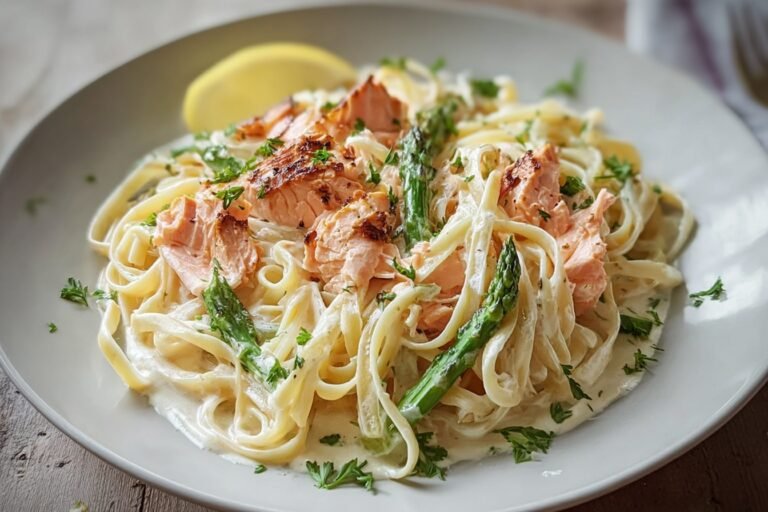
Ingredients
12 oz (340 g) pasta such as spaghetti or linguine
1 lb (450 g) salmon fillets, skin on or off
2 tbsp extra-virgin olive oil
3 cloves garlic, minced
1 small shallot, finely chopped (or 1/4 cup onion)
1/2 cup (120 ml) dry white wine or low-sodium chicken/vegetable stock
1/2 cup (120 ml) heavy cream or crème fraîche
Zest and juice of 1 lemon
1/4 cup chopped fresh parsley or dill
Salt and freshly ground black pepper to taste
Optional: 1/2 cup grated Parmesan or Pecorino
Instructions
1-First Step: Mise en Place and Seasoning Get everything ready before you fire up the stove to make this salmon pasta flow smoothly. Pat your 1 lb salmon dry and season it with salt and pepper, then zest and juice one lemon. Bring 4 to 6 quarts of salted water to a boil for the 12 oz pasta. This setup helps you adapt for things like gluten-free options right from the start.
2-Second Step: Cook the Pasta Al Dente Drop the pasta into boiling water and cook it 1 to 2 minutes less than the package says for that perfect bite. Reserve 3/4 to 1 cup of the pasta water before you drain it. That starchy water is key for making the sauce cling, whether you’re aiming for creamy salmon pasta or something lighter.
3-Third Step: Sear the Salmon Heat 2 tbsp olive oil in a large skillet over medium-high heat and add the salmon. Sear it skin-side down for 3 to 4 minutes to get a nice crisp, then flip and cook 2 to 4 minutes more until it’s just done. If you prefer, roast it at 400°F for 8 to 12 minutes instead. This step works for plant-based swaps too, like searing tofu until it’s golden.
4-Fourth Step: Remove Salmon and Sweat Aromatics Take the salmon out and let it rest under foil. Lower the heat, add a bit more oil if needed, and cook the shallot for 2 to 3 minutes. Toss in the garlic for 30 to 45 seconds to bring out that aroma. It’s the foundation of your sauce, keeping your salmon pasta full of flavor.
5-Fifth Step: Deglaze and Form the Sauce Pour in 1/2 cup dry white wine or stock to scrape up those tasty bits in the pan. Let it reduce for 2 to 3 minutes, then add 1/2 cup heavy cream and simmer gently. For a lighter take, mix in a yogurt slurry instead. Taste and season with salt, pepper, and lemon zest to balance it all.
6-Sixth Step: Flake Salmon and Combine Break the salmon into chunks and stir it back into the pan with the drained pasta. Add some reserved pasta water and toss everything together for a glossy finish. If you’re making a vegan version, fold in your seared tofu and cashew cream here.
7-Seventh Step: Finish and Adjust Flavors Mix in the lemon juice, chopped herbs, and cheese if you like. Tweak the sauce with more pasta water or seasonings as needed. For a kick, add red pepper flakes. This is your chance to make the salmon pasta pop with fresh tastes.
8-Final Step: Plate and Serve Scoop the salmon pasta into bowls, add herbs and lemon wedges on top, and serve right away. If you’re prepping meals, undercook the pasta a bit so it reheats well. Leftovers stay good in the fridge for 2 to 3 days, and you can warm them with a splash of stock. To learn about salmon’s health benefits, visit a reliable source on salmon nutrition.
Last Step:
Please leave a rating and comment letting us know how you liked this recipe! This helps our business to thrive and continue providing free, high-quality recipes for you.Notes
🐟 Don’t overcook the salmon initially as it will continue to cook when added back to the sauce with the pasta
🍝 Reserve pasta water before draining – the starchy water helps create a creamier sauce and helps it adhere to the pasta better
🌿 Fresh herbs can be substituted for dried ones – use 3 times the amount of fresh herbs compared to dried
- Prep Time: 10 minutes
- Cook Time: 20 minutes
- Category: Main Course
- Method: Sautéing
- Cuisine: Italian-American
- Diet: Pescatarian
Nutrition
- Serving Size: 1 serving
- Calories: 580
- Sugar: 4g
- Sodium: 680mg
- Fat: 28g
- Saturated Fat: 16g
- Unsaturated Fat: 10g
- Trans Fat: 0g
- Carbohydrates: 52g
- Fiber: 3g
- Protein: 32g
- Cholesterol: 120mg