

Why You’ll Love This Spring Vegetable Risotto
This spring vegetable risotto recipe is a delightful choice for anyone wanting a meal that’s full of fresh flavors and easy to prepare. It serves 4 people and comes together in just 40 minutes, with only 15 minutes of prep and 25 minutes of cooking time. You’ll appreciate how it combines seasonal veggies like asparagus, peas, radishes, and leeks to create a dish that’s both nutritious and satisfying for busy home cooks or families.
Not only does this recipe offer health benefits with its rich mix of vitamins and antioxidants from the fresh ingredients, but it also adapts well to different dietary needs. For instance, you can swap in vegetable stock to make it fully plant-based while keeping that creamy texture intact. If you’re hosting a dinner or just need a quick weeknight option, this risotto brings a vibrant taste that feels special yet simple.
One key tip from the experts is to toast the rice first, which helps prevent mushiness and enhances the overall flavor. To learn more about pairing this hearty dish with a refreshing beverage, check out our Brazilian Lemonade Recipe. This makes it versatile for everything from casual meals to entertaining guests.
Essential Ingredients for Spring Vegetable Risotto
Gathering the right ingredients is the first step to making a delicious spring vegetable risotto. This section lists everything you need based on the recipe details, ensuring you have precise measurements for a perfect outcome. We’ll focus on the key items to create that creamy, flavorful base with fresh spring elements.
- 6 tablespoons unsalted butter (divided)
- 2 leeks (white and light green parts only, sliced)
- 1 cup arborio rice
- 1/4 cup dry white wine
- 3 cups low sodium chicken or vegetable stock (warmed)
- 1 1/2 cups quartered radishes
- 1 1/2 cups chopped asparagus
- Salt and freshly cracked black pepper to taste
- 1 teaspoon lemon zest (from about half a lemon)
- 3/4 cup frozen peas (thawed)
- 1 cup grated parmesan cheese (plus extra for garnish)
- 1/2 cup mascarpone cheese
- 1 tablespoon chopped chives (plus more for garnish)
These ingredients work together to build a creamy texture and bright flavors, with the arborio rice providing the perfect base. For special dietary options, you can easily modify by using plant-based butter for a vegan version or ensuring the stock is gluten-free. Remember, each one plays a role in making this spring vegetable risotto with asparagus and peas a standout dish.
How to Prepare the Perfect Spring Vegetable Risotto: Step-by-Step Guide
Creating a creamy spring vegetable risotto starts with simple, organized steps that anyone can follow at home. First, melt half of the butter (that’s 3 tablespoons) in a large pot over medium heat, then add the sliced leeks and cook until they turn translucent, which takes about 5 minutes. This sets a flavorful foundation for the rest of the dish.
Next, stir in the arborio rice to toast it for about 1 minute, followed by pouring in the dry white wine and stirring until it’s nearly absorbed. Now, add the warmed stock gradually, about 1/2 cup at a time, stirring frequently and waiting for each addition to absorb before adding more, until about 1 cup of stock remains. This process helps release the rice’s starches for that signature creaminess.
Once you’ve added the radishes with another 1/2 cup of stock and stirred until absorbed, introduce the chopped asparagus and the remaining stock, seasoning with salt as you go. Continue stirring until the rice is mostly cooked through and the vegetables are tender but still slightly firm, aiming for an al dente texture. If the risotto seems too thick, add a bit more stock to reach that slightly loose consistency.
Finally, stir in the lemon zest, thawed peas, and black pepper until everything blends into a creamy mix, then remove from heat. Fold in the remaining 3 tablespoons of butter, parmesan cheese, mascarpone cheese, and chopped chives for extra smoothness. Serve immediately, garnished with extra lemon zest, parmesan, and chives for a fresh finish. Stirring intermittently, about every 30 seconds, is a great tip to keep things even and prevent sticking.
Dietary Substitutions to Customize Your Spring Vegetable Risotto: Protein and Main Component Alternatives
Customizing your spring vegetable risotto can make it fit various dietary preferences, especially when it comes to adding protein. For those seeking more protein, consider swapping asparagus or peas with options like grilled tofu, chickpeas, or shredded chicken to boost nutritional value without losing flavor. Vegan eaters might enjoy tempeh or seitan as substitutes, while pescatarians could add shrimp or scallops for a seafood twist.
Keep in mind the recipe’s base of arborio rice and vegetables, which already makes it gluten-free if you use certified gluten-free stock. To make it lower in calories, simply reduce the rice quantity and increase the veggies for a lighter meal. This spring vegetable risotto with radishes adapts easily while staying delicious and approachable for everyone.
Dietary Substitutions to Customize Your Spring Vegetable Risotto: Vegetable, Sauce, and Seasoning Modifications
Playing with vegetables in your spring vegetable risotto lets you use what’s fresh and available, adding variety to the dish. Try swapping in alternatives like zucchini, spinach, or artichokes based on the season, which can bring new textures and tastes to your spring vegetable risotto with leeks. For the sauce, achieve that rich creaminess with coconut milk for a dairy-free option or nutritional yeast to mimic a cheesy flavor without actual cheese.
When it comes to seasonings, experiment with fresh basil, thyme, or tarragon to change up the herbal notes and enhance the overall profile. To keep things light, cut back on cheese or butter and use olive oil or plant-based spreads instead, ensuring the recipe aligns with dietary restrictions. These tweaks keep the spirit of the original spring vegetable risotto with peas alive while making it your own.
Mastering Spring Vegetable Risotto: Advanced Tips and Variations
Taking your spring vegetable risotto to the next level involves some pro cooking techniques that make a big difference. Use a wide, heavy-bottomed pan for even heat distribution, and always finish with a touch of cold butter or cream to achieve that silky texture everyone loves. For flavor variations, try adding white wine during cooking, as in this recipe, to introduce more complexity and depth.
Presentation is key, so consider layering vegetables on top and garnishing with microgreens or grated parmesan for a pop of color. If you’re planning ahead, partially cook the risotto and add fresh vegetables and seasoning just before serving to keep everything crisp and fresh. Remember the key tips like toasting the rice first and using warmed stock to avoid mushiness, making your spring vegetable risotto with asparagus even better over time.
Nutritional Breakdown Table
| Nutrient | Per Serving |
|---|---|
| Calories | 649 |
| Carbohydrates | 60g |
| Protein | 16g |
| Fat | 37g (including 23g saturated fat) |
| Fiber | 6g |
| Sugar | 7g |
| Cholesterol | 95mg |
| Sodium | 1190mg |
How to Store Spring Vegetable Risotto: Best Practices
Proper storage keeps your spring vegetable risotto tasting great for later meals, so let’s cover the basics. Store it in an airtight container in the refrigerator for up to 3 days to maintain freshness and prevent spoilage. For longer storage, cool the risotto completely before freezing it in portioned airtight containers, where it will stay good for about 1 month.
When reheating, do it gently over low heat with a splash of broth or water to bring back that creamy texture without drying it out. If you’re into meal prep, consider preparing the risotto base and vegetables separately, then combine and finish just before serving. This way, you keep the flavors of your spring vegetable risotto with radishes vibrant and enjoyable.

FAQs: Frequently Asked Questions About Spring Vegetable Risotto
Should I rinse the rice before making spring vegetable risotto?
How do I prevent my spring vegetable risotto from becoming mushy?
Can I make spring vegetable risotto vegan or dairy-free?
How long does it typically take to cook spring vegetable risotto?
What are the best spring vegetables to add to risotto?
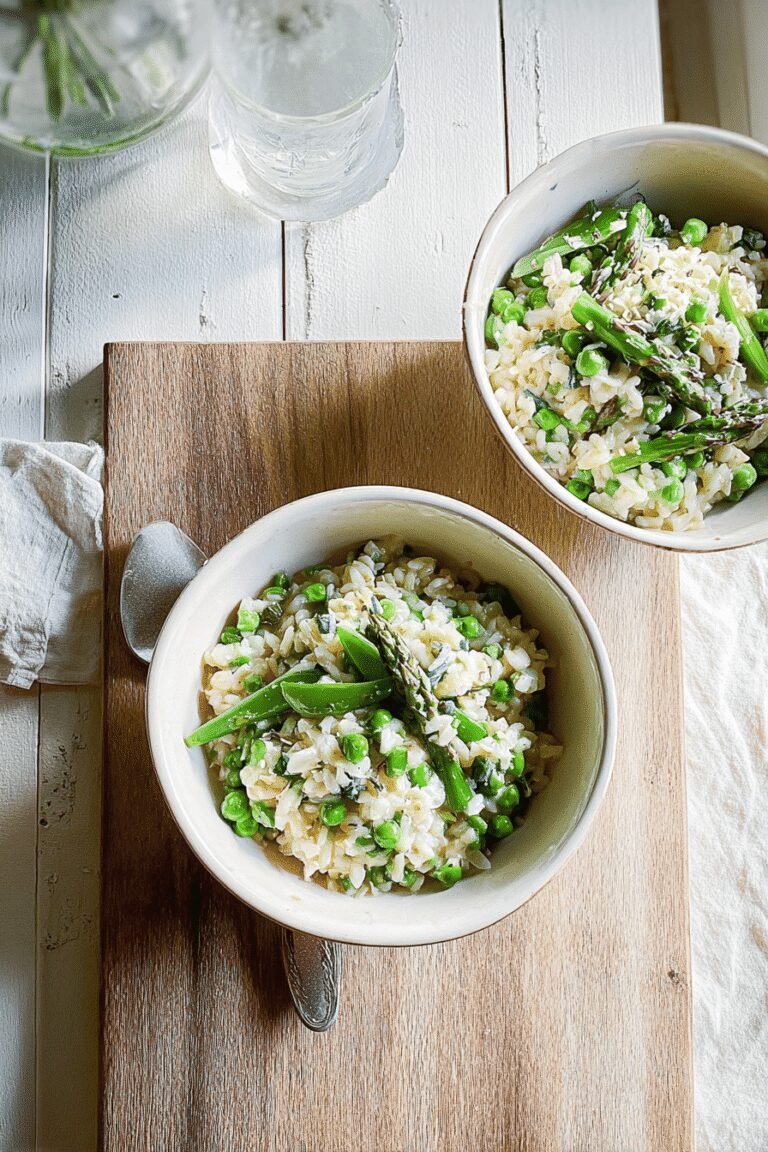
Spring Vegetable Risotto
🌿 Enjoy a creamy and flavorful risotto bursting with fresh spring vegetables like asparagus, peas, radishes, and leeks.
🍋 This dish offers a satisfying blend of textures and bright lemony notes, perfect for seasonal enjoyment.
- Total Time: 40 minutes
- Yield: 4 servings
Ingredients
– 6 tablespoons unsalted butter (divided)
– 2 leeks (white and light green parts only, sliced)
– 1 cup arborio rice
– 1/4 cup dry white wine
– 3 cups low sodium chicken or vegetable stock (warmed)
– 1 1/2 cups quartered radishes
– 1 1/2 cups chopped asparagus
– Salt and freshly cracked black pepper to taste
– 1 teaspoon lemon zest (from about half a lemon)
– 3/4 cup frozen peas (thawed)
– 1 cup grated parmesan cheese (plus extra for garnish)
– 1/2 cup mascarpone cheese
– 1 tablespoon chopped chives (plus more for garnish)
Instructions
1-First, melt half of the butter (that’s 3 tablespoons) in a large pot over medium heat, then add the sliced leeks and cook until they turn translucent, which takes about 5 minutes. This sets a flavorful foundation for the rest of the dish.
2-Next, stir in the arborio rice to toast it for about 1 minute, followed by pouring in the dry white wine and stirring until it’s nearly absorbed. Now, add the warmed stock gradually, about 1/2 cup at a time, stirring frequently and waiting for each addition to absorb before adding more, until about 1 cup of stock remains. This process helps release the rice’s starches for that signature creaminess.
3-Once you’ve added the radishes with another 1/2 cup of stock and stirred until absorbed, introduce the chopped asparagus and the remaining stock, seasoning with salt as you go. Continue stirring until the rice is mostly cooked through and the vegetables are tender but still slightly firm, aiming for an al dente texture. If the risotto seems too thick, add a bit more stock to reach that slightly loose consistency.
4-Finally, stir in the lemon zest, thawed peas, and black pepper until everything blends into a creamy mix, then remove from heat. Fold in the remaining 3 tablespoons of butter, parmesan cheese, mascarpone cheese, and chopped chives for extra smoothness. Serve immediately, garnished with extra lemon zest, parmesan, and chives for a fresh finish. Stirring intermittently, about every 30 seconds, is a great tip to keep things even and prevent sticking.
Last Step:
Please leave a rating and comment letting us know how you liked this recipe! This helps our business to thrive and continue providing free, high-quality recipes for you.Notes
🍚 Toast the rice before adding stock to prevent mushiness and enhance flavor.
🍲 Use warmed stock to maintain even cooking temperature.
🥄 Stir intermittently (about every 30 seconds) to achieve perfect creamy texture.
🧀 Add mascarpone, butter, and parmesan off the heat to keep the risotto smooth and creamy.
- Prep Time: 15 minutes
- Cook Time: 25 minutes
- Category: Main Course
- Method: Simmering and Stirring
- Cuisine: Italian
Nutrition
- Serving Size: 1 serving
- Calories: 649
- Sugar: 7 g
- Sodium: 1190 mg
- Fat: 37 g
- Saturated Fat: 23 g
- Carbohydrates: 60 g
- Fiber: 6 g
- Protein: 16 g
- Cholesterol: 95 mg